
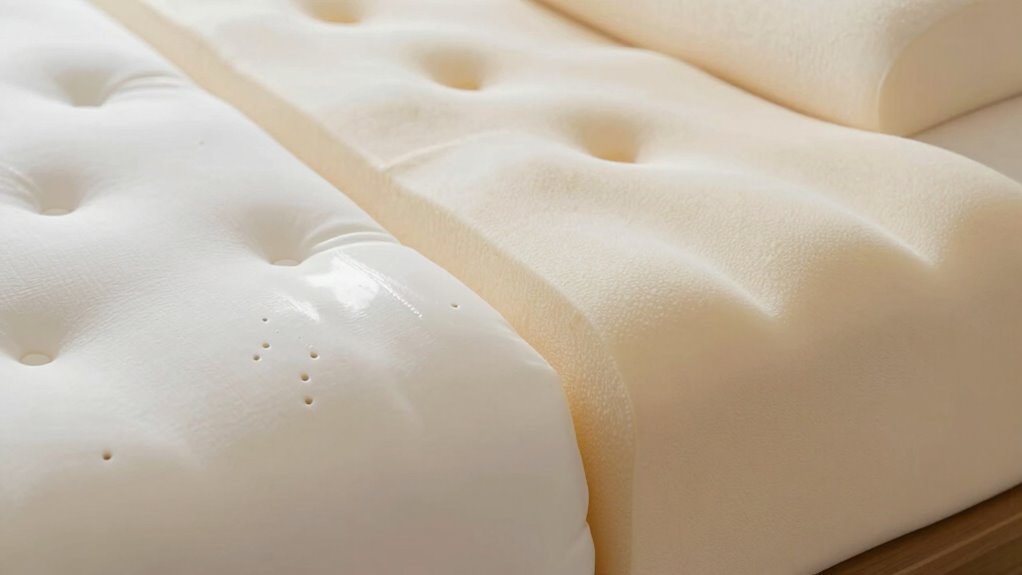

Latex and memory foam feel different night after night because of how their structures respond to heat and moisture. Latex stays consistent with better airflow, keeping you cooler and comfortable, especially in warmer conditions. Memory foam molds to your body, trapping heat and moisture, which can make it feel warmer and softer over time. These differences in responsiveness, breathability, and temperature regulation constantly change how each mattress feels. Keep exploring to discover more about what determines your sleep experience.

Get travel and outdoor gear delivered free with Prime
- Fast, free delivery on millions of items
- Prime Video, Amazon Music and more included
- Member-only deals all year
Key Takeaways
- Latex maintains a consistent feel due to its open-cell structure, while memory foam molds to the body, causing variable comfort.
- Latex’s superior breathability dissipates heat more effectively than memory foam, impacting nightly temperature regulation.
- Memory foam traps heat, making it feel warmer during sleep, especially in cooler environments, leading to different sensations each night.
- Environmental conditions like temperature influence how each material responds, altering comfort levels nightly.
- Variations in internal structure and responsiveness cause differences in how each material reacts to body heat and movement over time.
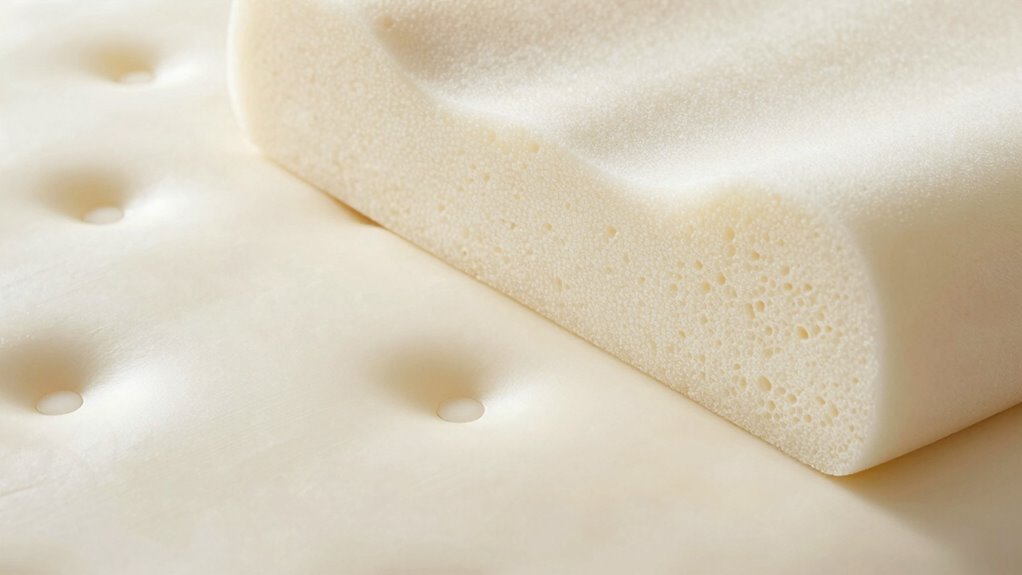
If you’ve ever noticed that your mattress feels different from night to night, it’s likely due to the distinct ways latex and memory foam respond to your body. These materials have unique characteristics that influence how comfortable you feel as you sleep, especially when it comes to breathability differences and temperature regulation. Latex tends to be more breathable because of its open-cell structure and natural properties. It allows air to circulate freely, which helps dissipate heat and moisture more efficiently. As a result, latex mattresses often stay cooler throughout the night, making them a good choice if you tend to sleep hot. You might notice that you wake up less sweaty or uncomfortable, even during warmer months.
Memory foam, on the other hand, is known for its excellent pressure relief and contouring abilities. However, it’s also more dense and tends to trap heat. The material molds closely to your body, but this snug fit can restrict airflow and cause heat to build up under the covers. Because of its limited breathability, memory foam mattresses often retain more body heat, leading to a warmer sleeping experience. If you’ve ever felt like you’re sinking into a hot, sticky mess, that’s likely due to memory foam’s temperature regulation limitations. It’s especially noticeable if you move around a lot during the night or share your bed with a partner who generates a lot of heat.
These differences in breathability and temperature regulation can cause your sleeping experience to change from one night to the next. On cooler nights, memory foam may feel more comfortable as the heat buildup is less noticeable, and the mattress can help retain warmth. In warmer conditions, latex’s superior airflow keeps you cooler and more comfortable, preventing you from waking up sweaty. Your body’s own heat and moisture are also factors—latex helps manage these better, maintaining a more consistent sleeping temperature. The materials’ unique properties play a significant role in how your mattress responds to environmental and body heat. Additionally, the internal structure of each material can influence how quickly or slowly heat dissipates, further impacting your sleep quality. Recognizing the thermal properties of each material can help you better understand how your mattress adapts to various conditions. Moreover, the internal structure of latex and memory foam impacts not just heat regulation but also how quickly the mattress responds to your movements. The density and porosity of these materials also affect their breathability and heat retention, which in turn influences your overall comfort. This ongoing variation in how each material responds to your body and environment is why your mattress can feel so different from night to night. Understanding these distinctions can help you choose the right mattress for your comfort preferences, especially if temperature regulation or breathability is a priority for you.
Products Worth Considering

Kindle Paperwhite Signature Edition 32GB (2024) – Auto-adjusting front light, wireless charging, weeks battery life – Metallic Jade

DJI Osmo Mobile 8 Phone Gimbal with Mic Mini Transmitter, Infinity Black

DJI Mini 4K Fly More Combo – Drone with 4K UHD Camera, 3‑Axis Gimbal, 10 km Transmission, 93‑min Flight Time (3 Batteries)
As an affiliate, we earn on qualifying purchases.
Frequently Asked Questions
How Does Body Temperature Affect Latex Versus Memory Foam Comfort?
Your body temperature impacts latex and memory foam differently because of their insulation properties. Latex offers better temperature regulation, keeping you cooler and maintaining comfort consistency through the night. Memory foam tends to trap heat, causing you to feel warmer and potentially disrupting your comfort. If you tend to sleep hot, latex might be the better choice for consistent comfort, as it adapts to your body temperature better than memory foam.
Do Latex and Memory Foam Mattresses Have Different Allergy Risks?
You might find that latex mattresses are generally hypoallergenic, reducing allergy risks for sensitive sleepers, while memory foam can sometimes trigger sensitivities. About 10% of people with allergies report reactions to traditional memory foam. Latex resists dust mites and mold, making it a safer choice if allergy concerns are high. If you’re prone to allergies, latex offers a more allergy-friendly option, whereas memory foam may require extra care to minimize sensitivities.
Can Mattress Age Influence the Feel of Latex and Memory Foam?
Yes, mattress age can influence how latex and memory foam feel. Over time, latex’s durability helps it maintain its firmness and support, though it may become slightly softer. Memory foam’s elasticity tends to diminish as it ages, leading to less responsiveness and contouring. As your mattress ages, expect these materials to change subtly, affecting comfort and support based on their inherent durability and elasticity.
How Do Motion Transfer Properties Differ Between the Two Materials?
Back in the day, you’d notice latex offers superior motion transfer properties compared to memory foam. Latex absorbs less movement, thanks to spring support and firmness consistency, so you won’t feel your partner’s tosses and turns as much. Memory foam, however, molds to your body and transfers more motion, which can disturb your sleep. This difference makes latex ideal if you want a more stable, undisturbed rest.
Are There Environmental Impacts Unique to Latex and Memory Foam Production?
You’ll find that latex and memory foam have distinct environmental impacts due to their manufacturing processes. Latex, especially natural latex, generally has a lower environmental footprint since it’s derived from rubber trees and involves fewer chemicals. Memory foam, however, relies heavily on petrochemicals, making its production more energy-intensive and less eco-friendly. If reducing environmental impact matters to you, natural latex might be the better choice.
Conclusion
Ultimately, choosing between latex and memory foam depends on your personal comfort and sleep needs. Both materials offer unique benefits, so it’s about finding what feels right for you. Remember, “A good laugh and a long sleep are the best cures.” Trust your instincts, try both if you can, and prioritize your sleep quality. After all, a comfortable night’s rest sets the tone for a better day ahead.