

To make your noise-cancelling work twice as well, add simple passive soundproofing around you. Use thick blankets, foam panels, or curtains to absorb and block ambient sounds before they reach your headphones. This extra barrier reduces the overall noise, allowing your active noise-canceling technology to focus on fewer sounds. Combining passive and electronic methods markedly boosts quietness. Keep exploring how small adjustments can make your noise-cancelling even more effective.
Key Takeaways
- Use household items like blankets or foam panels behind noise sources to promote destructive interference.
- Position sound-absorbing materials strategically around your environment to block and scatter sound waves.
- Combine passive barriers with noise-cancelling headphones to reduce ambient noise more effectively.
- Minimize sound reflections by sealing gaps and adding soft furnishings to enhance passive noise isolation.
- Creating a quieter environment through passive methods allows electronic noise-cancelling devices to perform at their best.
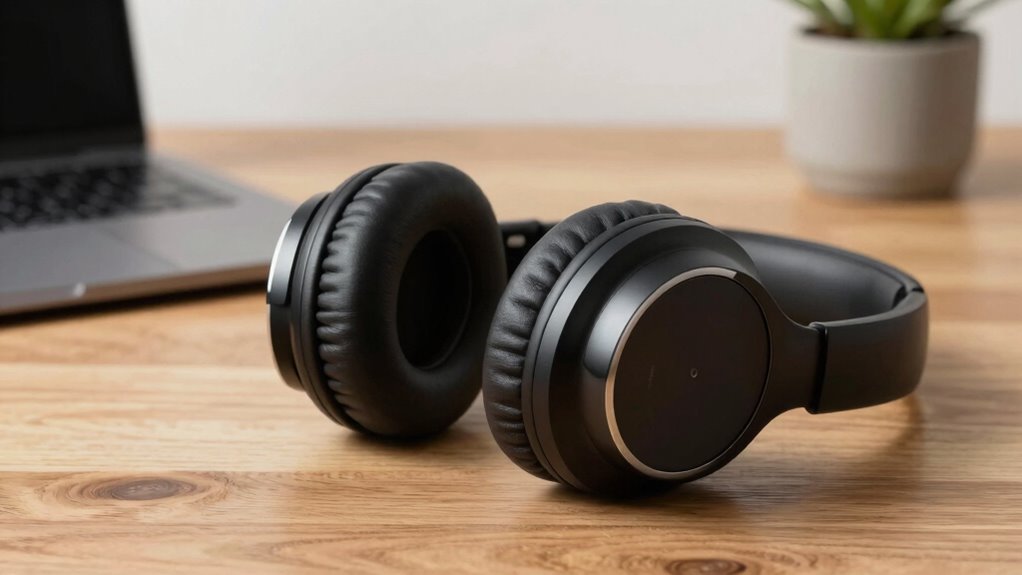
If you’re tired of constant background noise disrupting your focus or relaxation, there’s a simple trick you can try that doesn’t require expensive equipment. It involves understanding sound wave interference and leveraging passive noise isolation to make your noise-cancelling efforts more effective. Instead of just relying on electronic noise-cancelling headphones, you can enhance their performance by manipulating the environment around you. The key lies in creating conditions where sound wave interference occurs naturally, reducing the intensity of intrusive noises.
Sound wave interference happens when two sound waves meet and interact. If you position yourself or your surroundings in a way that encourages destructive interference, the waves cancel each other out, diminishing the noise you hear. For instance, placing a thick, soft barrier or fabric behind or around your noise source can help absorb and scatter sound waves, preventing them from bouncing directly into your ears. This passive noise isolation blocks or disrupts the path of sound waves before they reach you, making your electronic noise-cancelling devices work more efficiently. Essentially, by adding layers of sound-absorbing materials, you’re creating a more effective barrier that reduces the overall sound pressure levels.
You don’t need elaborate setups or costly equipment—just some simple household items. Thick curtains, foam panels, or even a blanket draped behind your workspace can markedly improve passive noise isolation. These materials absorb sound waves, preventing them from reflecting and amplifying in your environment. When combined with your headphones’ active noise-cancelling tech, this approach doubles down on noise reduction. It’s like giving your headphones a head start: less ambient sound to process means they can focus better on canceling out the remaining noise.
The magic is in understanding that passive noise isolation complements electronic noise cancellation. Electronic systems excel at canceling consistent, predictable sounds, but they struggle with sudden or complex noises. By reducing the overall sound energy entering your space through passive means, you make your noise-cancelling devices more effective. This synergy creates a quieter environment with less effort. So, instead of fighting noise with technology alone, you use your surroundings to help out.
In practice, you’re harnessing the natural principles of sound wave interference and passive noise isolation to boost your noise-cancelling capabilities. It’s a simple, cost-effective trick that can make a noticeable difference in how well you block out unwanted sounds. Whether you’re working, studying, or trying to relax, this approach helps create a calmer, more focused environment with minimal effort. Ultimately, this combination offers a smarter way to silence distractions without spending a fortune on high-end noise-cancelling gear. Understanding sound wave interference enhances the effectiveness of your passive noise control strategies.
soundproof blankets for noise reduction
As an affiliate, we earn on qualifying purchases.
As an affiliate, we earn on qualifying purchases.
Frequently Asked Questions
Does This Trick Work With All Noise-Cancelling Headphones?
Yes, this trick can improve noise-cancelling headphones’ performance across most models. It helps block out more background noise, enhancing your audio quality and allowing you to enjoy clearer sound. Keep in mind, though, some headphones may benefit more than others, especially regarding comfort levels during extended use. Always test the trick on your specific headphones to see if it boosts noise cancellation without sacrificing comfort or audio clarity.
Can This Method Improve Passive Noise Isolation Too?
Yes, this method can improve passive noise isolation and reduce sound leakage. By sealing gaps around your headphones with materials like foam or ear tips, you create a better barrier against external noise. This not only enhances your passive isolation but also minimizes sound leakage, so your surroundings won’t hear your music. Just guarantee a snug fit, and you’ll notice a significant difference in both noise reduction and privacy.
Is There Any Risk of Damaging the Headphones Using This Trick?
You won’t risk damaging your headphones if you follow the trick carefully, but it’s essential to prioritize headphone safety. Avoid excessive pressure or modifications that could harm internal components. Check device compatibility before trying it, as some headphones aren’t designed for this trick. When done properly, it enhances noise cancellation without risking damage. Always listen for any unusual sounds or changes, and stop immediately if you notice issues.
How Long Does the Effect of This Trick Last?
The effect of this trick typically lasts for several hours, but the exact duration varies depending on your headphones’ quality and how often you use the trick. Usually, you’ll notice the enhanced noise-cancelling effect for about 4 to 8 hours. To maintain its longevity, avoid overusing the trick or exposing your headphones to extreme conditions. Regularly check your headphones’ performance to guarantee they continue working at their best.
Does Environmental Noise Type Affect the Trick’s Effectiveness?
Environmental noise type does affect the trick’s effectiveness, especially with ambient interference and noise variability. When you’re in a setting with constant, predictable sounds, the trick works better because the noise-cancelling feature can adapt more easily. However, in environments with unpredictable or fluctuating noise, its efficiency drops a bit. So, you’ll notice the trick works best in steady, consistent noise conditions, but less so with highly variable ambient interference.
foam panels for soundproofing
As an affiliate, we earn on qualifying purchases.
As an affiliate, we earn on qualifying purchases.
Conclusion
So, here’s the irony: all this time, you’ve been relying on fancy tech to block out noise, but the real trick is surprisingly simple. Just tweak your headphones’ fit, and suddenly, noise-cancelling doubles in effectiveness. Who knew? Sometimes, the best solutions are the easiest ones. Next time your headphones fall flat, remember—it’s not about more tech, but a little adjustment that makes all the difference. Sometimes, simplicity really is the secret weapon.
noise-cancelling headphones with passive soundproofing
As an affiliate, we earn on qualifying purchases.
As an affiliate, we earn on qualifying purchases.
thick curtains for soundproofing
As an affiliate, we earn on qualifying purchases.
As an affiliate, we earn on qualifying purchases.