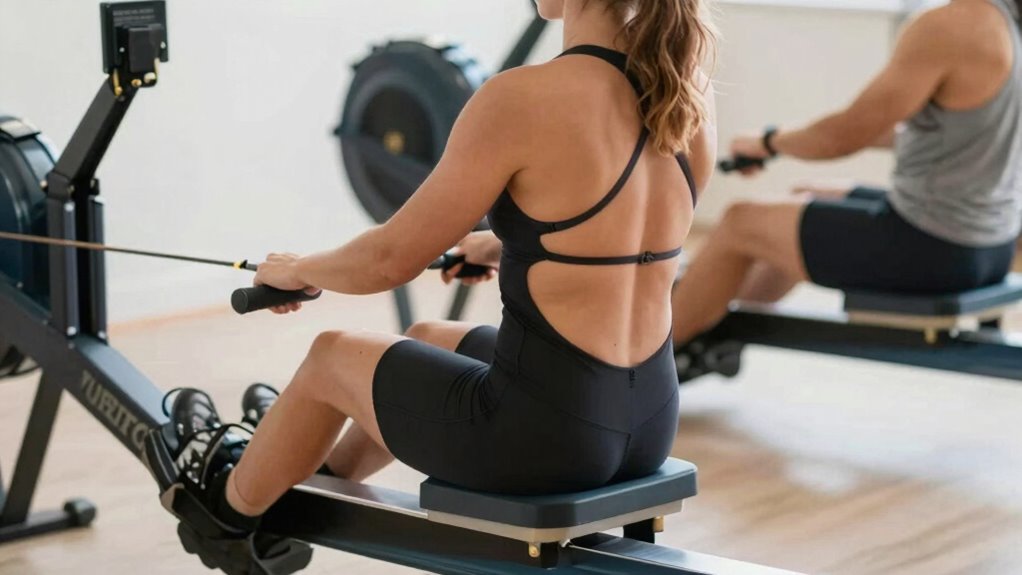
To prevent lower-back strain on rowing machines, focus on maintaining a straight back and engaging your core throughout each stroke. Start by adjusting the foot straps so your knees are slightly bent, and keep hips, knees, and ankles aligned. Drive with your legs first, then lean back slightly at the hips, pulling the handle toward your chest with a straight back. Proper posture and technique are key—stick with it, and you’ll discover more tips to protect your back.
Key Takeaways
- Engage your core throughout the rowing motion to support your lower back.
- Initiate each stroke by driving with your legs before leaning back.
- Keep your back straight and avoid rounding shoulders during pulls.
- Adjust resistance to a moderate level to maintain control and proper posture.
- Maintain smooth, controlled movements with proper breathing to prevent jerky motions.
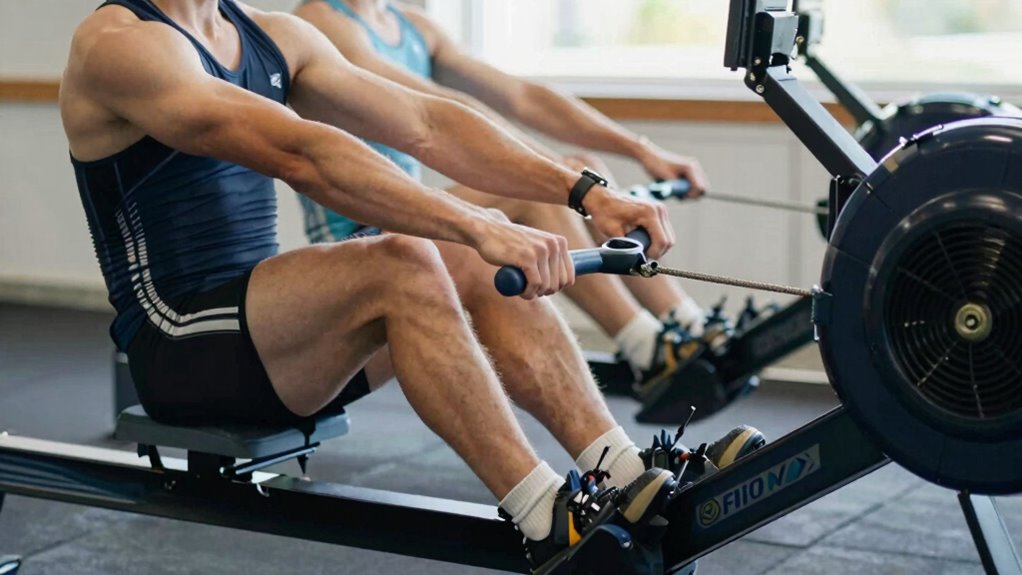
Are you looking for an efficient way to get a full-body workout at home or in the gym? Rowing machines are a fantastic choice, offering a low-impact yet highly effective exercise. However, to truly maximize benefits and prevent lower-back strain, paying attention to your form is essential. One fundamental aspect is making ergonomic adjustments on your rowing machine. Most models come with adjustable foot straps, seat height, and handle positions. You should set these so that your knees are slightly bent at the start of each stroke, keeping your hips, knees, and ankles aligned. Proper ergonomic adjustments ensure your body maintains correct posture throughout the workout, reducing unnecessary stress on your lower back.
Adjust your rowing machine for proper alignment to prevent lower-back strain and ensure effective workouts.
Additionally, your resistance settings play an indispensable role in maintaining safe and effective rowing form. Many machines have adjustable resistance levels, allowing you to tailor the intensity to your fitness level. It’s tempting to crank up the resistance for a more challenging workout, but doing so without proper form can lead to lower-back strain. Instead, start with a moderate resistance that allows you to perform smooth, controlled strokes. As you become more comfortable, gradually increase the resistance, always focusing on maintaining good posture and avoiding overreaching or hunching your back.
A key rowing form cue that can help you avoid lower-back issues is engaging your core throughout the movement. Think of your torso as a sturdy, braced unit rather than a floppy hinge. Initiate each stroke by driving with your legs, then lean back slightly at the hips once your legs are extended, and finally pull the handle toward your chest. Throughout this sequence, keep your back straight and avoid rounding your shoulders or hunching your upper back. By doing so, you distribute the workload evenly across your entire posterior chain and minimize strain on your lower back muscles.
Another tip is to pay close attention to your breathing. Coordinating your breath with your strokes can help you stay relaxed and maintain proper posture. Exhale as you pull the handle toward your chest and inhale as you return to the starting position. Keeping your movements fluid and controlled, rather than rushed or jerky, also lessens the risk of injury.
adjustable rowing machine foot straps
As an affiliate, we earn on qualifying purchases.
As an affiliate, we earn on qualifying purchases.
Frequently Asked Questions
Can Rowing Machines Help Improve Posture Over Time?
Yes, rowing machines can help improve your posture over time. By following proper ergonomics tips and maintaining correct form, you engage your back, core, and shoulders, promoting posture correction. Consistent use strengthens muscles that support good posture, reducing slouching and back pain. Focus on keeping your spine neutral and shoulders relaxed during each stroke. With patience and proper technique, you’ll notice better posture both on and off the machine.
What Are the Best Techniques to Prevent Neck Strain?
Want to avoid neck strain? Easy! Start by doing neck stretches regularly—think of it as a spa day for your muscles. Make ergonomic adjustments to your workspace and rowing form, ensuring your head stays aligned with your spine. Keep your shoulders relaxed and avoid craning your neck forward. With these simple techniques, you’ll stay comfy and avoid that annoying neck ache—no fancy gadgets needed!
How Often Should I Replace My Rowing Machine’s Parts?
You should replace your rowing machine’s parts based on a regular maintenance schedule, typically every 1 to 3 years, depending on usage. Keep an eye on the wear and tear, especially the seat rollers, chain, and handle. Follow the manufacturer’s maintenance tips, such as lubricating moving parts and inspecting for damage. Prompt part replacement ensures smooth operation, safety, and longevity of your machine.
Are There Specific Models Better for Lower-Back Pain?
You might find that models with ergonomic design and adjustable resistance are better for lower-back pain. It’s a coincidence that these features help you customize your workout and maintain proper form, reducing strain. Look for machines that prioritize comfort and support, like padded seats and supportive handles. By choosing a rowing machine with these features, you can enjoy a safer, more comfortable workout and minimize lower-back discomfort.
Can Rowing Machines Be Used Safely by Pregnant Women?
Pregnancy safety is a top priority, so you should consult your doctor before using rowing machines. If cleared, make exercise modifications like reducing intensity and avoiding full range of motion. Always maintain good posture, keep your core engaged, and listen to your body. Using a rowing machine can be safe during pregnancy when you adapt your workout appropriately. However, prioritize your health and follow professional guidance throughout your pregnancy.
ergonomic rowing machine with resistance control
As an affiliate, we earn on qualifying purchases.
As an affiliate, we earn on qualifying purchases.
Conclusion
Next time you step onto a rowing machine, remember that perfect form isn’t just about performance—it’s about protecting your back. When you focus on engaging your core and maintaining a straight spine, you’ll notice how effortlessly the strain melts away. It’s funny how a simple cue can make such a big difference, almost like the machine and your body are in sync. Keep that focus, and you’ll enjoy your workouts without the worry of back pain.
core support rowing machine accessories
As an affiliate, we earn on qualifying purchases.
As an affiliate, we earn on qualifying purchases.
rowing machine with proper posture features
As an affiliate, we earn on qualifying purchases.
As an affiliate, we earn on qualifying purchases.