
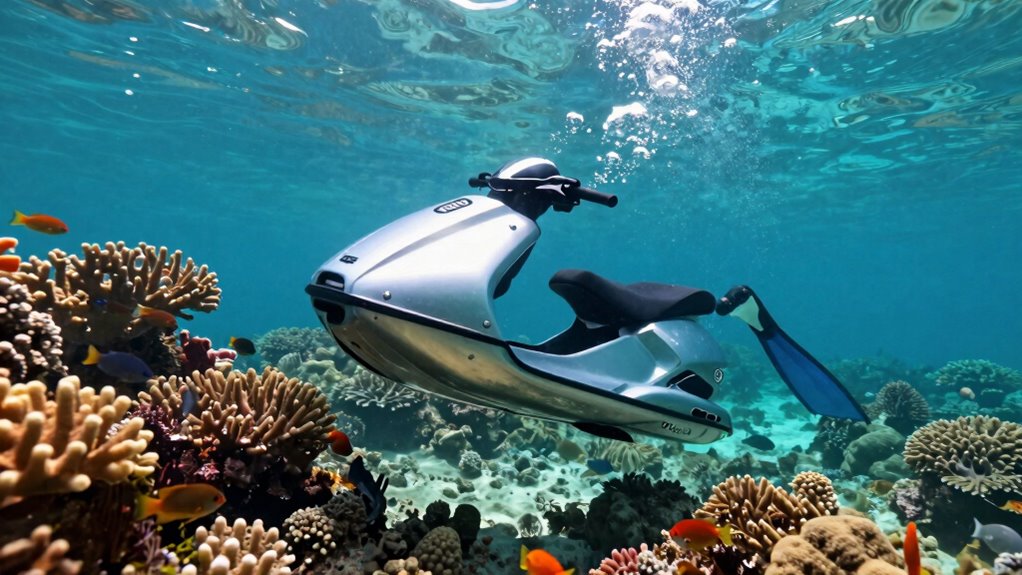

The biggest way people get into trouble with sea scooters is when they push beyond their skill level or use the device improperly. Speeds can be exciting, but they also increase the risk of losing control or colliding with objects. Failing to inspect equipment or ignoring safety guidelines can lead to accidents. Staying cautious, practicing control, and understanding your limits are key. Keep going to discover essential tips to help you stay safe and enjoy your underwater adventures.
Key Takeaways
- Overestimating speed capabilities can lead to loss of control and accidents underwater.
- Insufficient familiarity with controls increases the risk of mishandling the scooter.
- Pushing beyond skill levels without practice causes collisions with obstacles or marine life.
- Operating alone or without proper safety gear heightens danger during technical issues.
- Ignoring environmental awareness and local regulations can result in dangerous situations and ecological harm.
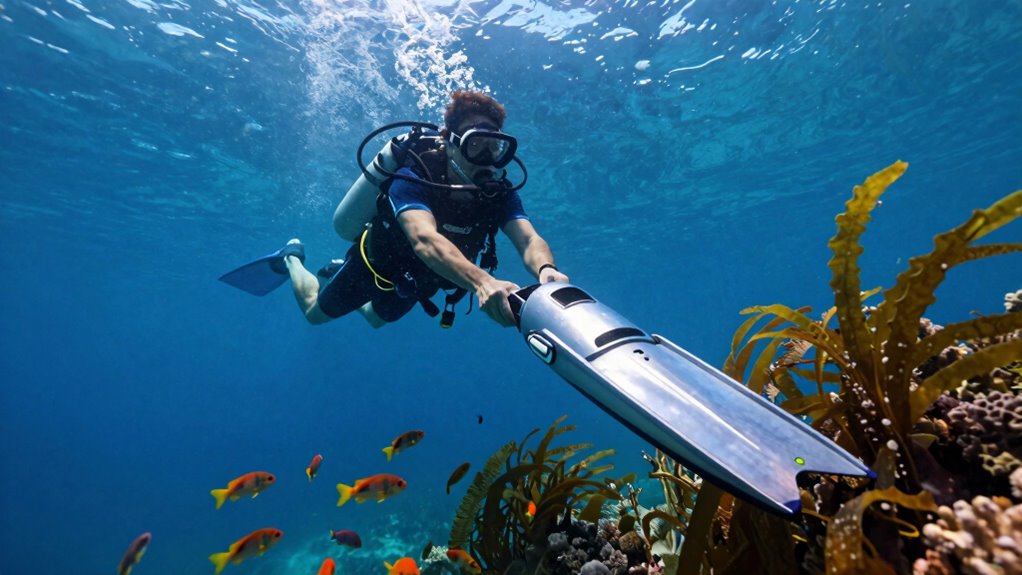
Sea scooters are exciting underwater devices that let you explore the ocean with ease and efficiency. These compact, powerful machines use underwater propulsion systems to move you smoothly through the water, allowing you to cover more ground with less effort. With a sea scooter, you can glide past vibrant coral reefs, swim alongside colorful marine life, and enjoy the ocean’s beauty without tiring quickly. However, while these devices are incredibly fun and useful, they also come with certain risks if not used properly.
The key to safe and enjoyable sea scooter experiences is understanding and respecting their underwater propulsion capabilities. These devices can generate impressive speeds, which might seem thrilling but can also lead to loss of control if you’re not cautious. To avoid accidents, you need to familiarize yourself with the sea scooter’s controls before diving in. Start slow, practice maneuvering in a safe, open area, and gradually increase your speed as you become more comfortable. Many accidents happen when users push their scooters beyond their skill level, so patience is essential.
Another essential aspect is paying attention to safety precautions. Always wear appropriate safety gear, including a mask, fins, and a wetsuit, and consider using a snorkel or scuba tank if you’re diving deeper. Before entering the water, inspect your sea scooter thoroughly to ensure it’s in good working condition—check the battery life, seals, and propulsion system. Never operate your sea scooter alone in unfamiliar or challenging conditions. Having a buddy nearby can help you respond quickly if something goes wrong, such as entanglement or mechanical failure.
You should also be aware of your surroundings at all times. Underwater environments can be unpredictable, with currents, sharp rocks, or coral that can damage your equipment or cause injury. Keep a safe distance from marine life and avoid disturbing ecosystems. It’s important to understand how Free Floating can impact your safety, so always stay within designated areas and follow local guidelines. It’s easy to get distracted by the thrill of underwater propulsion, but staying alert ensures you don’t accidentally collide with objects or other divers. Remember that operating a sea scooter is about enhancing your experience, not rushing through it. Slow down if you encounter obstacles or feel unsure about your control.
Lastly, respect local regulations and guidelines for underwater activities. Many popular diving spots have rules regarding the use of motorized devices to protect marine environments and ensure everyone’s safety. Following these rules helps prevent accidents and preserves the beauty of the ocean for future explorers. By understanding how to harness underwater propulsion safely and adhering to necessary precautions, you’ll enjoy your sea scooter adventures without trouble, making your underwater explorations both fun and safe.
sea scooter safety gear
As an affiliate, we earn on qualifying purchases.
As an affiliate, we earn on qualifying purchases.
Frequently Asked Questions
Are Sea Scooters Suitable for Children?
Sea scooters can be suitable for children, but you need to prioritize child safety and follow age restrictions. Always supervise young users closely, ensure they understand how to operate the scooter, and choose models designed for their age and skill level. Check the manufacturer’s guidelines, and never let children use sea scooters alone. Proper safety gear and training are essential to prevent accidents and guarantee a fun, safe experience in the water.
How Long Can a Sea Scooter Operate on a Single Charge?
A sea scooter’s battery life is like a marathon runner’s stamina, lasting around 45 minutes to an hour on a single charge. You can usually recharge it in 2 to 4 hours, depending on the model. So, you’ll want to plan your dive accordingly, making sure to start with a full charge. Keep an eye on the battery indicator, and don’t forget to recharge before your next adventure.
What Safety Gear Is Recommended When Using a Sea Scooter?
When using a sea scooter, you should wear protective wetsuits to guard against cold water and abrasions. It’s also vital to use underwater communication devices or hand signals to stay in contact with your buddy. Always carry safety equipment like a dive knife, a whistle, and a buoyancy control device. These precautions guarantee your safety while exploring underwater with a sea scooter, allowing you to enjoy your dive confidently.
Can Sea Scooters Be Used in Freshwater Lakes?
Sure, you can use a sea scooter in freshwater lakes, even though it’s often considered a marine gadget. Just keep in mind freshwater limitations and lake environments might differ from saltwater adventures. You’ll want to check for any restrictions or safety concerns before diving in. While it’s tempting to zoom around, remember that lake ecosystems can be fragile, so respect the environment and stay within designated areas for a safe, fun experience.
What Is the Maximum Depth a Sea Scooter Can Reach?
You’ll find that most sea scooters have a depth limitation of around 100 to 130 feet, depending on the model. This is due to pressure resistance, which affects how deep they can safely operate without damage. Always check your specific scooter’s maximum depth rating before diving, and avoid exceeding it to prevent pressure-related issues. Staying within these limits ensures safe, enjoyable underwater adventures without risking equipment failure.
underwater propulsion device
As an affiliate, we earn on qualifying purchases.
As an affiliate, we earn on qualifying purchases.
Conclusion
So, savvy snorkelers, stay safe and stay smart with sea scooters. Recognize risks, respect limits, and remember that reckless riding can result in serious struggles beneath the surface. By being cautious and conscious, you can confidently conquer currents and craft a mesmerizing underwater experience. Keep control, avoid accidents, and enjoy every exhilarating encounter with ease and excitement. With awareness and awareness alone, you’ll master the magic of sea scooters without making a mess of your adventure.
snorkeling fins and mask set
As an affiliate, we earn on qualifying purchases.
As an affiliate, we earn on qualifying purchases.
sea scooter inspection tools
As an affiliate, we earn on qualifying purchases.
As an affiliate, we earn on qualifying purchases.