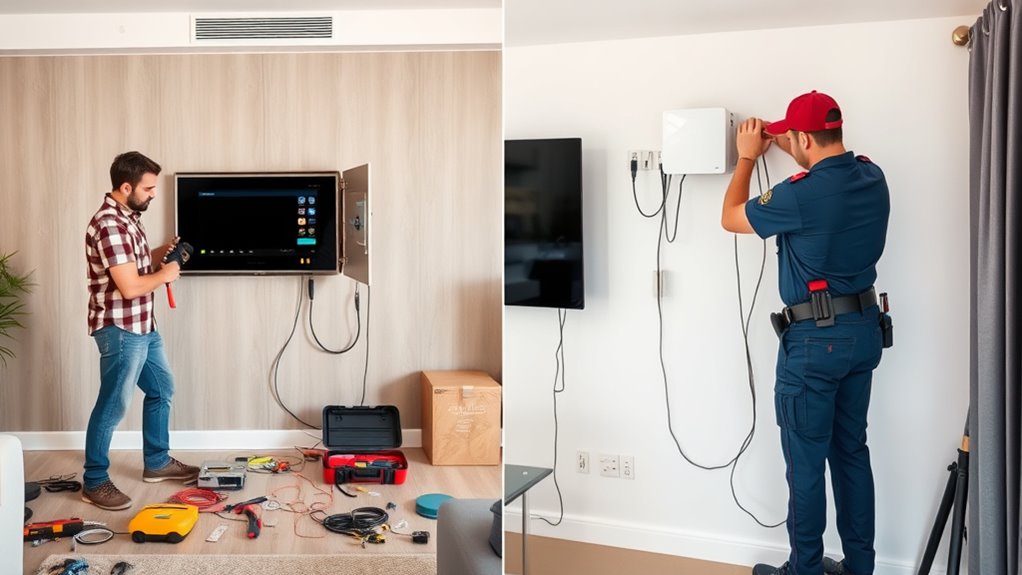

Choosing between DIY and professional smart home installation depends on your budget, technical skills, and security concerns. DIY setups save money upfront and give you control over customization, but they can introduce security vulnerabilities if not done correctly. Hiring professionals costs more initially but ensures systems are secure, reliable, and properly integrated. By considering your priorities, you can decide which approach suits you best—more details ahead will help clarify your choice.
Key Takeaways
- DIY installation saves money upfront but may increase long-term costs due to troubleshooting and repairs.
- Professionals ensure systems are securely installed, reducing vulnerabilities and enhancing reliability.
- DIY offers greater control and customization, but requires technical skills and time investment.
- Professional installers have expertise and better tools, resulting in a more stable and secure smart home system.
- Budget, technical comfort, and security priorities are crucial factors in choosing between DIY and professional setup.
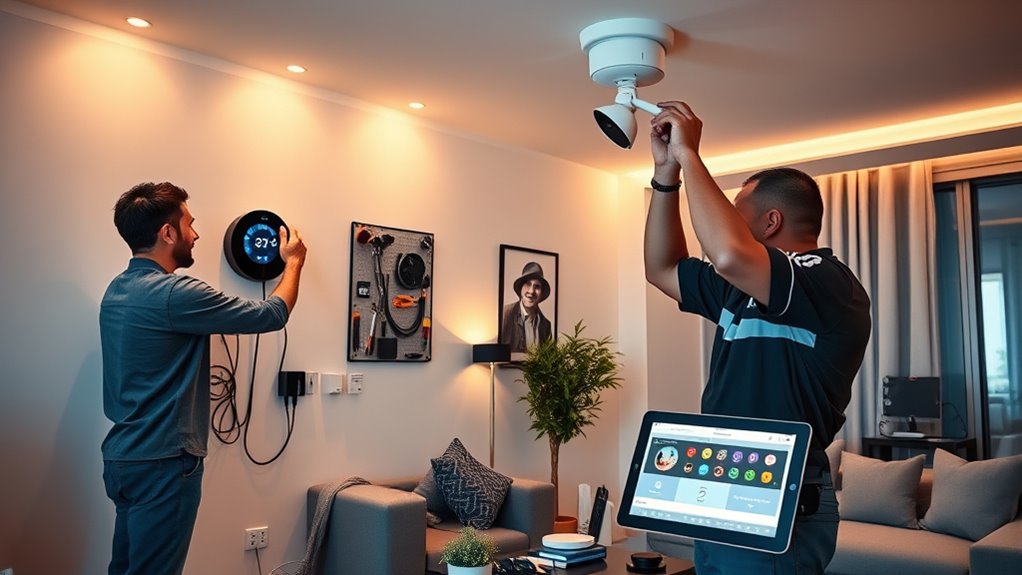
Installing a smart home system can seem overwhelming, but deciding whether to do it yourself or hire professionals is a crucial first step. If you choose the DIY route, you’ll likely save money upfront, making it appealing for those looking to boost cost efficiency. However, it’s important to contemplate potential security risks that come with a less experienced setup. Without proper installation, vulnerabilities could be left open, allowing unauthorized access or data breaches. Conversely, professional installers have the expertise to ensure your system is secure and properly integrated, reducing the chance of security flaws that might otherwise compromise your privacy or safety.
DIY smart home setup saves money but risks security vulnerabilities without professional expertise.
When you opt for a DIY approach, you gain control over the installation process, and you can customize the setup to your preferences. You’ll purchase devices and equipment directly, avoiding labor costs associated with hiring professionals. This can be particularly appealing if you’re comfortable with technology and enjoy hands-on projects. Nonetheless, you should be prepared for the time investment and potential troubleshooting. Incorrect wiring, incompatible devices, or poor configuration can lead to system failures or reduced performance, which may cost you more in the long run due to repairs or upgrades.
On the other hand, choosing professional installation often involves higher initial costs, but it offers peace of mind knowing that experienced technicians are handling the setup. They’re skilled at minimizing security risks by ensuring all devices are correctly configured and secured against vulnerabilities. Professionals also tend to have access to better tools and resources, enabling a more seamless and reliable integration of your smart home components. This can result in a more stable, efficient system that works well from the start, saving you frustration and time.
While DIY installation may be tempting for its lower cost and personal control, it’s not suitable for everyone, especially if security and reliability are priorities. If you’re not confident in your technical skills or if your home’s security is a top concern, hiring professionals can be a smarter investment. They can help you avoid pitfalls that might compromise your system’s security or functionality. Additionally, understanding the importance of contrast ratio and its impact on overall image quality in your home setup can help you make better choices when selecting projectors for your entertainment space. Ultimately, your choice depends on your budget, technical comfort level, and how much you value peace of mind versus initial savings. Weighing these factors will guide you toward the best approach for your smart home setup.
smart home security system kit
As an affiliate, we earn on qualifying purchases.
As an affiliate, we earn on qualifying purchases.
Frequently Asked Questions
How Much Time Does a Professional Smart Home Installation Typically Take?
A professional smart home installation usually takes anywhere from a few hours to a full day, depending on the system’s complexity. The installation timeline can be impacted by the technician’s availability and your home’s specific setup. If you have a straightforward system, it might only take a few hours. For more advanced setups, plan for a longer session, and coordinate with the technician’s schedule to guarantee smooth installation.
What Are the Hidden Costs Involved in DIY Smart Home Projects?
While you might think DIY projects save money, unexpected expenses can catch you off guard. Skill gaps may lead to costly mistakes or the need for extra tools and parts. You could also face hidden costs like troubleshooting, ongoing maintenance, or replacing incompatible devices. These hidden costs add up quickly, making DIY smart home projects more expensive than they initially seem, especially if you’re unfamiliar with the technology.
Can I Upgrade or Expand My Smart Home System Later Easily?
You can typically upgrade or expand your smart home system later, but it depends on future scalability and system compatibility. If you choose devices that support standard protocols and are compatible with your existing setup, you’ll find it easier to add new features or devices later. Be mindful of integrated hubs or ecosystems, as some can limit expansion, so planning ahead guarantees smoother upgrades down the line.
What Are the Common Mistakes to Avoid During DIY Installation?
When tackling DIY installation, avoid common pitfalls like rushing the setup, neglecting compatibility, and overlooking detailed instructions. These missteps can lead to faulty connections, security vulnerabilities, and system failures. Double-check your device requirements, follow manufacturer guidelines precisely, and test each component thoroughly. By staying patient, organized, and attentive to details, you reduce installation pitfalls and guarantee your smart home functions smoothly and reliably, avoiding costly mistakes.
How Do Warranties and Support Differ Between DIY and Professional Setups?
Warranty differences mean that DIY setups often lack extensive coverage, so if something breaks, you’re on your own for repairs or replacements. Support options for DIY users are usually limited to online resources or community forums, which can be frustrating. In contrast, professional installations typically include warranties covering parts and labor, plus dedicated support services, ensuring you get timely help if issues arise. This added support can save you time and stress.
DIY smart home starter kit
As an affiliate, we earn on qualifying purchases.
As an affiliate, we earn on qualifying purchases.
Conclusion
Ultimately, whether you choose DIY or hire a pro depends on your comfort level and needs. If you’re handy and enthusiastic to learn, a DIY approach can be rewarding—just like the pioneers of the Wild West, blazing your own trail. But if you prefer peace of mind and a seamless setup, a professional guarantees everything’s done right. Whichever route you take, remember that smart home tech is here to make your life easier, not harder.
professional smart home installation service
As an affiliate, we earn on qualifying purchases.
As an affiliate, we earn on qualifying purchases.
smart home device security accessories
As an affiliate, we earn on qualifying purchases.
As an affiliate, we earn on qualifying purchases.