


A smart kitchen connects appliances like refrigerators, ovens, and dishwashers to make cooking easier, more efficient, and energy-saving. With voice controls, you can preheat your oven or check supplies without moving around. Sensors detect issues early, while remote apps let you monitor and control devices anytime. This connected setup enhances convenience, safety, and sustainability. Keep exploring to discover how these innovations can truly transform your cooking space and everyday routines.

Get travel and outdoor gear delivered free — and shop member deals
- Fast, free delivery on millions of items
- Access to Prime Big Deal Days deals on October 6–7
- Prime Video, Amazon Music and more included
Key Takeaways
- Smart kitchens integrate connected appliances and devices to enhance efficiency, organization, and energy savings.
- Voice control enables hands-free operation of appliances, improving convenience during cooking and prep.
- Smart appliances monitor usage and automatically optimize energy consumption, reducing costs and environmental impact.
- Remote control via apps allows preheating, inventory checks, and troubleshooting from anywhere.
- Sensors and automation improve safety by detecting leaks, spills, and activity, ensuring a secure cooking environment.
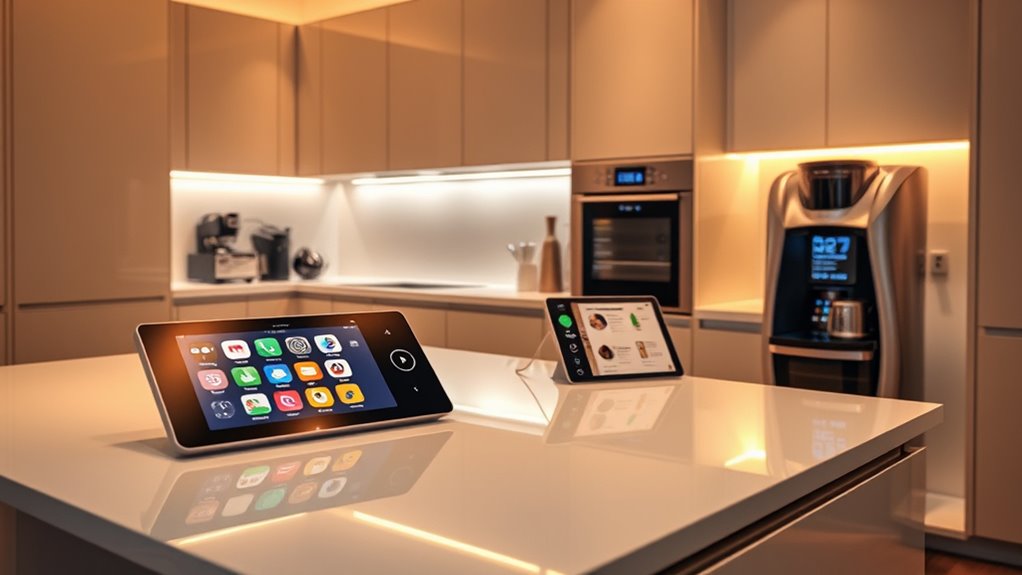
A smart kitchen transforms your cooking space into an efficient, connected environment. With the right appliances and tools, you can streamline your cooking process while making your home more energy-efficient. Voice control is a game-changer here, allowing you to manage devices hands-free. Whether you’re asking your smart speaker to preheat the oven, check the fridge’s contents, or adjust the lighting, voice commands make cooking smoother and more intuitive. This technology not only adds convenience but also helps you stay organized, reducing the need to interrupt your workflow to find a button or switch. Plus, voice control systems can integrate with other smart devices, creating a seamless ecosystem that responds to your needs instantly.
Energy efficiency is another key benefit of a smart kitchen. Many smart appliances are designed to consume less power without sacrificing performance. For example, smart dishwashers and refrigerators monitor their operation, adjusting cycles and temperatures to optimize energy use. When you’re not using an appliance, it can automatically power down or enter a low-energy standby mode, saving you money on utility bills. Smart lighting systems can also be programmed to turn off when you leave the room or adjust brightness based on the time of day, further reducing energy consumption. These features not only benefit your wallet but also contribute to a greener, more sustainable household.
The integration of smart appliances makes your kitchen more responsive and adaptable. Imagine setting your oven to start preheating just as you step into the house, or having your refrigerator notify you when you’re running low on essentials. Many devices come with companion apps that give you remote control and real-time updates, so you’re always in the know about your kitchen’s status. This connectivity means you can plan meals more efficiently, reduce waste, and avoid last-minute trips to the store. Additionally, smart sensors can detect spills, leaks, or unusual activity, alerting you immediately to prevent bigger problems. Incorporating home automation into your kitchen setup can further enhance convenience and efficiency.
As an affiliate, we earn on qualifying purchases.
Frequently Asked Questions
How Secure Are Smart Kitchen Devices From Hacking?
Smart kitchen devices can be vulnerable to hacking, but their security depends on the cybersecurity protocols you follow. You should regularly update firmware, use strong passwords, and enable two-factor authentication to protect your privacy concerns. While manufacturers improve security measures, always stay vigilant. By taking these steps, you reduce risks and keep your smart appliances safer from potential cyber threats.
Can Smart Appliances Be Easily Integrated With Existing Kitchen Setups?
You’ll find smart appliances can be integrated into your existing kitchen setups fairly easily, but installation challenges and compatibility concerns might arise. Check if your current appliances support smart technology and verify your Wi-Fi network is robust enough. Some devices require specific hubs or apps, so it’s smart to research compatibility beforehand. With proper planning, upgrading your kitchen with smart appliances becomes a seamless process, enhancing your cooking experience effortlessly.
What Is the Average Lifespan of Smart Kitchen Gadgets?
While your smart kitchen gadgets bring convenience, they often whisper their age through evolving features. On average, these devices last about 5 to 10 years, depending on device maintenance and timely software updates. Regular updates keep them running smoothly, extending their life. However, as technology advances, you might find yourself needing to upgrade sooner to enjoy the latest innovations and maintain peak performance.
Are Smart Appliances Energy-Efficient Compared to Traditional Ones?
You’ll find that smart appliances often offer better energy savings than traditional ones, thanks to their ability to optimize usage and monitor energy consumption. This efficiency not only helps lower your utility bills but also reduces your environmental impact. By using intelligent features like remote control and adaptive settings, you can cut down on waste and make more eco-friendly choices, making your kitchen both smarter and more sustainable.
How User-Friendly Are Smart Kitchen Devices for Seniors or Disabled Individuals?
Imagine a kitchen where every device responds effortlessly to your voice, making cooking smoother. Smart kitchen devices are increasingly user-friendly for seniors and disabled individuals, thanks to voice control and ergonomic design. These features reduce physical strain and simplify operation, allowing you to navigate functions easily. As a result, you gain independence and confidence in the kitchen, making everyday tasks more accessible and enjoyable for everyone.
Conclusion
Think of your smart kitchen as a symphony, where each device plays its part in harmony. With these appliances, cooking becomes a dance that’s both effortless and inspiring. As you embrace this high-tech symphony, you’ll find your culinary skills amplified, turning everyday meals into masterpieces. So, step into this future where innovation and flavor unite, and let your smart kitchen be the conductor guiding you to delicious new horizons.
Halloween Picks
halloween
As an affiliate, we earn on qualifying purchases.