
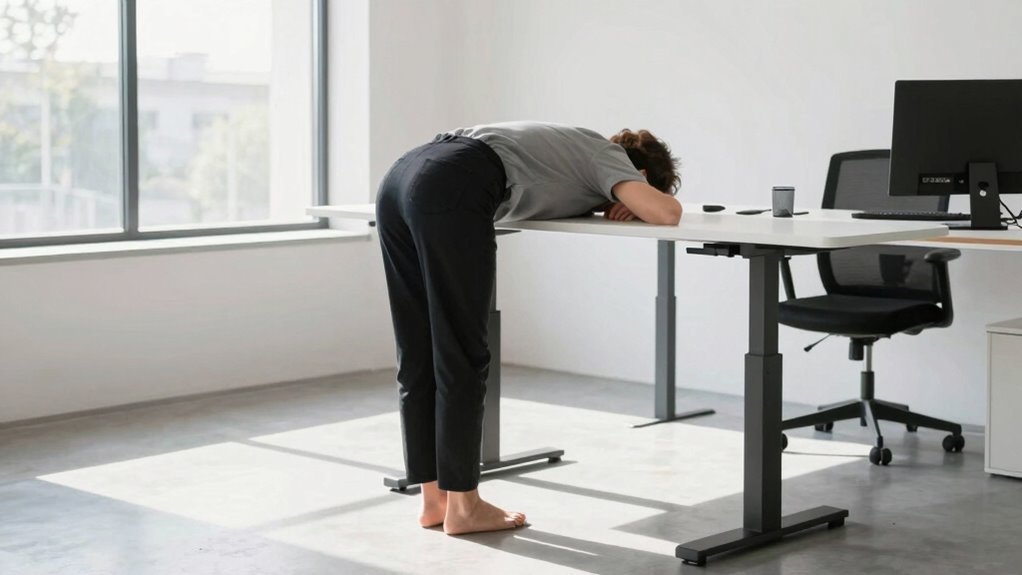

One common mistake is using a standing desk without properly adjusting it to your body. If your desk is too high or too low, it can cause shoulder, arm, or back strain and lead to poor posture. Failing to set the correct height means your elbows won’t bend at roughly 90 degrees, increasing muscle tension. To avoid this, make sure your workspace supports healthy positioning. Keep exploring to discover simple tips that can transform your workstation into an ergonomic haven.
Key Takeaways
- Setting the desk height too high or low can force unnatural arm and shoulder positions, worsening posture.
- Not adjusting the monitor height properly can cause neck strain and misalignment.
- Standing for long periods without ergonomic support increases fatigue and poor posture.
- Ignoring ergonomic accessories like wrist rests or anti-fatigue mats may lead to discomfort.
- Failing to regularly reassess and adjust your workspace can reinforce improper posture habits.

Many people also forget to adjust their desk height correctly. If your desk is too high or too low, you’ll strain your shoulders, arms, or back. The key is to set your desk so that your elbows are bent at roughly 90 degrees when your hands are on the keyboard. This promotes natural arm positioning and reduces unnecessary tension. Pair this with ergonomic accessories like wrist rests to support your wrists and maintain a neutral position. Proper desk height combined with these accessories helps you stay in a posture that’s both comfortable and healthy, allowing you to work efficiently without risking injury. Additionally, investing in ergonomic accessories like adjustable monitor stands or anti-fatigue mats can significantly improve your standing desk setup. Remember, correct setup is essential for maximizing the health benefits of standing desks and preventing discomfort over time. Ensuring your workspace is designed with ergonomic principles in mind can further enhance your comfort and productivity throughout the day. Maintaining awareness of proper workspace setup can also help prevent long-term musculoskeletal issues.
As an affiliate, we earn on qualifying purchases.
Frequently Asked Questions
Can Standing Desks Cause Leg or Foot Pain?
Yes, standing desks can cause leg fatigue and foot discomfort if you stand for long periods without proper support. You might notice your legs feel tired or achy, and your feet could become sore or numb. To prevent this, take regular breaks, wear supportive shoes, and use anti-fatigue mats. Adjusting your standing posture and shifting your weight often helps reduce leg and foot pain.
How Long Should I Stand at My Desk Daily?
You should aim to stand at your desk for about 2 to 4 hours daily, gradually increasing as your body adapts. To avoid discomfort, make sure your desk height is set correctly, keeping your elbows at a 90-degree angle, and use ergonomic accessories like a supportive mat or adjustable monitor. Take regular breaks to sit or stretch, which helps prevent strain and promotes better posture.
Are There Specific Exercises to Improve Standing Desk Posture?
To improve your standing desk posture, incorporate posture correction exercises like shoulder rolls, chest openers, and gentle back stretches. Regular stretching routines help reduce tension and prevent slouching. Focus on engaging your core, keeping your shoulders relaxed, and maintaining a neutral spine. Doing these exercises throughout the day can enhance comfort, improve alignment, and support better posture while standing, making your work sessions more comfortable and healthier.
Does Shoe Choice Affect Standing Desk Comfort?
Yes, shoe choice definitely affects standing desk comfort. Opt for shoes with good cushioning and proper foot arch support to reduce fatigue and prevent discomfort. Cushioned shoes absorb impact, easing pressure on your feet and joints, while supportive arch features help maintain proper posture. Avoid flat, unsupportive shoes that can lead to strain. Choosing the right footwear guarantees your standing sessions are more comfortable and better for your posture.
How Do I Transition From Sitting to Standing Safely?
To shift safely from sitting to standing, you should activate ergonomic accessories like footrests and anti-fatigue mats, and wear proper footwear that supports your feet. Start by standing up slowly, engaging your core, and shifting your weight evenly. Move gradually, take breaks frequently, and listen to your body. Using these ergonomic accessories and proper footwear helps prevent strain, making your shift comfortable and reducing the risk of posture problems.
Conclusion
Avoid this common standing desk mistake, or your posture could spiral into chaos faster than you can say “back pain.” Remember, simply standing isn’t enough—pay attention to your ergonomics and listen to your body. When done right, your standing desk can transform your workspace into a haven of good posture. But ignore these tips, and you might as well be fighting a losing battle against a mountain of discomfort. Stay mindful, stay healthy!