
During storm season, the most important detail for your sump pump backup is guaranteeing it has a reliable power source, like a battery backup or secondary pump, to activate if your primary pump fails or there’s a power outage. Regularly testing and maintaining your backup system ensures it works when you need it most. Knowing your system’s capacity and limitations helps prevent flooding and costly damage. Keep exploring to discover essential steps for ultimate storm preparedness.

Get travel and outdoor gear delivered free with Prime
- Fast, free delivery on millions of items
- Prime Video, Amazon Music and more included
- Member-only deals all year
Key Takeaways
- Ensure backup systems automatically activate during power outages or primary pump failure.
- Regularly test and maintain backup batteries and mechanical components for reliability.
- Understand your sump pump’s capacity to handle heavy rain and prevent overflow.
- Install secondary pumps connected to alternative power sources as an extra safeguard.
- Incorporate comprehensive storm preparedness strategies including backup system readiness.
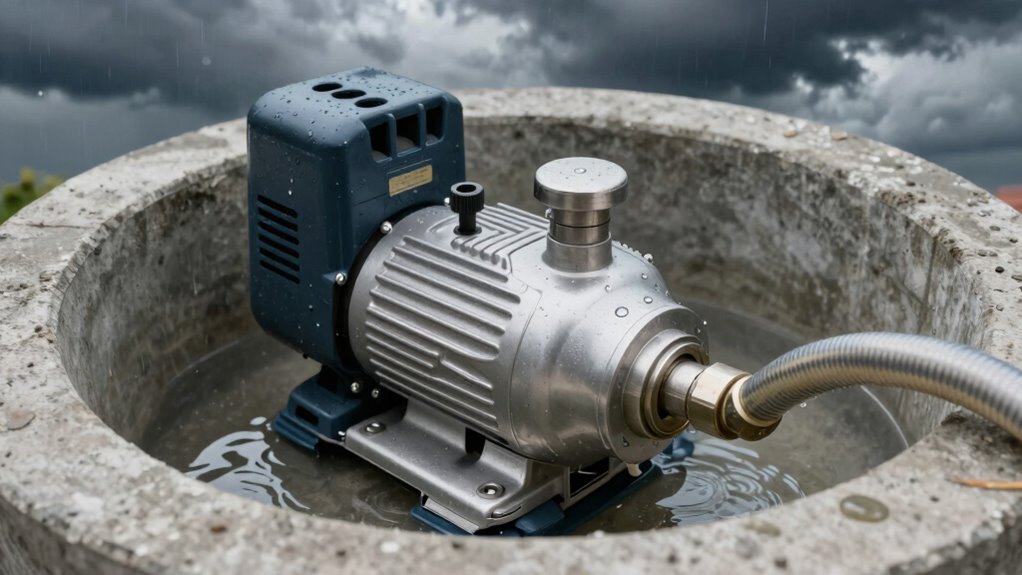
Have you ever wondered what happens to your sump pump during a heavy storm? When rain pours relentlessly and your yard quickly turns into a flood zone, your sump pump’s role becomes essential. But even the most reliable pumps can fail unexpectedly, especially when overwhelmed by intense rainfall. That’s where a backup system becomes indispensable. A backup system offers an extra layer of protection, guaranteeing your basement stays dry even if your primary pump encounters issues. It’s not enough to just rely on your main pump; you need to prepare for the possibility of failure prevention. Installing a backup system means you’re actively reducing the risk of flooding, giving you peace of mind during storm season.
During a storm, your primary sump pump is designed to handle a significant amount of water, but it isn’t invincible. Power outages, mechanical failures, or debris can cause it to stop working just when you need it most. A backup system acts as a safeguard, automatically taking over if your primary pump fails. This could be a battery-powered backup or a secondary sump pump connected to an alternate power source. Both options serve to prevent catastrophe. When heavy rain strikes and your main pump can’t keep up, the backup system kicks in, pumping water out efficiently. Without it, water can accumulate quickly, risking extensive damage to your basement and belongings. Regular maintenance and testing of backup systems is crucial to ensure they function correctly during emergencies. Additionally, understanding the limitations of your sump pump can help you better prepare for storm events. Knowing the capacity of your pump allows you to assess whether your current system is sufficient for heavy rainfall. Recognizing the importance of maintenance can prolong the lifespan of your backup system and ensure reliable operation. Moreover, understanding your system’s capacity and limitations helps you make informed decisions about upgrades or additional safeguards.
Failure prevention isn’t just about installing a backup system; it’s about understanding its importance and maintaining it properly. Regularly testing your backup guarantees it functions correctly when needed. Battery backups, for instance, require periodic checks and replacements to keep them charged. Mechanical backups, like secondary sump pumps, should be inspected for clogs or wear. By proactively maintaining these systems, you eliminate potential weak points that could cause failure during a storm. This diligence helps you avoid costly repairs and the frustration of unexpected flooding.
Ultimately, the key to protecting your home during storm season lies in preparation. A backup system isn’t just an add-on—it’s a critical component of your flood prevention strategy. It acts as a safety net, catching the water that your primary pump might miss or fail to handle. When you prioritize failure prevention through reliable backup solutions, you’re taking control of your home’s resilience. Storms are unpredictable, but your response doesn’t have to be. Installing, maintaining, and trusting your backup system ensures that no matter how heavy the rain gets, your basement remains dry and safe. Proper understanding of your sump pump’s capabilities and limitations can prevent costly damage and give you peace of mind.
As an affiliate, we earn on qualifying purchases.
Frequently Asked Questions
How Often Should I Test My Sump Pump Backup System?
You should test your sump pump backup system at least once a month to make certain it’s working properly. During each test, check the battery maintenance to confirm the backup’s power source is fully charged. Also, evaluate the alarm sensitivity to make sure it activates correctly during a power outage or water level rise. Regular testing helps catch issues early and keeps your system reliable during storm season.
What Signs Indicate My Backup System Is Failing?
If your backup system struggles during heavy rain, it could signal failure. For example, a homeowner noticed their backup pump didn’t activate during a storm; they discovered the battery needed maintenance. Regularly check your backup system’s battery and consider upgrades if it’s outdated. Signs like strange noises or slow responses indicate issues, so staying proactive guarantees your system functions reliably when you need it most.
Can I Install a Backup Sump Pump Myself?
Yes, you can install a backup sump pump yourself if you’re comfortable with basic plumbing and electrical work. First, choose the right backup system type—battery-powered or water-powered—and make sure your battery is well-maintained for reliable operation. Follow manufacturer instructions carefully, and double-check connections and safety features. Proper installation helps prevent flooding during storms, giving you peace of mind knowing your backup system will work when needed most.
What Is the Typical Lifespan of a Sump Pump Backup?
A sump pump backup typically lasts 3 to 5 years, but battery maintenance is key to its longevity. Regularly check the backup’s battery and replace it as needed, especially before storm season. Proper pump installation guarantees it works efficiently when needed most. By staying on top of battery maintenance and guaranteeing correct installation, you can maximize your backup pump’s lifespan and keep your basement dry during heavy rains.
How Does Weather Affect Backup System Performance?
During storm seasons, weather variability can challenge your backup system’s performance. For example, heavy rain combined with freezing temperatures might cause ice buildup, preventing the backup pump from activating properly. This highlights the importance of storm preparedness, ensuring your backup system can handle fluctuating conditions. Regular maintenance and weather-aware setups help your sump pump remain reliable, even during unpredictable weather, protecting your home from flooding when you need it most.
Conclusion
Don’t wait until a storm hits to realize your sump pump backup isn’t enough. Have you considered how a reliable backup system can save your home from flooding and costly damages? Storm season can be unpredictable, but your preparedness shouldn’t be. Investing in a high-quality backup isn’t just smart—it’s essential. After all, isn’t peace of mind worth the small effort now, before the next storm rolls in? Take action today to protect what matters most.
Halloween Picks
halloween
As an affiliate, we earn on qualifying purchases.