Understanding whole-home water filter terminology can be confusing, but it’s essential for choosing the right system. Terms like “carbon filter,” “reverse osmosis,” “gpm,” and “sediment filter” each refer to different components and functions. Knowing what these mean helps you select systems that fit your needs and budget. If you want to get clarity on these terms and improve your water setup, there’s more to discover that can make the process easier and smarter.
Key Takeaways
- Understand common filter types like activated carbon, reverse osmosis, and UV systems to clarify their functions.
- Recognize installation terms such as plumbing upgrades, electrical connections, and system complexity.
- Know maintenance terminology including cartridge replacement, cleaning, and filter lifespan for proper upkeep.
- Differentiate between upfront installation costs and ongoing maintenance expenses for accurate budgeting.
- Familiarize with long-term benefits like improved water quality, system efficiency, and cost savings to better evaluate options.
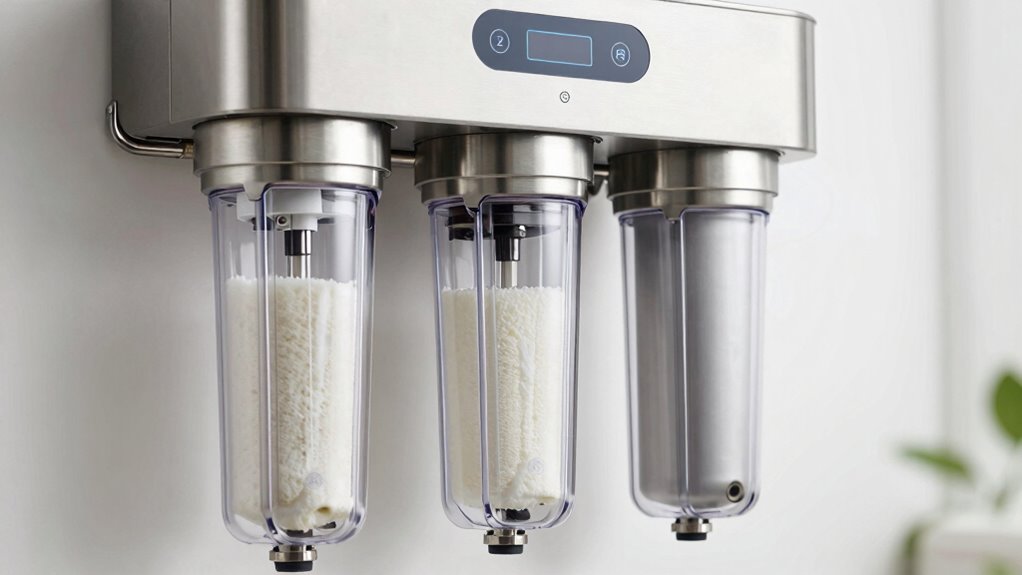
If you’re looking for a thorough way to guarantee clean, safe water throughout your home, whole-home water filters are an effective solution. These systems are designed to treat water at the point where it enters your house, providing filtered water from every tap. However, understanding the terminology surrounding these filters can be confusing. One of the first things you’ll want to contemplate is the installation costs. Installing a whole-home filter isn’t just about buying the unit; it involves plumbing work, possibly upgrades to your existing pipes, and sometimes electrical connections if you opt for more advanced systems. The installation costs can vary widely depending on your home’s size, the complexity of your plumbing, and the type of filter you choose. It’s essential to get a detailed estimate upfront so you know what to expect financially. Keep in mind that professional installation is generally recommended to ensure the system functions correctly and safely.
Once your system is installed, you’ll need to stay on top of maintenance schedules. Regular maintenance is key to keeping your whole-home water filter working efficiently and extending its lifespan. Maintenance tasks typically include replacing filter cartridges, cleaning components, and inspecting the system for leaks or damage. The frequency of these tasks depends on the type of filter you install and your water usage. Some filters require cartridge changes every few months, while others with more advanced filtration stages may last longer. Staying consistent with maintenance helps prevent clogging, maintains water pressure, and ensures the water quality remains high. Many manufacturers provide specific maintenance schedules, but it’s wise to set reminders so you don’t forget. Neglecting maintenance can lead to reduced filtration efficiency, increased wear and tear, and potentially more costly repairs down the line. Additionally, understanding filter lifespan and how it relates to maintenance can help you better plan for replacements and avoid unexpected issues.
Understanding these terms—installation costs and maintenance schedules—gives you better control over your whole-home water filtration system. It allows you to plan financially and operationally, so your investment delivers clean water reliably. Keep in mind that while initial costs might seem high, the long-term benefits of better water quality and reduced reliance on bottled water or separate point-of-use filters can be worth it. Also, proper maintenance ensures your system functions as designed, saving you money and hassle over time. Remember, choosing the right system, getting a clear estimate of installation costs, and following recommended maintenance schedules are your best bets for enjoying safe, filtered water throughout your home without surprises.
whole house water filter system
As an affiliate, we earn on qualifying purchases.
As an affiliate, we earn on qualifying purchases.
Frequently Asked Questions
How Often Should I Replace My Whole-Home Water Filter?
You should replace your whole-home water filter every 6 to 12 months, depending on your filter’s maintenance needs and water quality. Regular filter maintenance ensures peak performance and clean water. Check the manufacturer’s replacement schedule and monitor water flow; if you notice reduced pressure or taste changes, it’s time for a replacement. Staying on top of your filter maintenance keeps your system functioning effectively and your water safe.
What Is the Lifespan of Different Filter Types?
Imagine your filter material slowly filling with impurities, signaling it’s time for a change. The lifespan varies—carbon filters last 6 to 12 months, while reverse osmosis filters can go up to 2-3 years. Look for replacement indicators, like decreased water flow or discoloration, to know when to swap them out. Regularly monitoring these signs guarantees your filter maintains ideal performance and keeps your water clean.
Can a Whole-Home Filter Improve Water Taste and Smell?
Yes, a whole-home filter can considerably improve water taste and smell by removing contaminants and odors. To maintain your water quality high, make certain to perform regular filter maintenance, replacing filters as recommended. This guarantees the system functions efficiently and continues to enhance your water’s flavor and scent. Proper maintenance prevents buildup and sustains ideal filtration, giving you consistently clean, fresh water throughout your entire home.
Is Professional Installation Necessary for a Whole-Home Filter?
You don’t need a professional to install your whole-home filter, but don’t expect a DIY miracle either. Installation requirements vary, and while some models are straightforward, others demand plumbing skills and tools. Opting for professional versus DIY installation depends on your confidence and knowledge. Skipping experts might save money now, but a botched job could flood your plans—and your basement—later. Remember, sometimes it’s worth paying for peace of mind.
How Do I Know if My Water Needs Filtering?
You can tell if your water needs filtering by checking its quality and testing for contamination sources. Look for signs like odd taste, smell, or discoloration. You might also notice skin or hair issues after bathing. Testing your water through a certified lab reveals contaminants such as bacteria, lead, or chemicals. If issues persist, installing a whole-home water filter can effectively improve water quality and protect your household.
activated carbon water filter
As an affiliate, we earn on qualifying purchases.
As an affiliate, we earn on qualifying purchases.
Conclusion
Understanding the terms around whole-home water filters can feel like trying to find a needle in a haystack. But don’t let confusing jargon throw you off course; with a little patience, you’ll see the big picture clearly. Remember, knowledge is power, and when you know what to look for, you’ll have a home water system that truly meets your needs. Once you get the hang of it, you’ll be sitting pretty knowing your water’s safe and clean.
reverse osmosis water filter for home
As an affiliate, we earn on qualifying purchases.
As an affiliate, we earn on qualifying purchases.
UV water purification system
As an affiliate, we earn on qualifying purchases.
As an affiliate, we earn on qualifying purchases.