
Marine radios still matter because they offer reliable communication even when smartphones fail. Unlike your phone, they operate on dedicated channels with less interference and don’t depend on cell coverage. They’re built tough to withstand harsh weather and water, making them indispensable for emergencies. Features like distress signals and emergency buttons are designed for high-stress situations. If you want to understand why these radios continue to be crucial, keep exploring the key reasons that set them apart.

Get travel and outdoor gear delivered free with Prime
- Fast, free delivery on millions of items
- Prime Video, Amazon Music and more included
- Member-only deals all year
Key Takeaways
- Marine radios operate on dedicated channels with less interference, ensuring reliable communication at sea.
- They are built to withstand harsh weather and water exposure, maintaining functionality in extreme conditions.
- Emergency features like distress signals and emergency buttons provide critical safety support during crises.
- Smartphones depend on cellular networks, which are often unavailable or unreliable at sea.
- Marine radios serve as a vital backup, enhancing overall safety and ensuring continuous communication during emergencies.

Marine radios remain essential for safety and communication on the water, even in an age dominated by smartphones and GPS devices. While your phone might seem like all you need for navigation and staying connected, it’s not always reliable when you’re out at sea. Marine radios are built specifically for the unique challenges of the water, offering a level of emergency preparedness that smartphones can’t match. When you’re far from shore or in rough weather, cellular signals often drop or become unreliable. That’s where a marine radio becomes your lifeline, ensuring you can reach rescue services, other vessels, or coastal authorities without delay.
One of the key reasons marine radios still matter is their proven communication reliability. Unlike cell phones, which depend on cell towers and network coverage, marine radios operate on dedicated channels, often with fewer users and less interference. This dedicated communication system means your messages are more likely to get through when it counts the most. Moreover, marine radios are designed with robust, waterproof construction, so they continue functioning even in harsh weather conditions. This durability is crucial for maintaining clear, consistent communication during emergencies, whether you’re caught in a storm or dealing with an onboard issue.
Emergency preparedness is another vital factor that keeps marine radios relevant. In a crisis, you need a device that’s simple to operate and dependable. Marine radios often include emergency features like distress signals, channel scans, and emergency alert buttons that can instantly broadcast your situation to nearby vessels or coast guard stations. These features are vital for ensuring your safety and increasing your chances of rescue. Smartphones, on the other hand, might not have such dedicated emergency functions and can be rendered useless if the battery dies or the device gets water-damaged. Additionally, the reliability of marine radios makes them an indispensable safety tool in unpredictable maritime environments. In fact, their ability to operate on dedicated channels and withstand harsh conditions underscores their importance for maritime safety. A further advantage is that marine radios are designed specifically for the challenging maritime environment, which enhances their dependability compared to conventional devices.
While many boaters rely on smartphones for navigation and communication, they shouldn’t replace marine radios entirely. Instead, think of them as complementary tools. Marine radios provide a reliable, dedicated communication link, especially in emergencies, where every second counts. They’re designed to operate in environments where phones fail, giving you peace of mind that you can always reach help if needed. Having a marine radio as part of your safety equipment can make all the difference in critical situations. In the end, investing in a quality marine radio is a smart move for anyone serious about safety and communication reliability on the water. It ensures you’re prepared for the unexpected, no matter what the weather or terrain throws your way.
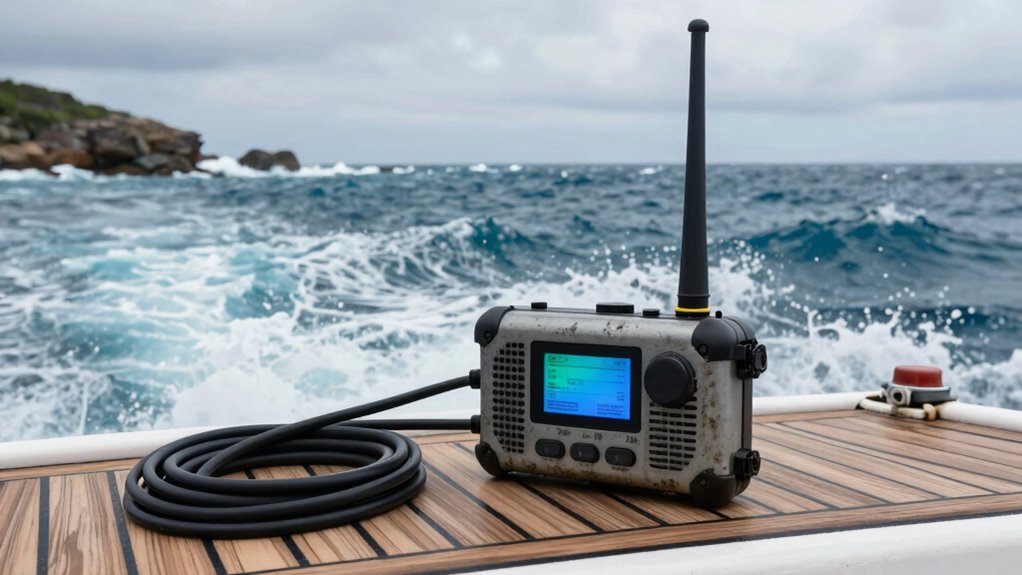
marine VHF radio with distress signal
As an affiliate, we earn on qualifying purchases.
As an affiliate, we earn on qualifying purchases.
Frequently Asked Questions
Can Marine Radios Work Underwater?
Marine radios can’t work underwater because radio signal attenuation occurs rapidly in water, which blocks typical radio waves used for communication. Underwater communication requires specialized equipment like acoustic modems, not traditional marine radios. If you’re submerged, your marine radio’s signal won’t transmit effectively, making it unreliable for underwater communication. That’s why marine radios are essential on the surface, but not suited for underwater use.
What Is the Typical Range of a Marine Radio?
The typical range of a marine radio varies, usually between 20 to 100 miles, depending on the radio’s power and conditions. Marine radio history shows that VHF radios, operating on specific radio frequency bands, are most common for short to moderate distances. Higher power radios and favorable conditions can extend this range, making marine radios reliable for safety and communication, even with today’s advanced phones.
Are Marine Radios Legal to Use Without a License?
Using marine radios without a license is generally illegal, much like trying to access a secret society. You must follow licensing requirements and radio frequency regulations to operate legally. These rules ensure clear communication and safety at sea. Even with advanced phones, marine radios stay essential for reliable, immediate contact, especially in emergencies. Always check your local laws before transmitting to stay compliant and avoid hefty fines.
How Do Marine Radios Operate in Emergency Situations?
In emergency situations, marine radios operate by allowing you to directly communicate with coast guards, rescue teams, or nearby boats. Marine radio safety relies on clear procedures, such as using distress signals like MAYDAY and following established emergency communication protocols. You should transmit your location and situation calmly, ensuring your message is concise and precise. This reliable method often outperforms cell phones, especially when networks are down or out of range.
Do Marine Radios Require Regular Maintenance or Upgrades?
Yes, marine radios need regular maintenance and upgrades. You should perform firmware updates to guarantee your radio operates smoothly and stays compatible with new features or regulations. Additionally, check your battery maintenance routines regularly, replacing or recharging batteries as needed to prevent failures during critical moments. Keeping up with these tasks helps your marine radio stay reliable, especially when you depend on it for safety and communication at sea.
Conclusion
While smartphones offer convenience, they can’t match the reliability of marine radios when it counts most. Imagine being stranded in rough waters, your phone dead or out of range, but your marine radio still transmitting clear, essential signals. In that moment, the radio isn’t just a device—it’s your lifeline, a steadfast guardian in unpredictable conditions. Don’t rely solely on phones; keep a marine radio onboard, because safety shouldn’t be left to chance.
Halloween Picks
halloween
As an affiliate, we earn on qualifying purchases.