
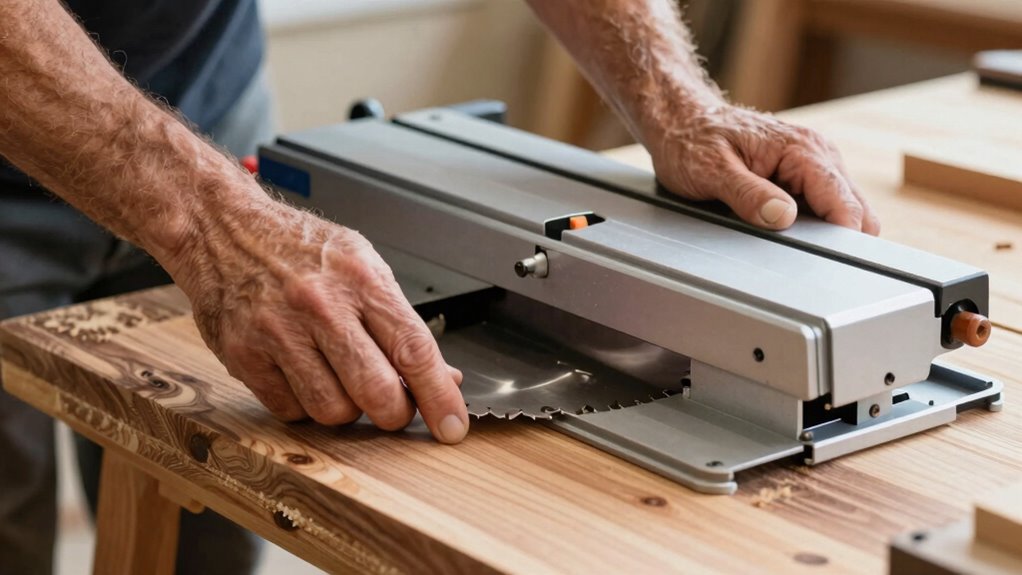

Before considering any upgrades to your table saw, you should establish a strong safety routine. Prioritize using the blade guard correctly and always maintain it to guarantee maximum protection. Use push sticks properly for narrow cuts and keep your hands clear of the blade. Turn off and unplug your saw before making adjustments or cleaning. Developing these habits creates a safe foundation, and if you keep going, you’ll discover how these practices help prevent accidents and improve your overall safety.
Key Takeaways
- Establish a consistent safety routine focused on proper blade guard use and maintenance before considering any upgrades.
- Always verify the blade guard is properly installed and functioning correctly prior to operation.
- Prioritize safety habits like using push sticks and keeping hands clear of the blade over attempting modifications.
- Turn off and unplug the saw before making adjustments or cleaning to ensure safety first.
- Cultivate a safety-first mindset to build confidence and prevent accidents before investing in upgrades.
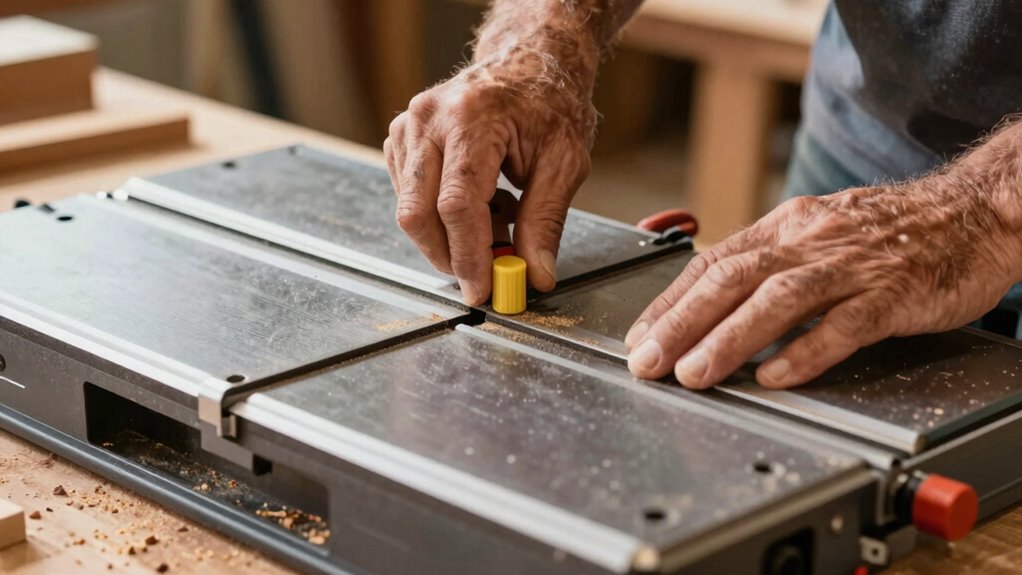
Using a table saw safely is vital to prevent accidents and guarantee precise cuts. Before you consider any upgrades or new equipment, establishing a solid safety habit is the most important step. The foundation of this habit revolves around always respecting the safety features of your saw, like the blade guard, and using tools like a push stick correctly. These practices aren’t just suggestions; they’re essential to safeguarding your fingers and preventing dangerous mishaps.
Start by confirming the blade guard is properly installed and functioning before every cut. The blade guard acts as a barrier, shielding your hands from the spinning blade. Never remove or disable it, even for small or repetitive cuts. It’s tempting to do so for convenience, but that tiny lapse can lead to severe injuries. When you’re working, keep your hands clear of the blade guard unless you’re using a push stick. A push stick is designed to keep your hands at a safe distance from the blade during narrow cuts. Always grip the push stick firmly, and never rely on your fingers to push the wood through, especially when making delicate or precise cuts.
Always verify the blade guard is secure and working before cutting to ensure maximum safety and protection.
Developing the habit of using a push stick isn’t just about safety; it also improves cut accuracy. When you’re feeding the material with a push stick, you maintain better control and reduce the risk of kickback. Kickback, where the wood suddenly jerks back toward you, is one of the most dangerous situations you face with a table saw. Properly using a push stick minimizes this risk by keeping your hands away from the blade path and providing steady, controlled pressure. Remember, even if your project requires multiple cuts, always use the push stick for narrow or tricky pieces. It’s a small tool that makes a huge difference. Additionally, ensuring your saw is equipped with and properly maintains safety features can elevate your overall safety awareness.
In addition to using the blade guard and push stick, adopt the habit of checking your safety equipment before each session. Make sure the saw is turned off and unplugged when adjusting or cleaning. Never reach over the blade or try to clear sawdust while the saw is running. Developing a safety-conscious mindset contributes significantly to accident prevention and reinforces good habits. Consistently practicing proper safety procedures not only helps prevent injuries but also builds confidence in your woodworking skills. Cultivating a safety-first attitude ensures you remain vigilant and prepared while working. Maintaining this safety-minded approach becomes second nature when you consistently remind yourself that no cut is worth risking your fingers or your safety. Recognizing and respecting the safety features of your equipment is the key to preventing accidents.
Building this safety habit is the most vital upgrade you can make. It’s simple, effective, and keeps you safe every time you operate your table saw. By respecting safety features like the blade guard and always using a push stick when necessary, you establish a routine that prioritizes your well-being. This habit forms the foundation for safer woodworking and guarantees that future upgrades or modifications are built on a solid safety-first mindset.
As an affiliate, we earn on qualifying purchases.
Frequently Asked Questions
How Often Should I Inspect My Table Saw for Safety Issues?
You should inspect your table saw for safety issues before every use. Check blade alignment to guarantee accurate cuts and prevent accidents. Also, examine the dust collection system to avoid buildup that can impair visibility or cause safety hazards. Regular inspections help catch potential problems early, keeping you safe. Make it a habit to verify these safety features every time you operate your saw, maintaining both safety and performance.
What Personal Protective Equipment Is Essential When Using a Table Saw?
Imagine the shock of injury versus the peace of safety; that’s why you must wear protective eyewear and hearing protection every time you use a table saw. Your eyes need shielding from flying debris, and your ears demand noise reduction. These essential personal protective equipment pieces keep you safe, allowing you to focus on your work without fear. Prioritize your safety—don’t cut corners when it comes to protective gear.
How Can I Ensure My Workspace Is Safe for Table Saw Operation?
To guarantee your workspace is safe for table saw operation, focus on workshop organization and safety training. Keep your workspace tidy, clear of clutter, and secure loose cords. Make sure the saw is on a stable surface and well-maintained. Prioritize safety training to understand proper operation and emergency procedures. Regularly review safety protocols, and always stay alert, so you minimize risks and create a safe environment for yourself and others.
Are There Specific Safety Signs or Warnings I Should Look For?
Did you know that nearly 80% of workplace accidents involve overlooked warning signs? When inspecting safety signage, look for clear warning labels about blade hazards, kickback risks, and protective gear requirements. Prioritize visible, easy-to-understand warning labels on your table saw. These safety signs serve as critical reminders, helping you stay alert and avoid accidents. Always follow the instructions on safety signage to maintain a safe workspace.
What Should I Do if My Table Saw Malfunctions During Use?
If your table saw malfunctions during use, stop immediately and unplug it. Check blade alignment to verify it’s secure and properly aligned, as misalignment can cause issues. Clear dust buildup that might interfere with operation, and inspect for any damaged parts. Regularly maintaining dust collection will help prevent malfunctions. Always consult your saw’s manual for specific troubleshooting steps, and never continue using a malfunctioning saw to avoid accidents.
Conclusion
Before upgrading your table saw, prioritize mastering the safety habit of always using a push stick. Imagine you’re ripping a long, narrow board and decide to skip it for speed. Suddenly, your hand slips, causing a serious injury. By consistently using a push stick, you protect your fingers and keep accidents at bay. Remember, no upgrade replaces the importance of safe habits—practice them first to guarantee every cut is as safe as it is precise.