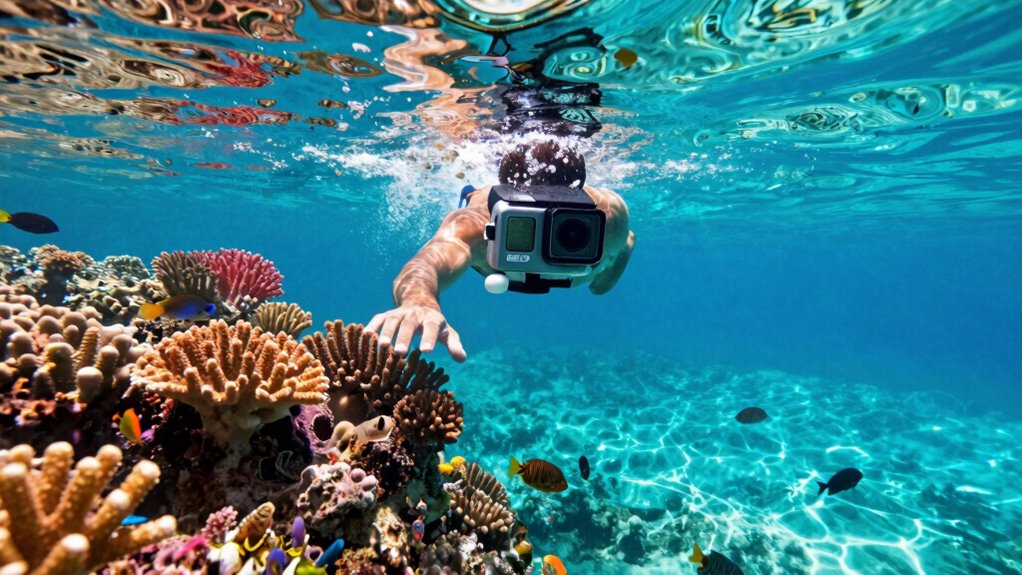

You need to adjust your action camera settings for snorkeling because underwater environments change lighting, colors, and clarity compared to deck filming. The dim, bluish light underwater requires higher ISO, a narrower aperture, and white balance adjustments to capture vibrant footage. Waterproof housings can impact brightness and sharpness, so choosing the right gear and settings is key. If you keep exploring, you’ll discover how to optimize your camera for stunning underwater shots.

Get travel and outdoor gear delivered free with Prime
- Fast, free delivery on millions of items
- Prime Video, Amazon Music and more included
- Member-only deals all year
Key Takeaways
- Underwater lighting conditions are dimmer and bluish, requiring adjustments to brightness, white balance, and exposure settings.
- Water’s refractive properties and distortion effects demand specific focus and aperture settings for clear footage.
- Waterproof housings can reduce light entering the camera, necessitating ISO and aperture adjustments to maintain image quality.
- Different environments influence optimal camera positioning and stabilization techniques for better footage.
- Environmental factors like depth and water clarity impact camera settings to capture vibrant, sharp underwater scenes.

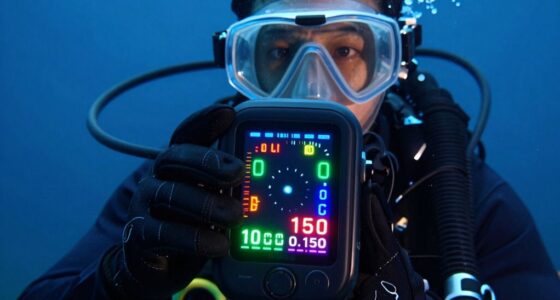
When choosing the right action camera settings, it’s important to take into account whether you’re snorkeling or filming from a boat deck, as each environment demands different adjustments. Snorkeling involves underwater scenes where lighting conditions are vastly different from above water. Underwater lighting can be tricky because sunlight filters and diminishes with depth, creating a dimmer, bluish ambiance. To capture vibrant, clear images, you need to tweak your camera’s exposure and white balance accordingly. Increasing ISO settings slightly can help brighten the footage without introducing too much noise. Additionally, setting your camera to a narrower aperture will help keep more of the scene in focus, especially in the dimmer underwater environment.
Using proper waterproof housing is essential when snorkeling. It not only protects your camera from water damage but also influences how you can operate it underwater. Many waterproof housings come with built-in controls or allow you to access camera buttons, but they can also affect the quality of your footage by reducing light entering the lens. Therefore, choosing a housing with a clear, flat lens surface minimizes distortion and ensures your underwater shots are sharp and clear. Make sure the housing is rated for the depths you’ll reach, and double-check that all seals are secure before submerging. Proper waterproof housing also ensures your camera maintains optimal image quality and prevents fogging or water spots on the lens. Additionally, understanding waterproofing standards can help you select the best protective gear for your needs. Being aware of environmental conditions can help you further optimize your camera settings and protective gear for different underwater scenarios. It’s also helpful to familiarize yourself with the depth ratings of your equipment to avoid damaging your camera during dives.
underwater action camera housing
As an affiliate, we earn on qualifying purchases.
As an affiliate, we earn on qualifying purchases.
Frequently Asked Questions
How Does Water Pressure Affect Camera Settings Underwater?
Water pressure increases with depth, affecting your camera’s settings underwater. As you go deeper, higher water depth means more pressure resistance is needed to keep your camera functioning properly. You should adjust your camera’s focus, exposure, and stabilization to compensate for the pressure resistance, ensuring it stays sealed and protected. Properly setting your camera for water pressure prevents leaks and damage, helping you capture clear, stable footage underwater.
Can I Use the Same Battery Life Settings Underwater and on Deck?
Sure, you can use the same battery life settings underwater and on deck, but why would you? Underwater adventures demand battery conservation and power optimization, so you should tweak your settings accordingly. Maximize your camera’s efficiency by lowering screen brightness, turning off unnecessary features, and enabling power-saving modes. This way, you’ll capture more of those incredible moments without worrying about drowning your battery—literally and figuratively.
What Filters Are Best for Underwater Snorkeling Footage?
For underwater snorkeling footage, you should choose filters that enhance color correction, like red or magenta filters, which offset the blue and green hues underwater. These filters improve clarity and true color reproduction. When selecting filters, consider your water conditions; a red filter works well in shallow waters, while a magenta or orange filter suits deeper or murkier environments. Proper filter selection guarantees vibrant, natural-looking footage.
How Do Lighting Conditions Underwater Influence Camera Focus?
Underwater visibility and surface lighting conditions directly impact your camera’s focus. When visibility’s poor, your camera struggles to lock onto subjects, so you should adjust focus settings manually or select a focus mode suited for low light. Bright surface lighting can cause glare or overexposure, so use filters or diffusers. By adapting your camera to these conditions, you guarantee clear, sharp footage despite changing underwater lighting and visibility challenges.
Are There Specific Storage Considerations for Underwater Footage?
When storing underwater footage, you should prioritize marine storage options that resist moisture and corrosion. Always create waterproof backups of your videos to prevent data loss caused by water damage or equipment failure. Use sealed, waterproof containers or specialized drives designed for marine environments. This way, your precious snorkeling footage stays safe, accessible, and preserved even if your primary device faces exposure to water or humidity.
Conclusion
So, next time you chuck your action cam into the ocean, don’t just hit ‘record’ and hope for the best. Remember, underwater shots need a different mindset—like trying to teach a fish to ride a bicycle. With the right settings, you’ll capture vibrant coral kingdoms instead of a blurry, blue mess. Otherwise, you’ll end up with footage so bad, even your grandma’s old camcorder would scoff. Happy snorkeling, and may your lens stay clear!
Halloween Picks
halloween
As an affiliate, we earn on qualifying purchases.