
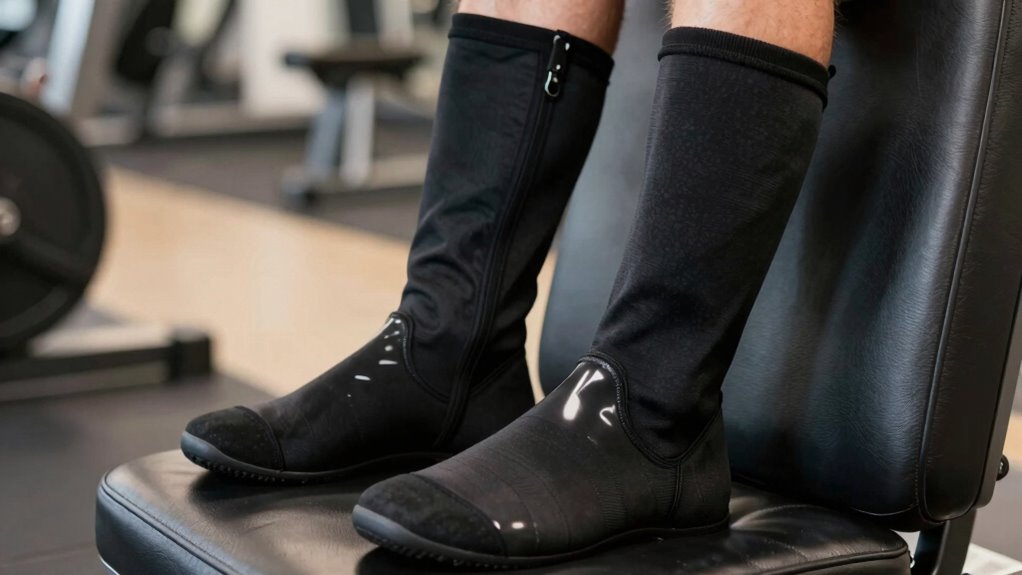

The way compression boots feel changes depending on when you use them because the pressure levels and targeted features adapt to your needs. After a workout, they often feel tighter and more intense to help with muscle recovery and flush out waste. During rest or relaxation, they give a gentler, soothing sensation to improve circulation and ease discomfort. Understanding these differences can help you get the most benefits—if you keep exploring, you’ll discover more ways to optimize your experience.
Key Takeaways
- Design features and compression levels tailored for specific activities influence sensation during use.
- Post-workout sessions often involve higher pressure, leading to a more intense feel.
- During rest, gentle compression promotes circulation, resulting in a soothing sensation.
- Customization of pressure settings and chambers affects comfort and effectiveness at different times.
- Timing of use (recovery vs. circulation) impacts perceived pressure and overall experience.
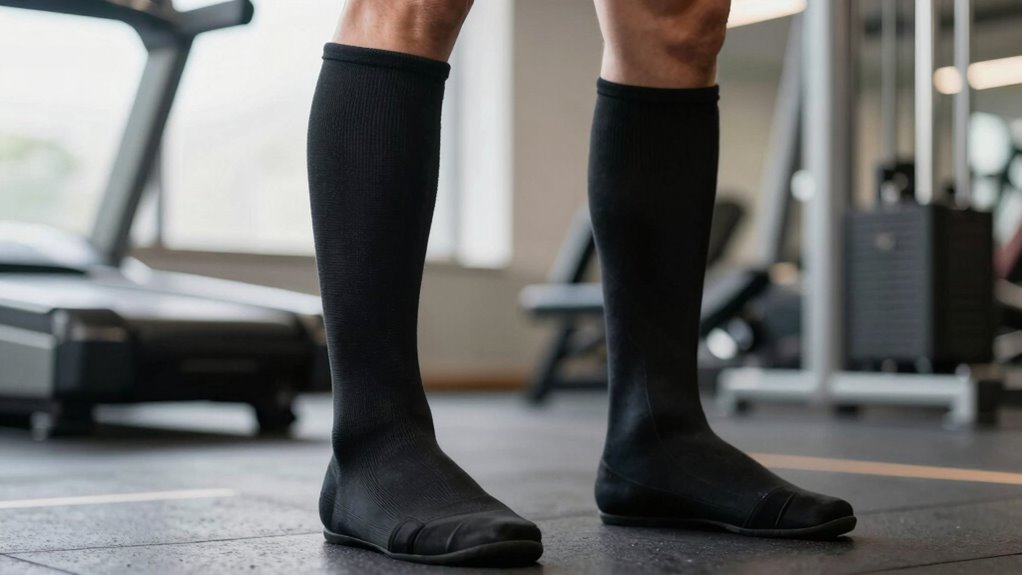
Compression boots feel different because their design and compression levels vary, directly affecting how they interact with your legs. When you use them, the sensation can change depending on your activity, your body’s needs, and the timing of the session. If you’re using compression boots after a workout, you might notice a more intense feeling, as they’re working to promote muscle recovery and reduce soreness. The compression helps flush out metabolic waste products like lactic acid, which build up during exercise, speeding up the recovery process. You’ll likely feel a sense of relief and relaxation as the pressure eases muscle tension and alleviates fatigue.
Using compression boots after workouts promotes recovery, relieves soreness, and eases muscle tension effectively.
On the other hand, when you use compression boots during periods of rest or inactivity, the experience can be different. At this point, the focus shifts from muscle recovery to circulation enhancement. The boots gently stimulate blood flow, ensuring oxygen-rich blood reaches your muscles and tissues more effectively. This improved circulation can help prevent swelling or discomfort caused by prolonged sitting or inactivity. You might notice a soothing, rhythmic pressure that feels more like a massage, promoting overall leg comfort and rejuvenation. Incorporating the right compression levels for your specific needs can further optimize this experience. Understanding the design features of the boots, such as chambers and pressure settings, can help you customize your experience more effectively. This awareness allows you to harness the full benefits of compression therapy, making your experience both effective and comfortable. Additionally, selecting the appropriate compression level can prevent discomfort and ensure the therapy is tailored to your body’s response. Being aware of proper timing can also enhance the benefits, whether for recovery or circulation.

QUINEAR Leg Recovery Compression System for Athlete Post Workout, Professional Sequential Device for Massage Therapy, Foot and Leg Recovery Boots, Improve Circulation Reduce Muscle Soreness (Medium)
- Professional Air Compression System: Inflates 4 chambers for circulation and recovery
- Smart Sequential Compression: Adjusts pressure based on leg size with sequential inflation
- Multiple Intensity and Mode Settings: 8 intensities, 3 modes, customizable therapy sessions
As an affiliate, we earn on qualifying purchases.
As an affiliate, we earn on qualifying purchases.
Frequently Asked Questions
Can Compression Boots Be Used During Exercise?
Yes, you can use compression boots during exercise, but it’s not always recommended. Using them during workouts may provide some exercise benefits like improved circulation and reduced muscle fatigue. However, many prefer to use compression boots post-exercise to boost muscle recovery and reduce soreness. If you decide to use them during exercise, start with shorter sessions and monitor how your body responds to make sure you’re maximizing benefits without discomfort.
Are Compression Boots Suitable for All Age Groups?
Did you know that over 30% of adults experience circulation issues? Compression boots aren’t suitable for all age groups; age considerations matter. Younger individuals typically tolerate them well, but older adults or those with certain health conditions should consult a healthcare professional first. Suitability concerns include underlying circulatory issues or skin sensitivities. Always assess your health status and seek medical advice to guarantee safe use, especially for older or vulnerable age groups.
How Long Should I Wear Compression Boots Each Session?
You should typically wear compression boots for a session lasting 15 to 30 minutes. Keep in mind that your session duration may vary based on your personalized fitting and comfort level. Start with shorter sessions and gradually increase the time if you feel comfortable. Always listen to your body and follow any specific recommendations from your healthcare provider to avoid overuse or discomfort.
Do Compression Boots Help With Chronic Pain?
Surprisingly, compression boots can help with chronic pain, making pain management easier. You might think they’re just for athletes, but they promote better circulation and reduce inflammation—key factors in easing chronic discomfort. While they’re not a cure-all, using them regularly can provide relief and support your pain management routine. Just remember, consistency is key, and combining them with other treatments offers the best chance for long-term comfort.
Can Compression Boots Replace Traditional Recovery Methods?
Compression boots can’t fully replace traditional recovery methods, but they do complement muscle recovery and enhance compression therapy. You use them to boost circulation, reduce soreness, and speed up recovery after workouts. However, they shouldn’t be your only method; combining them with stretching, hydration, and rest yields the best results. Think of compression therapy as a valuable addition, not a complete substitute, for ideal recovery.
Conclusion
So, next time you slip into those compression boots, remember it’s not just about the device — it’s about timing, your activity, and even when you last ate. Funny how a simple coincidence, like using them after a long run or during a rest day, can make all the difference in how they feel. Sometimes, the smallest details, like the right moment, turn an ordinary experience into something surprisingly invigorating. It’s all about tuning in to what your body needs.