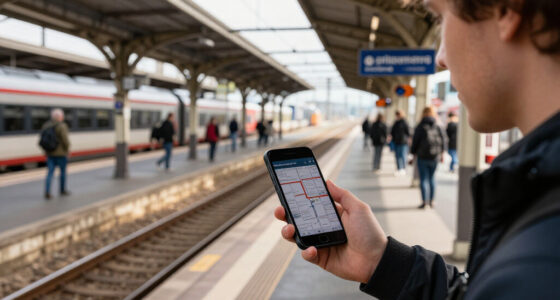
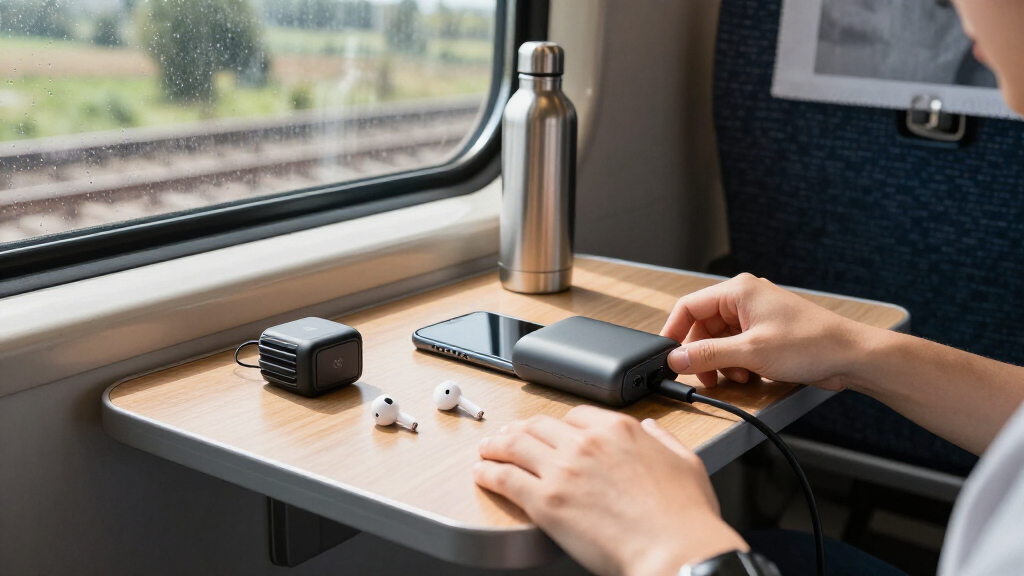

When packing portable travel gadgets, a power bank and a universal travel adapter can both help keep your devices charged, but they solve different problems. A power bank carries stored energy for airports, trains, day trips, and other stretches without a convenient outlet. A travel adapter lets compatible chargers plug into outlets in destinations with different socket shapes. The main decision is whether your bigger risk is being away from an outlet or being unable to use one when you find it. Frequent travelers who rely on a phone for tickets, maps, and communication will often get more immediate freedom from a power bank. Travelers going abroad with several rechargeable devices may get more use from an adapter, particularly if their chargers already support the local voltage. Neither replaces the other on every trip, and a few details—such as airline battery limits and device voltage—can change what is practical to pack.

Get travel and outdoor gear delivered free with Prime
- Fast, free delivery on millions of items
- Prime Video, Amazon Music and more included
- Member-only deals all year

INIU 10000mAh 45W Fast Charging Portable Charger
- ✔ Capacity: 10,000mAh
- ✔ Maximum output: 45W
- ✔ Ports: 2 USB-C, 1 USB-A

LISEN MagSafe Airplane Phone Holder & Travel Stand
- ✔ Model: 2E7100
- ✔ Compatibility: Smartphones; listed for iPhone 12–18 series
- ✔ Mounting: Desk, airplane tray table, kitchen counter

Aecooly Slim Portable Rechargeable Fan, Beige
- ✔ Model: PF01
- ✔ Dimensions: 1.08 × 1.83 × 4.33 inches
- ✔ Weight: 5.3 ounces
At a Glance
| Criteria | Portable power bank | Universal travel adapter | Winner |
|---|---|---|---|
| What it solves | Supplies stored power when no outlet is available | Connects compatible chargers to unfamiliar outlet shapes | Depends |
| Charging away from outlets | Strong; works wherever the bank can travel with you | None; it needs a working outlet and charger | A |
| Use abroad | Useful in any destination, with no outlet-shape issue | Strong for socket compatibility; check voltage support separately | B |
| Capacity and device range | Limited by its battery capacity and ports | Depends on the charger plugged into it and its output rating | Depends |
| Portability | Compact, though higher capacity adds weight | Usually small, but can be bulky with many plug types | A |
| Upfront value | Best when you need charging on the move | Best when your existing chargers need a socket adapter | Depends |
INIU 10000mAh 45W Fast Charging Portable Charger
For travelers choosing just one of these three gadgets, we put the INIU 10000mAh 45W charger first because power is useful across more situations than a phone stand or personal fan. Its 45W output can reduce waiting time with compatible phones, tablets, and gaming devices, while two USB-C ports and one USB-A port give us more connection options than a single-purpose accessory. The compact, lightweight design described by the manufacturer supports everyday carry, and the detachable braided cable means a damaged cord does not automatically take the whole charger out of service.The tradeoff is capacity: 10,000mAh can provide roughly two phone charges depending on the device and conditions, so we would treat it as a day-trip backup rather than a substitute for a larger travel battery. Its included cable is only 0.4 feet long, which can be awkward if we want to hold a phone while it charges. Compared with the LISEN holder, this pick keeps devices running but does not improve viewing; unlike the Aecooly fan, it cannot address heat. Still, it is the most broadly useful choice when we want one compact gadget to support the devices we already carry.
Pros:
- 45W output supports faster charging for compatible devices.
- Two USB-C ports and one USB-A port offer flexible connections.
- Compact design and detachable braided cable suit travel carry.
- Overcharge protection and stated TSA compliance support travel use.
Cons:
- 10,000mAh capacity may not cover several days of heavy use.
- The included 0.4-foot cable is restrictive during active use.
- Fast charging depends on device and cable compatibility.
Best for: Travelers who want a compact backup battery for a phone and occasional charging of other compatible devices.
Not ideal for: People who need several full recharges, long cable reach while using a device, or a high-capacity power source for a multi-day trip.
Bottom line: We recommend the INIU as the most versatile travel pick when compact charging matters more than multi-day capacity.
“We recommend the INIU as the most versatile travel pick when compact charging matters more than multi-day capacity.”
LISEN MagSafe Airplane Phone Holder & Travel Stand
The LISEN MagSafe holder is the most specialized item in this lineup, built for travelers who want a phone positioned hands-free on a tray table, desk, counter, or luggage handle. Its dual-spring grip is intended to hold securely, and 360-degree rotation lets us adjust between watching, video calls, and other viewing angles without holding the phone. That focus makes it a better fit for cramped-seat convenience than the INIU charger, which solves a power problem but leaves us to prop up the screen ourselves.Compatibility and setup are the key questions. The listing specifies MagSafe compatibility and iPhone 12–18 series, so travelers with other phones should verify whether their device can attach securely before relying on it. The clamp also needs a suitable edge or surface; not every seat or luggage handle will provide one. Compared with the Aecooly fan, the holder improves access to a screen rather than physical comfort, and it does not charge the phone. Its listed weight is 4.54 g, but dimensions are relatively substantial for a tiny accessory, so we should consider its shape and storage alongside its portability. It is our pick for viewing convenience, not a universal travel essential.
Pros:
- Dual-spring grip is designed to hold the phone firmly.
- 360-degree rotation supports varied viewing angles.
- Can attach to tray tables, desks, counters, and some luggage handles.
- Foldable form is intended for compact travel storage.
Cons:
- Use is centered on MagSafe-compatible phones, especially iPhone 12–18 series.
- Not water resistant.
- A suitable mounting edge or surface is required.
Best for: MagSafe-compatible iPhone travelers who regularly watch, call, or follow content hands-free in transit or at temporary work spots.
Not ideal for: People using phones without secure MagSafe attachment, travelers who prefer to pack only multi-use essentials, or anyone without a reliable clamp surface.
Bottom line: Choose the LISEN when hands-free phone positioning is a recurring travel need and your device fits its MagSafe setup.
“Choose the LISEN when hands-free phone positioning is a recurring travel need and your device fits its MagSafe setup.”
Aecooly Slim Portable Rechargeable Fan, Beige
When heat is the problem we want to solve, the Aecooly slim fan offers something neither of the other picks can: personal airflow. It can be used handheld or folded into a desktop stand, so the same device can help during a warm walk and while sitting at a desk or stopover. Three speeds give us a basic way to adjust the breeze, and the USB-C connector makes it easy to recharge with common travel charging gear. The stated battery life of up to 24 hours may be useful for intermittent use, though actual runtime will depend on speed and conditions.This is a comfort accessory, not a substitute for a larger fan. Its small two-blade design is likely to move less air than a full-size option, and the listed 50 dB noise level may be noticeable in a quiet cabin or shared room. That makes the Aecooly less generally useful than the INIU charger for many travelers, while the LISEN holder is the more relevant choice if screen positioning is the priority. We see this fan as a targeted addition for hot-weather trips, queues, and warm indoor spaces. Its slim body and foldable stand help with portability, but buyers should choose it for close-range cooling rather than expecting broad coverage.
Pros:
- Slim handheld body is easy to pack.
- Folds into a desktop stand for hands-free use.
- Three speeds provide simple airflow adjustment.
- USB-C charging and stated runtime up to 24 hours suit travel routines.
Cons:
- Small two-blade format may deliver limited airflow.
- Listed 50 dB noise can be noticeable in quiet settings.
- Useful mainly when personal cooling is a priority.
Best for: Travelers who want a rechargeable personal fan for hot-weather trips, queues, or warm desks and can accept modest airflow.
Not ideal for: Anyone expecting to cool a room, needing near-silent operation, or prioritizing charging and hands-free phone use over airflow.
Bottom line: The Aecooly is the right specialist pick for warm trips, provided we value close-range comfort over stronger airflow or broader utility.
“The Aecooly is the right specialist pick for warm trips, provided we value close-range comfort over stronger airflow or broader utility.”
As an Amazon Associate we earn from qualifying purchases.
Key Differences
The most important difference is stored energy versus outlet access. A power bank can charge a phone during a long transfer or a day away from your hotel, but its usefulness ends when its battery runs down. An adapter can make an overseas wall outlet usable with your charger, but it does nothing during a train ride or when every outlet is occupied. They complement each other on some itineraries, yet neither is a universal substitute for the other.
For international travel, socket shape and electrical compatibility are separate questions. An adapter changes how a plug fits; it does not necessarily convert voltage. Many modern phone and laptop chargers accept a broad input range, but travelers should check the label on each device’s power supply before connecting it. A power bank avoids that outlet question for the devices it can charge, although its capacity, ports, and airline carriage rules still matter.
Value depends on the trip and what you already own. If you often use your phone away from outlets, a power bank can be useful at home as well as abroad. If your chargers already fit the destination’s outlets, an adapter may add little. When both problems are likely, packing both is sensible: one gives you access to wall power; the other keeps a charge available between outlets.
Detailed Comparison
Charging when no outlet is available (Portable power bank wins — major)
Winner: power bank, by a major margin. A charged bank can supply power in a taxi, on a trail, or while waiting at a gate. An adapter cannot help in those situations because it has no battery of its own. The bank’s advantage is temporary: once depleted, it needs to be recharged, so capacity and how many devices you plan to top up matter.
Using wall outlets abroad (Universal travel adapter wins — major)
Winner: universal travel adapter, by a major margin. Its job is to let a compatible charger fit a range of outlet styles, which can matter as soon as you arrive. A power bank will still charge from a USB cable, but it cannot make a foreign wall socket accept your charger. Check the adapter’s plug coverage and the input range printed on your charger; an adapter alone is not a voltage converter.
Number and kinds of devices (moderate difference)
Winner: depends on your charging setup. A power bank’s ports and output limit how many devices it can serve at once, and a small model may be suited mainly to phones or earbuds. An adapter’s capacity depends on its USB ports and the charger or chargers you connect. For a phone-only traveler, a bank with a suitable output may be enough. For a group sharing one hotel outlet, a multiport adapter can be more useful, provided its total output meets demand.
Portability and everyday convenience (minor difference)
Winner: power bank for days out; adapter for hotel charging. A small power bank goes into a day bag and can be reached whenever your battery runs low. An adapter tends to stay near an outlet and is most useful at a destination. The size gap is usually minor for basic models, but high-capacity banks and adapters with multiple sockets can each become noticeably heavier or bulkier.
Reliability and planning (moderate difference)
Winner: depends on the failure you want to prevent. A power bank reduces reliance on finding an available outlet during the day, but only if you remember to charge it. An adapter reduces the chance that your plug will not fit at the destination, but still relies on a working outlet and compatible charger. Neither guarantees charging on its own: the bank needs stored charge, and the adapter needs a suitable power supply plugged into it.
Value for money (moderate difference)
Winner: depends on existing gear and trip habits. A power bank earns its place when you regularly need extra battery away from outlets; its usefulness can extend beyond travel. An adapter is better value when you travel to places with unfamiliar socket types and do not already own a compatible one. Paying more for a large bank or elaborate adapter makes sense only if the extra capacity, ports, or plug coverage solves a real need.
Portable power bank: Pros and Cons
Pros:
- Provides power away from wall outlets
- Useful on day trips and during long transfers
- Can serve as a backup at home
- Avoids relying on the destination’s socket shape while it has charge
Cons:
- Must be recharged before or during the trip
- Higher capacity usually means more weight
- Ports and output can limit which devices it can charge well
- Airline rules may limit battery size or require cabin carriage
Universal travel adapter: Pros and Cons
Pros:
- Makes many unfamiliar outlet shapes usable with compatible chargers
- Can support several devices if it has suitable ports and output
- Does not need its own battery to operate
- Often useful across multiple international trips
Cons:
- Cannot charge anything without an available outlet and charger
- Does not necessarily convert voltage
- Can be bulky when it includes many plug types or ports
- Quality and output vary, so the label and specifications matter
Who Should Choose What
Choose Portable power bank if:
- You use your phone for maps, tickets, or communication during long days away from outlets.
- Your trips include trains, hikes, festivals, or airports where sockets may be scarce.
- You want a portable backup that can also be useful in daily life.
Choose Universal travel adapter if:
- You travel internationally and your charger plug does not fit the destination’s sockets.
- You usually charge devices at your accommodation and want to use one wall outlet for several devices.
- You already have reliable chargers and need a way to connect them to local outlet styles.
Skip both if: Skip both for a short trip where your devices last comfortably through the day and your existing charger already fits the destination’s outlets.
Value for Money
Pay more for a power bank only when you need the additional capacity, faster output, or ports to serve your devices. A larger model can cover more charging, but it also takes up more space and may face tighter airline limits. Pay more for an adapter when its additional plug coverage, USB ports, or output will replace a less capable setup you would otherwise pack. Extra features add little value if your destination uses a socket your current charger already fits.
For most phone-focused travelers who regularly run low during the day, a modest, reputable power bank is the stronger first purchase because it addresses a common problem even at home. For someone who travels internationally but returns to a fully charged phone each evening, a basic adapter with the right plug coverage may be the better buy. If both needs apply, the pair provides more complete charging coverage than either gadget alone.
Final Verdict
Choose the portable power bank if you want your devices to stay usable between outlets; it is the better first purchase for travelers who depend on a phone throughout the day. Choose the universal travel adapter if your main problem is connecting existing chargers at overseas destinations. The deciding factor is whether you need stored energy or a compatible wall connection. If you face both problems, pack both and check battery carriage rules and charger voltage labels before you leave.
Frequently Asked Questions
Can a universal travel adapter charge my phone by itself?
No. It provides a way to connect a compatible charger to an outlet with a different plug shape. You still need a charger, and the charger must support the destination’s voltage.
Does a power bank work in every country?
It can charge devices through its ports without connecting to the local outlet, but you will need a compatible way to recharge the bank. Check the rules for carrying batteries on your airline, including any capacity limits and cabin requirements.
Should I buy a voltage converter with my travel adapter?
Check the input range printed on each device’s charger. Many phone and laptop chargers accept multiple voltages, while some appliances do not. A plug adapter changes the connection shape; it does not automatically change voltage. Use a converter only when a device requires one and the converter suits that device’s power demand.
Which one should I buy first for a phone-only trip?
Buy a power bank if you expect long days away from outlets or often arrive with a low phone battery. Buy an adapter if the destination’s sockets will not fit your charger and you plan to charge at your accommodation. If neither problem applies, you may not need either.