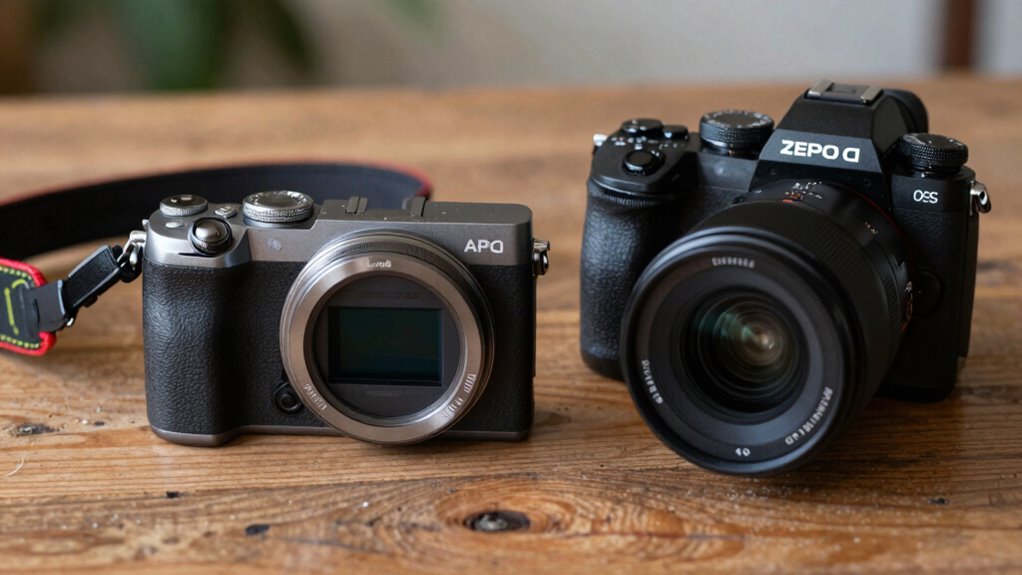

When choosing between mirrorless, full-frame, and APS‑C for travel photography, consider your priorities. Full-frame cameras excel in image quality and lens options but are bulkier and more expensive, while APS‑C models offer a lighter, more portable option with good quality. Mirrorless systems strike a balance with smaller size and recent tech improvements like better battery life. To find out which system best fits your travel style and needs, explore further as each choice brings unique benefits.
Key Takeaways
- Full-frame cameras offer superior image quality but tend to be larger and heavier, affecting portability.
- APS-C models are more compact and lightweight, ideal for travel convenience without significant image compromise.
- Mirrorless systems provide a balance of good image quality, smaller size, and often better battery efficiency with adapters.
- Consider lens compatibility and selection, which vary across systems and impact versatility during travel.
- Battery life varies; mirrorless models usually need extra batteries, while APS-C options often last longer per charge.
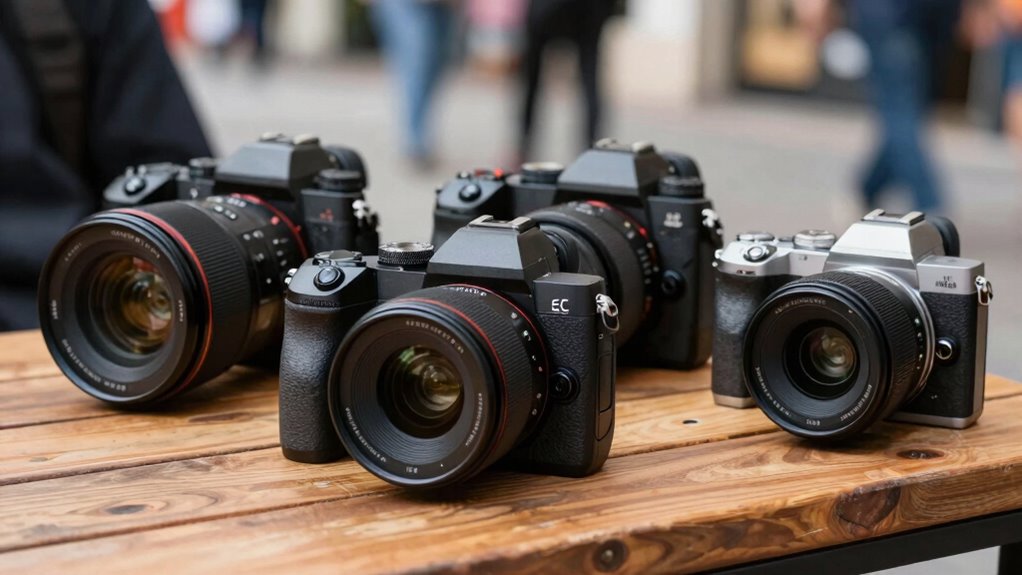
Are you trying to decide between mirrorless, full-frame, and APS-C cameras? It’s a common dilemma for travelers who want quality without sacrificing portability. The first thing to contemplate is lens compatibility. Full-frame cameras often have a broader selection of lenses, especially high-end options, making them ideal if you want versatility for different shooting scenarios. However, they tend to be larger and heavier, which could be a drawback if you’re packing light. APS-C cameras, on the other hand, usually have a smaller lens lineup, but many brands maintain good compatibility with their existing lenses, especially if you already own a particular system. Mirrorless cameras strike a balance here—they often support adapters for lenses from other systems, expanding your options, but check compatibility carefully before buying.
Choosing between mirrorless, full-frame, and APS-C cameras depends on your lens needs and portability.
Battery life is another critical factor for travel photography. Full-frame mirrorless cameras generally have shorter battery lives compared to traditional DSLRs, mainly because they rely heavily on electronic viewfinders and screens. This means you might find yourself carrying extra batteries or charging more frequently, which can be inconvenient when you’re away from power sources. APS-C mirrorless models tend to have similar battery life issues but can sometimes last longer than full-frame counterparts due to smaller sensors and lower power demands. On the flip side, some newer models have improved remarkably, offering up to several hundred shots per charge, but it’s wise to carry spares regardless of your choice. European cloud solutions are increasingly integrated into camera workflows, providing secure storage options for your travel photos.
Size and weight are also worth contemplating. Full-frame cameras tend to be bulkier, which might slow you down during long hikes or street shoots. APS-C models are usually more compact and lighter, making them easier to carry around all day. Mirrorless cameras, especially those built for travel, often prioritize a smaller footprint, but they can still pack impressive features and image quality.
Ultimately, your decision should hinge on what matters most for your travel photography. If you prioritize ultimate image quality and have the space and capacity to carry extra gear, a full-frame camera might be your best bet. If portability and convenience are your top priorities, an APS-C mirrorless model offers a compelling mix of quality and size. And if you want the latest technology with adaptable lenses and decent battery life, a mirrorless system could serve you well. Weigh these factors carefully, and you’ll find a camera that keeps your travel adventures sharp and memorable.
mirrorless camera for travel
As an affiliate, we earn on qualifying purchases.
As an affiliate, we earn on qualifying purchases.
Frequently Asked Questions
How Do Lens Ecosystems Compare Across These Camera Types?
You’ll find lens ecosystems vary widely across camera types. Full-frame systems often offer the broadest compatibility and the most extensive variety of lenses, making them ideal for versatility. APS-C cameras have a more limited but still robust selection, often at a lower cost. Mirrorless systems tend to have rapidly growing ecosystems with innovative options, but lens compatibility can sometimes be more restrictive depending on the brand. Choose based on the lens ecosystem that best fits your shooting needs.
Which Sensor Type Offers the Best Low-Light Performance?
If you’re shooting in low light, a full-frame sensor offers the best performance because of its larger size, which provides better noise reduction techniques. Imagine capturing a nighttime cityscape; the full-frame’s sensor size advantages allow for cleaner images with less grain. This extra size helps gather more light, making it easier to shoot in challenging conditions. So, for low-light photography, full-frame cameras are your best bet.
Are There Significant Size Differences Between These Cameras?
Yes, there are noticeable size differences between these cameras. Full-frame models tend to be larger and heavier due to their bigger sensors and more robust build, affecting your weight considerations during travel. Mirrorless cameras with APS-C sensors are more compact, making them easier to carry around, while smaller sensors generally mean lighter equipment. If size and weight are priorities, you’ll find APS-C mirrorless options more convenient without sacrificing sensor sensitivity too much.
How Does Autofocus Speed Vary Among Them?
Imagine catching a fleeting moment with perfect clarity—that’s where autofocus speed shines. You’ll find that mirrorless cameras often excel in autofocus tracking and accuracy, quickly locking onto subjects even in challenging conditions. Full-frame models tend to offer faster, more precise autofocus, especially with advanced tracking features. APS-C cameras are still quite responsive, but their autofocus may lag slightly behind, making mirrorless and full-frame options your best bet for rapid, reliable focus.
What Are the Durability and Weather-Sealing Differences?
You’ll find that full-frame and APS-C cameras often have better weather resistance and rugged design compared to some mirrorless models. They typically feature robust weather-sealing, making them more durable in challenging conditions. Mirrorless cameras are improving in durability, but it’s essential to check each model’s weather resistance specifications. For travel, choose a camera with solid weather-sealing and a rugged design to withstand the elements and rough handling.
full-frame camera lens kit
As an affiliate, we earn on qualifying purchases.
As an affiliate, we earn on qualifying purchases.
Conclusion
Choosing the right camera depends on your travel style, but don’t let size or price hold you back. Imagine yourself capturing vibrant street scenes with a compact APS-C, or stunning landscapes with a full-frame. Remember, it’s not about the gear—it’s about your vision. So, pick what feels right, and don’t worry if you start small. Your best shot is just a click away, wherever your adventures take you.
compact APS-C camera
As an affiliate, we earn on qualifying purchases.
As an affiliate, we earn on qualifying purchases.
camera battery pack for mirrorless
As an affiliate, we earn on qualifying purchases.
As an affiliate, we earn on qualifying purchases.