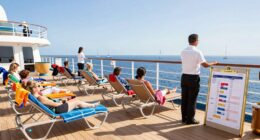
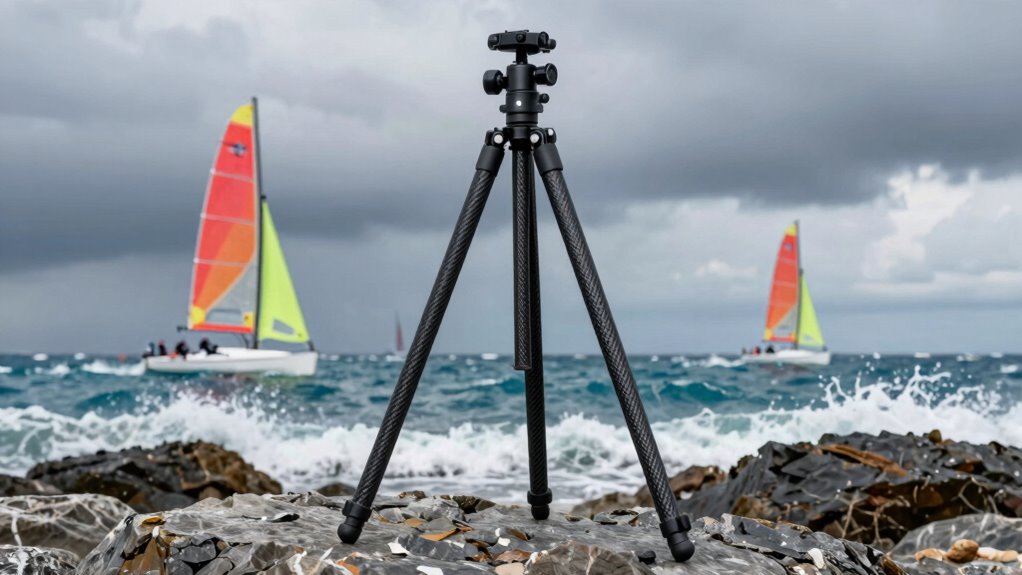

On windy scenic sailings, carbon fiber tripods matter because they give you unmatched stability and durability in harsh conditions. Their lightweight design makes them easy to carry and adjust quickly, even on uneven surfaces. The material’s resistance to salt spray and moisture ensures your equipment stays protected, while its vibration damping helps produce sharper images during long exposures. If you want professional-quality shots in challenging environments, understanding how carbon fiber tripods perform will demonstrate why they’re essential.

Get travel and outdoor gear delivered free with Prime
- Fast, free delivery on millions of items
- Prime Video, Amazon Music and more included
- Member-only deals all year
Key Takeaways
- Carbon fiber tripods provide exceptional stability, minimizing vibrations caused by strong winds for sharper long-exposure images.
- Their lightweight design allows easy repositioning on uneven, moving decks during dynamic sailing conditions.
- Resistance to salt, moisture, and temperature fluctuations ensures reliable performance in harsh marine environments.
- Vibration damping properties help reduce camera shake, maintaining image clarity in turbulent conditions.
- Durable materials ensure longevity and consistent performance despite exposure to marine elements.
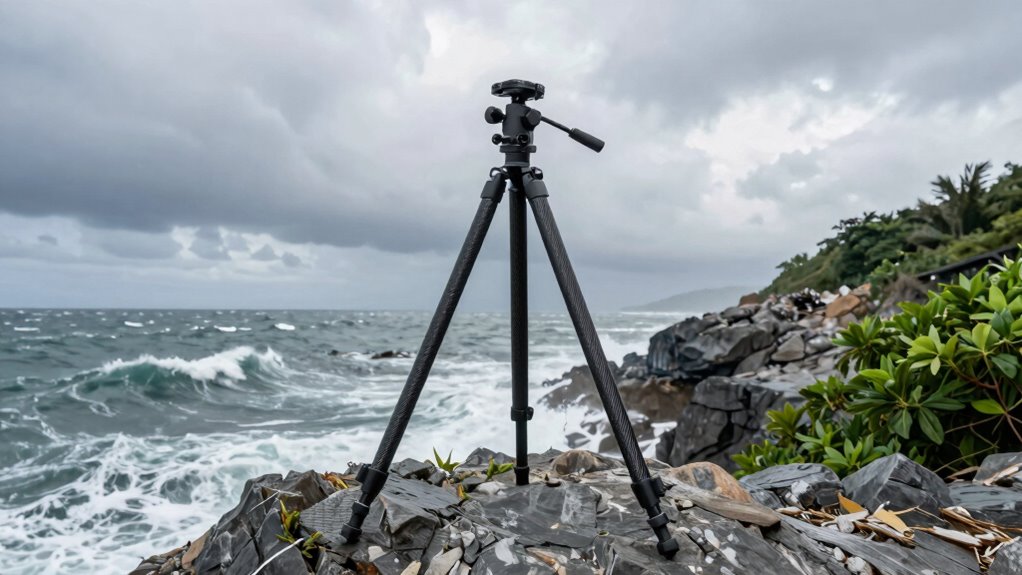
Have you ever tried capturing stunning seascapes or panoramic views from a sailing vessel during a windy day? If you have, you know how challenging it can be to keep your camera steady amidst the gusts and movement of the boat. That’s where a high-quality tripod makes all the difference. Carbon fiber tripods are especially valuable in these situations because they excel at providing camera stability, even when the environment is less than ideal. Their lightweight design means you can carry them effortlessly across the deck or rigging, yet they’re incredibly sturdy once set up. This combination of portability and stability allows you to focus on framing the perfect shot without constantly battling the tripod’s wobbling or slipping.
Another reason carbon fiber tripods matter on windy scenic sailings is their material durability. The marine environment is harsh, with salt spray, moisture, and fluctuating temperatures that can wear down lesser materials quickly. Carbon fiber, however, resists corrosion and degradation far better than aluminum or plastic. You don’t have to worry about rust or weakening over time, making it a reliable companion for lengthy sailing trips and unpredictable weather conditions. This durability guarantees your tripod remains functional and dependable, shot after shot, season after season. In addition, material science advancements have further enhanced the strength and resilience of carbon fiber, making it an even more dependable choice for outdoor activities. Moreover, the lightweight nature of carbon fiber also means that transporting and setting up your tripod becomes a more manageable task, especially on uneven or unstable surfaces. The stability offered by carbon fiber is critical for capturing sharp images in challenging conditions. Additionally, the vibration damping properties of carbon fiber help reduce micro-movements, ensuring clearer images when shooting in turbulent environments.
Using a carbon fiber tripod also means you can quickly adapt to changing conditions. When the wind picks up or you need to reposition for a better view, lightweight materials let you move the tripod with minimal effort. This agility is vital when trying to capture fleeting moments of the sea’s dynamic beauty. Plus, because they’re less bulky than traditional tripods, you can stow them away easily or set them up on uneven surfaces on deck, all without sacrificing stability. Additionally, the rigidity of carbon fiber minimizes vibrations and micro-movements, which is essential when capturing detailed landscapes or long exposures in windy environments.
In addition to their practical benefits, carbon fiber tripods help you maintain sharp images in demanding conditions. Their rigidity minimizes vibrations and micro-movements, which is essential when capturing detailed landscapes or long exposures in windy environments. You won’t have to worry about blurry shots caused by camera shake, allowing you to produce professional-quality images even on the most turbulent days at sea.
Ultimately, investing in a carbon fiber tripod makes a tangible difference on windy scenic sailings. It’s the perfect combination of camera stability, lightweight portability, and material durability that helps you seize the beauty of the sea, no matter how strong the wind. With one, you’re better equipped to handle the challenges of outdoor photography on a moving vessel, guaranteeing your images are crisp, clear, and unforgettable.
carbon fiber camera tripod for outdoor sailing
As an affiliate, we earn on qualifying purchases.
As an affiliate, we earn on qualifying purchases.
Frequently Asked Questions
How Do Carbon Fiber Tripods Compare to Aluminum in Durability?
Carbon fiber tripods are more durable than aluminum, offering better material flexibility, which helps them withstand harsh conditions like strong wind and rough seas. While they tend to be more expensive initially, they’re more cost-efficient over time because they’re lighter and less prone to damage. This means you can carry them easily and rely on their strength, making them a smart choice for windy scenic sailings.
Are Carbon Fiber Tripods Suitable for Underwater Photography?
Yes, carbon fiber tripods are suitable for underwater photography. They handle underwater pressure well due to their strength and lightweight nature. Plus, their high corrosion resistance makes them ideal for prolonged exposure to water, especially saltwater. You’ll find they resist rust and degradation better than metal alternatives, giving you a reliable and durable support system for capturing sharp images beneath the surface.
What Is the Weight Limit for Holding Heavy Camera Gear?
You should check your tripod’s weight limit, which depends on its build quality and design. Most carbon fiber tripods support heavy camera gear comfortably, especially if they have a sturdy tripod height and are compatible with your camera. Always verify the maximum load capacity before attaching your heaviest equipment. Using a tripod within its weight limit guarantees stability, prevents damage, and keeps your shots sharp, even in windy conditions.
How Do Temperature Changes Affect Carbon Fiber Tripod Stability?
Temperature changes can cause slight shifts in a carbon fiber tripod’s stability due to thermal expansion. However, its low material conductivity helps it resist rapid temperature fluctuations, maintaining steadiness. You might worry about instability in extreme weather, but modern carbon fiber designs minimize these effects. So, even with temperature swings, your tripod remains reliable, ensuring sharp shots without fuss. Just remember, proper setup still matters for ideal stability.
Can Carbon Fiber Tripods Be Repaired if Damaged?
Yes, carbon fiber tripods can be repaired if damaged, but it depends on the extent of the damage. The tripod material is durable, yet repairs typically involve specialized techniques like epoxy bonding or resin infusion. For minor cracks or breaks, professional repair services can restore stability. However, extensive damage might mean replacing the tripod altogether. Always consult a repair expert familiar with carbon fiber to guarantee safety and performance.
Conclusion
Just like a steady hand guarantees a perfect shot in turbulent weather, a carbon fiber tripod keeps your camera stable amid the gusts of a windy sail. Remember, in the grand voyage of capturing scenic beauty, your tripod is your ship’s keel—silent, steadfast, essential. When the wind howls and the scenery beckons, trust in the strength and resilience of carbon fiber to anchor your memories, making them remain clear and sharp, no matter how fierce the breeze.
Columbus Day / Indigenous Peoples' Day Picks
long weekend sales
As an affiliate, we earn on qualifying purchases.