
In your first week with a home energy monitor, you’ll quickly discover how your habits and devices impact your energy use. You’ll see which appliances run most often, especially those on standby or operating overnight, and spot patterns that may spike your bills. Understanding these habits helps you make smarter choices and identify areas for savings. Keep exploring, and you’ll uncover more ways to improve your home’s energy efficiency and reduce costs.
Key Takeaways
- You quickly identify which appliances consume the most energy, including standby and continuous-use devices.
- You analyze your household’s energy habits and detect patterns, such as overnight refrigerator use or heating durations.
- You gain insights into how your daily routines impact overall energy consumption and costs.
- You recognize opportunities to reduce usage by adjusting habits or appliance settings for better efficiency.
- You develop a clearer understanding of your energy footprint, enabling smarter decisions and long-term savings.
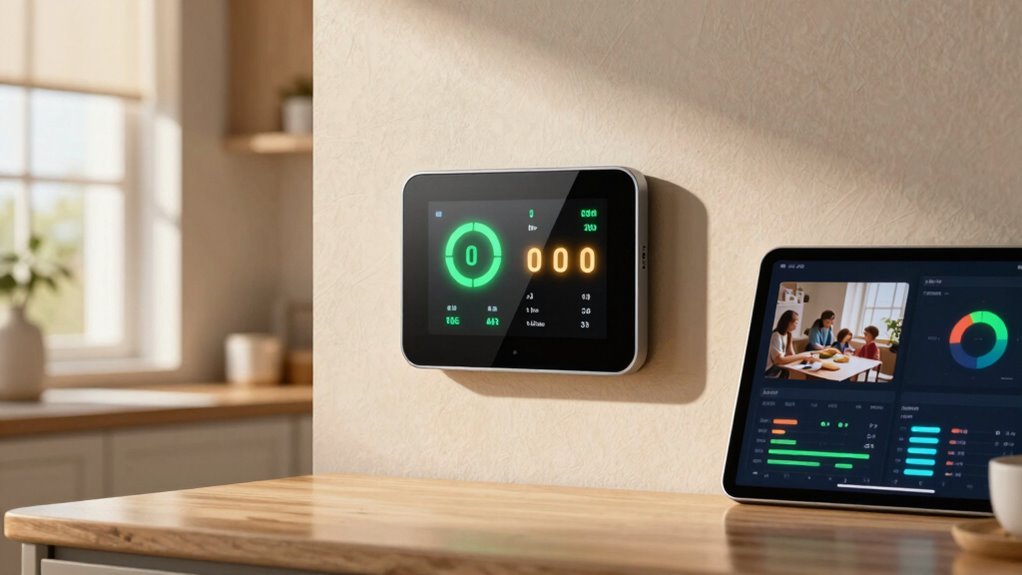
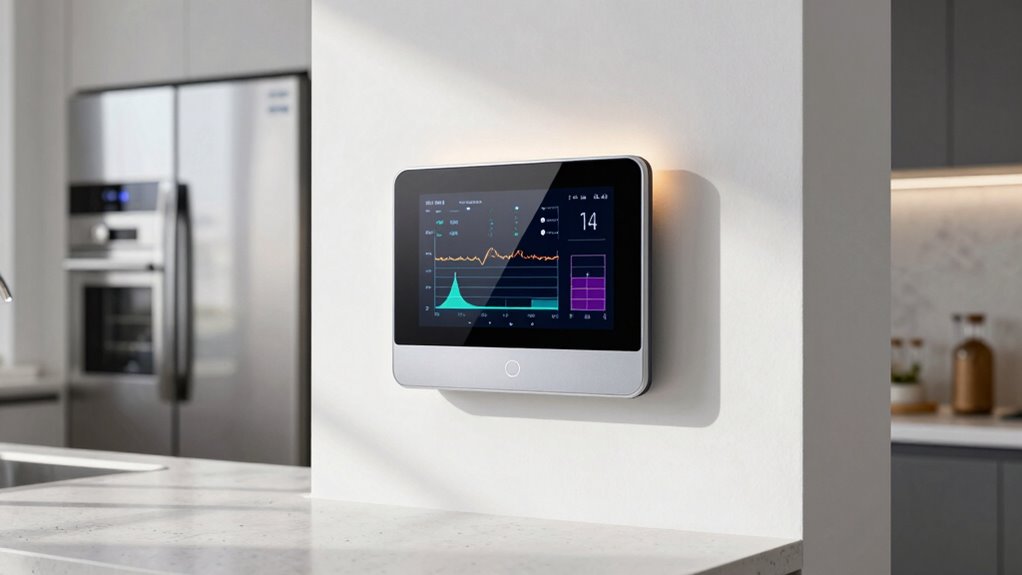
Home energy monitors are devices that give you real-time insights into how much electricity your household consumes. When you set one up, the first thing you’ll notice is how quickly your energy habits become transparent. During the initial week, you’ll likely focus on understanding your usage patterns, which begins with smart meter installation. This process involves connecting the monitor to your existing electrical system or utility meter, often with minimal effort. Once installed, the monitor starts collecting data that offers a detailed picture of your energy consumption. You might be surprised at how much energy certain appliances use, especially those that operate continuously or are left on standby.
As you dig into your data, you quickly realize that energy consumption analysis is key to making smarter choices. The monitor provides you with a clear breakdown, often categorizing usage by device or time of day. For example, you may discover that your refrigerator consumes the most energy overnight or that your heating system is running longer than necessary. This insight empowers you to identify areas where you can cut back. You might decide to turn off unnecessary devices or adjust your thermostat, knowing that even small changes can lead to noticeable savings over time.
During this first week, you’ll also learn how your habits impact your overall energy footprint. You may notice a spike in energy use during certain hours, prompting you to consider shifting some activities to times when your utility rates are lower if your provider offers time-of-use billing. Alternatively, you might realize that your energy consumption is relatively stable and that your current habits are efficient. This initial analysis helps you set realistic goals for reducing your bills and minimizing your environmental impact.
Furthermore, the data from your home energy monitor allows you to track the effectiveness of any adjustments you make. After a few days of changing your habits, you’ll see whether these tweaks actually reduce consumption. The ongoing energy consumption analysis becomes a powerful tool for building long-term habits, turning awareness into action. Additionally, understanding energy efficiency can help you prioritize upgrades and investments in your home. Over time, you’ll develop a better understanding of how your household uses energy and how simple modifications can lead to significant savings. In summary, your first week of using a home energy monitor is about gaining clarity—getting familiar with your energy data and learning how to harness it for a more efficient, cost-effective home.

Emporia Vue 3 Home Energy Monitor – Smart Home Automation Module and Real Time Electricity Usage Monitor, Power Consumption Meter, Solar and Net Metering for UL Certified Safe Energy Monitoring
SAFETY YOU CAN TRUST WITH UL CERTIFICATION: With Emporia Energy, your home energy monitoring is safe, reliable, and…
As an affiliate, we earn on qualifying purchases.
As an affiliate, we earn on qualifying purchases.
Frequently Asked Questions
Can Home Energy Monitors Detect Appliance-Specific Energy Use?
Yes, home energy monitors can detect appliance-specific energy use by analyzing energy consumption patterns. They utilize appliance identification technology, which recognizes unique signatures of individual devices. By monitoring these patterns, you can see how much energy each appliance uses, helping you identify energy hogs and optimize your usage. This detailed insight allows you to make smarter decisions about your energy consumption, saving money and reducing your carbon footprint.
Are There Privacy Concerns With Home Energy Monitoring Devices?
Yes, there are privacy risks with home energy monitoring devices. You might worry about data sharing, as your energy consumption patterns could reveal your daily routines, habits, or even when you’re away. These devices collect detailed information, and if this data falls into the wrong hands, it could be misused. Protect your privacy by choosing monitors with strong security features and being cautious about what data you share.
How Much Do Home Energy Monitors Typically Cost?
Home energy monitors typically cost between $50 and $300, depending on the feature variety and brand. When you do a cost comparison, you’ll notice that basic models offer essential tracking, while advanced monitors include features like real-time alerts and detailed analytics. Consider your needs and budget to choose the right device, balancing affordability with the functionality that helps you save energy and reduce costs effectively.
Do Energy Monitors Require Professional Installation?
Think of energy monitors as your home’s heartbeat—requiring careful calibration to keep everything in sync. You might face installation challenges, but many models are designed for DIY setup, making it accessible. However, some systems, especially those involving complex wiring or integration, benefit from professional installation. This guarantees accurate readings and smooth operation, saving you time and potential troubleshooting down the line.
Can Energy Monitors Integrate With Smart Home Systems?
Yes, energy monitors can integrate with smart home systems, enhancing your smart grid and boosting energy efficiency. Many models are compatible with platforms like Alexa, Google Home, or Apple HomeKit, allowing you to control and monitor your energy usage seamlessly. This integration helps you identify consumption patterns, optimize appliance use, and reduce costs, making your home smarter and more efficient without needing complex setups or professional installation.
Emporia Vue 3 Home Energy Monitor – Smart Home Automation Module and Real Time Electricity Usage Monitor, Power Consumption Meter, Solar and Net Metering for UL Certified Safe Energy Monitoring
SAFETY YOU CAN TRUST WITH UL CERTIFICATION: With Emporia Energy, your home energy monitoring is safe, reliable, and…
As an affiliate, we earn on qualifying purchases.
As an affiliate, we earn on qualifying purchases.
Conclusion
By the end of week one, you’ll realize how these monitors unexpectedly reveal your energy habits—sometimes when you least expect it. That sudden spike in power use might coincide with your late-night Netflix binge or weekend laundry. It’s almost funny how these small devices uncover habits you never paid attention to. Before long, you’ll find yourself making smarter choices, all thanks to those surprising, coincidental insights your home energy monitor provides.
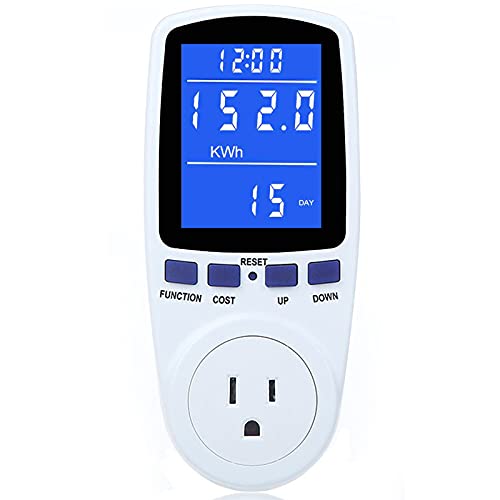
Upgraded Watt Power Meter Plug Home Electrical Usage Monitor Consumption, Energy Voltage Amps Kill Tester with Backlight, Overload Protection, 7 Modes Display
Various Monitoring Parameters: The power meter plug can monitor the power (W), energy (kWh), volts, amps, hertz, power…
As an affiliate, we earn on qualifying purchases.
As an affiliate, we earn on qualifying purchases.
Emporia Vue 3 Home Energy Monitor – Smart Home Automation Module and Real Time Electricity Usage Monitor, Power Consumption Meter, Solar and Net Metering for UL Certified Safe Energy Monitoring
SAFETY YOU CAN TRUST WITH UL CERTIFICATION: With Emporia Energy, your home energy monitoring is safe, reliable, and…
As an affiliate, we earn on qualifying purchases.
As an affiliate, we earn on qualifying purchases.