
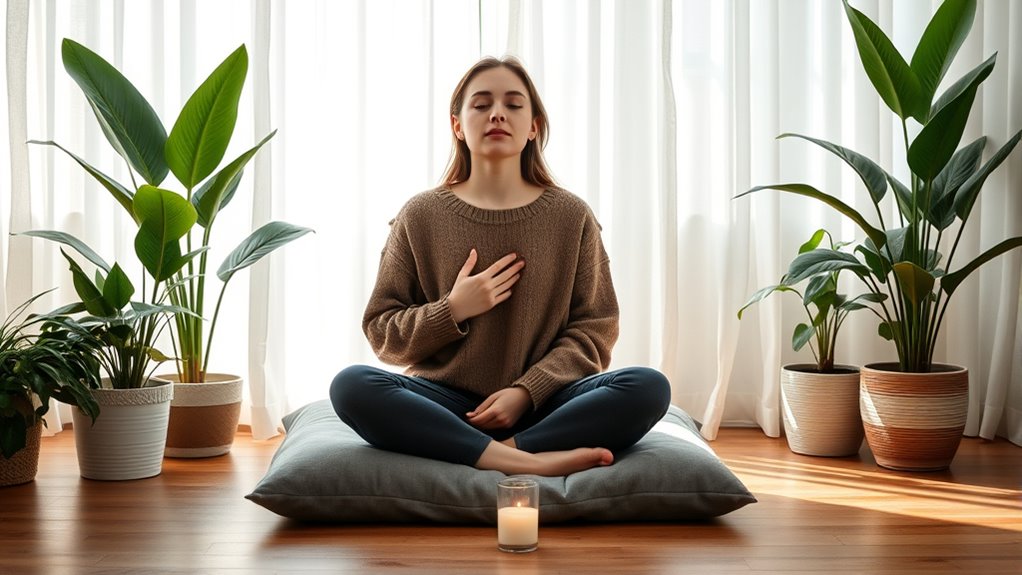

To start with mindfulness meditation, find a quiet, comfortable space, and sit or lie down. Focus on your breath, noticing inhale and exhale sensations without trying to change them. When your mind wanders, gently bring your focus back. Begin with five to ten minutes daily, using simple techniques like breath awareness or guided imagery. Patience and consistency help you develop a natural routine—keep going, and you’ll discover more ways to enhance your practice.

Get travel and outdoor gear delivered free — and shop member deals
- Fast, free delivery on millions of items
- Access to Prime Big Deal Days deals on October 6–7
- Prime Video, Amazon Music and more included
Key Takeaways
- Find a quiet, comfortable space and sit in a relaxed posture.
- Focus on your breath, noting inhale and exhale sensations without trying to change it.
- Start with short sessions of five to ten minutes daily to build consistency.
- Gently redirect your attention back to your breath when your mind wanders.
- Practice regularly to develop mindfulness and experience long-term mental and emotional benefits.

Are you curious about how meditation can improve your life? If so, you’re not alone. Many beginners find that starting a meditation practice helps reduce stress, increase focus, and promote overall well-being. The good news is, meditation isn’t complicated, and you don’t need special equipment or a lot of time to get started. All you need is a quiet space, a willingness to try, and some simple techniques to guide you along the way.
One of the easiest ways to begin your meditation journey is by focusing on breathing techniques. This involves paying close attention to your breath — noting how it feels as you inhale and exhale. You don’t have to change your breathing; just observe it. When your mind starts to wander, gently bring your focus back to your breath. This practice helps anchor your attention in the present moment and calms your nervous system. As you become more comfortable with breath awareness, you might find it helpful to incorporate guided imagery. Guided imagery involves imagining peaceful scenes or scenarios, which can deepen your relaxation. For example, you might visualize yourself walking along a quiet beach or sitting under a tree in a lush forest. This visualization stimulates your senses and relaxes your mind, making it easier to let go of stress and distractions.
Getting started with these techniques is simple. Find a comfortable seated position in a quiet space where you won’t be disturbed. Close your eyes if you feel comfortable doing so. Begin by taking slow, deep breaths, focusing on the sensation of air moving in and out of your body. Use guided imagery by softly imagining a relaxing scene or scenario, allowing your mind to settle into that peaceful environment. If your thoughts drift away, don’t get frustrated. Gently bring your focus back to your breath or the scene you’re visualizing. It’s normal for your mind to wander; the key is practicing patience and consistency. Additionally, understanding the benefits of meditation can motivate you to maintain your practice and experience long-term improvements in mental and emotional health.
Consistency is the secret to seeing benefits from meditation. Even just five to ten minutes a day can make a difference. As you practice regularly, you’ll notice that your ability to stay present improves, and your stress levels decrease. Over time, these simple techniques become second nature, and meditation becomes a natural part of your daily routine. Remember, meditation isn’t about achieving perfection; it’s about creating a moment of pause in your busy life, helping you reconnect with yourself and find calm amid chaos. With patience and practice, you’ll discover that meditation can become a powerful tool for nurturing your mental and emotional health.
As an affiliate, we earn on qualifying purchases.
Frequently Asked Questions
How Long Should I Meditate Each Day as a Beginner?
When starting meditation, there’s no strict rule for meditation duration. As a beginner, aim for a manageable daily practice frequency, like 5 to 10 minutes each day. Focus on consistency rather than length, gradually increasing your meditation duration as you become more comfortable. This approach helps you build a sustainable routine and experience the benefits of mindfulness without feeling overwhelmed. Over time, you can extend your sessions as you see fit.
What Are Common Mistakes to Avoid When Starting Meditation?
When starting meditation, avoid common mistakes like letting distractions take over or neglecting posture correction. You might get easily distracted, so practice distraction management by gently bringing your focus back to your breath. Also, guarantee your posture is comfortable and upright to prevent tension or drowsiness. Staying mindful of these factors helps create a better meditation experience and builds a strong foundation for your practice.
Can Meditation Help With Specific Health Issues?
Meditation can be a game-changer for your health, like opening a treasure chest of calm. It’s especially effective for stress reduction and anxiety management, helping you feel more centered and resilient. Regular practice calms your mind, lowers cortisol levels, and improves sleep. While it’s not a cure-all, meditation can greatly ease symptoms of common health issues, making daily life feel a little lighter and more manageable.
Is There a Best Time of Day to Meditate?
You might wonder about the ideal timing for meditation. The best time depends on your daily routine and when you feel most relaxed. Many find morning meditation helps set a positive tone, while others prefer evening sessions to unwind. Experiment with different times to see what fits best. Consistency matters more than the exact moment, so choose a time that you can stick to regularly for lasting benefits.
Do I Need Any Special Equipment or Space to Meditate?
Think of your meditation environment as a cozy corner in your busy house—simple and inviting. You don’t need special equipment, just a quiet space where you won’t be disturbed. A comfortable cushion or chair helps, but even a spot on the floor works. Creating a dedicated meditation environment sets the tone for mindfulness, making it easier to focus and relax, no fancy meditation equipment required.
Conclusion
Starting your meditation journey might seem simple, but its impact is profound. Some believe that mindfulness can rewire your brain, reducing stress and increasing happiness. Science supports this, showing changes in brain structure with regular practice. So, as you sit quietly each day, remember you’re not just calming your mind—you’re reshaping your future. Embrace this moment, trust the process, and watch how mindfulness transforms your life in ways you never imagined.
Fall Picks
fall essentials
As an affiliate, we earn on qualifying purchases.