
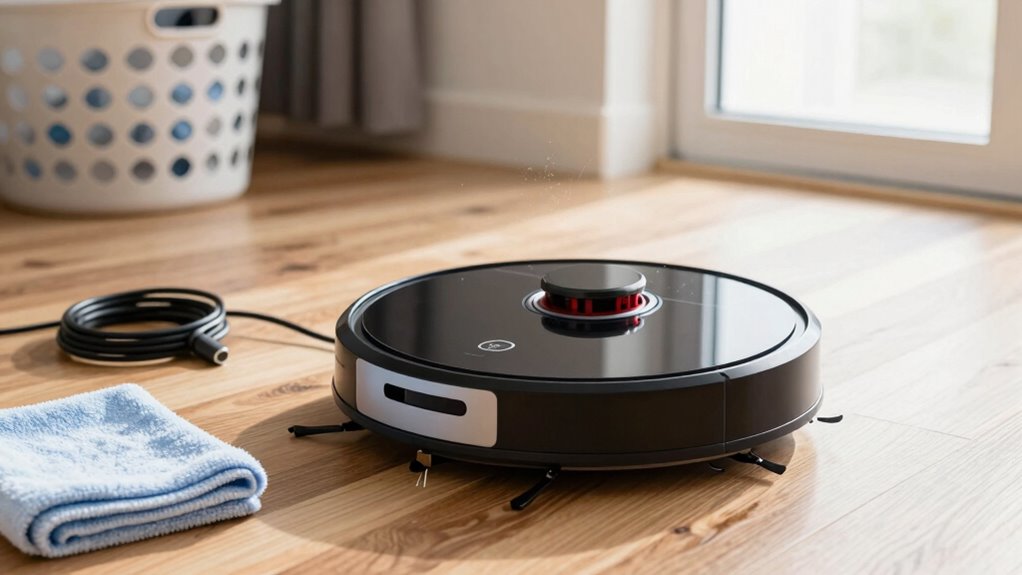

Before your trip, make sure your robot vacuum is fully charged and runs a quick cleaning cycle to check its battery life. Clear the area around the dock and inspect brushes, filters, and sensors to keep navigation smooth. Update firmware and empty the dustbin to prevent clogs. Adjust cleaning schedules so the device works when you’re away, and maintain the home environment for peak performance. For a smooth, problem-free absence, follow these steps—you’ll find more helpful tips ahead.

Get travel and outdoor gear delivered free with Prime
- Fast, free delivery on millions of items
- Prime Video, Amazon Music and more included
- Member-only deals all year
Key Takeaways
- Fully charge the vacuum and run a quick clean cycle to verify battery health before departure.
- Clear the area around the charging dock and ensure unobstructed docking for seamless recharging.
- Remove hair, debris, and dust from brushes, sensors, and filters to prevent malfunctions.
- Update firmware and check for software updates to address bugs and improve performance.
- Empty the dustbin and replace filters to avoid clogs and maintain optimal suction during absence.
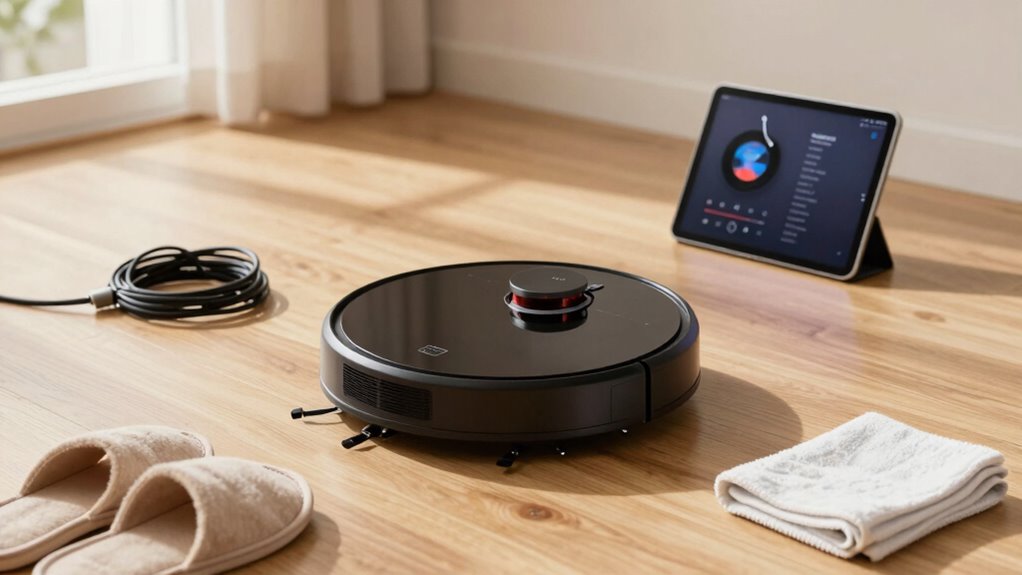
Before heading out on your trip, it’s essential to prepare your robot vacuum to make sure it’s ready to handle any messes that might happen while you’re away. A well-maintained vacuum not only keeps your home clean but also prevents weird problems that could arise during your absence. Start by reviewing your cleaning schedules. Ensure that your robot is set to clean at appropriate times, ideally when you’re home, so you can monitor its performance and address any issues beforehand. Adjust the schedule if necessary, especially if your plans change or if you want to avoid surprises when you return. This proactive step helps prevent unexpected interruptions or missed spots while you’re gone.
Next, focus on battery maintenance. Your robot vacuum’s battery is critical to its performance, so give it some TLC before your trip. Fully charge the device and let it run a quick clean cycle to ensure the battery is holding power properly. If your vacuum has a removable or replaceable battery, check its health and consider swapping it out if it shows signs of deterioration. Proper battery care prevents sudden shutdowns mid-clean and avoids the frustration of a dead vacuum upon your return. Also, clear the charging dock area, making sure it’s accessible and free of obstacles; this guarantees your vacuum can dock and recharge seamlessly once its cleaning cycle is complete or if it needs to top up during your absence.
Cleaning the vacuum itself is equally important. Remove any hair, debris, or dust from brushes, filters, and sensors. Dirty sensors can cause the vacuum to behave erratically or get stuck, which could lead to weird problems if it happens when you’re away. A clean sensor ensures smooth navigation and prevents it from missing spots or bumping into furniture. Additionally, check for any firmware updates and install them if available. Updated software can fix bugs and enhance functionality, minimizing the chances of glitches or weird behaviors. Regularly inspecting and maintaining indoor air quality components like filters can also help the vacuum operate more efficiently. Furthermore, proper vacuum maintenance can extend its lifespan and keep it functioning optimally. Moreover, ensuring your home’s ventilation system is functioning properly can support the vacuum’s performance and overall air quality during your absence. Don’t forget to also schedule routine inspections to catch potential issues early, ensuring your device stays in top shape for your trip. Regular maintenance not only improves performance but also helps prevent unexpected problems from developing over time.
Finally, consider emptying the dustbin if it’s full, and replace or clean filters. This simple step guarantees optimal suction and prevents the vacuum from shutting down due to full bins or clogged filters. When you’ve completed these steps—setting the cleaning schedule, maintaining the battery, cleaning and updating the device—you significantly reduce the risk of weird problems cropping up during your trip. Your robot vacuum will be ready to handle whatever messes come its way, giving you peace of mind and a cleaner home when you return.
Products Worth Considering

Kindle Paperwhite Signature Edition 32GB (2024) – Auto-adjusting front light, wireless charging, weeks battery life – Metallic Jade

DJI Mini 4K Fly More Combo – Drone with 4K UHD Camera, 3‑Axis Gimbal, 10 km Transmission, 93‑min Flight Time (3 Batteries)

Amazon Kindle Paperwhite (2024), 16 GB, 7-inch Display, Jade
As an affiliate, we earn on qualifying purchases.
Frequently Asked Questions
How Often Should I Update My Robot Vacuum’s Software?
You should update your robot vacuum’s software whenever updates are available, ideally every few weeks. Regular updates help maintain battery health and optimize cleaning performance. They often include improvements for dustbin capacity management, preventing clogs or missed spots. Keeping your device current guarantees it runs smoothly, prolongs its lifespan, and avoids weird problems. Check the manufacturer’s app or website regularly to stay informed about updates and install them promptly.
Can I Schedule Routine Maintenance for My Robot Vacuum?
You can absolutely schedule routine maintenance for your robot vacuum, and it’s a game-changer! Set reminders for battery calibration and emptying the dust compartment regularly. Most models let you program these tasks, ensuring your vacuum stays in top shape without you lifting a finger. This way, you prevent weird problems, extend its lifespan, and keep your floors flawlessly clean—like having a mini cleaning army at your command!
What Should I Do if the Vacuum Gets Stuck Frequently?
If your robot vacuum gets stuck often, start by checking for obstacles and removing them from its path. Make certain your battery is well-maintained; a weak battery can cause navigation issues. Clean the wheels and sensors regularly to improve movement. Also, update the firmware if available, and consider scheduling routine maintenance. These steps help your vacuum navigate smoothly and prevent it from getting stuck frequently.
Are There Specific Cleaning Solutions to Avoid?
Avoid harsh or incompatible cleaning solutions, as they can damage your vacuum’s components. Stick to manufacturer-recommended cleaning solution compatibility to prevent chemical residue concerns that might clog filters or impair sensors. Using the wrong solutions can lead to unexpected malfunctions, turning your routine into a troubleshooting nightmare. Always double-check the labels and instructions—your vacuum’s performance depends on it. Stay vigilant, and your robot will keep cleaning smoothly.
How Do I Troubleshoot Connectivity Issues Before Trips?
To troubleshoot connectivity issues before trips, start by checking for Wi-Fi interference from other devices or thick walls that could weaken the signal. Confirm your robot vacuum’s firmware is up-to-date, as updates often fix bugs and improve connectivity. Restart your router and vacuum, then reconnect the device. If problems persist, reset the Wi-Fi settings on the vacuum and reconfigure it, guaranteeing a strong, stable connection before leaving.
Conclusion
By following this simple pre-trip routine, you prevent weird problems before they start, ensuring your robot vacuum runs smoothly. It’s a small act that offers peace of mind, unlike the chaos of unexpected malfunctions. Just as a well-planned journey avoids bumpy roads, a routine keeps your device on track. In the end, it’s the quiet preparation that transforms a mundane task into a seamless, worry-free experience—proof that attention to detail makes all the difference.