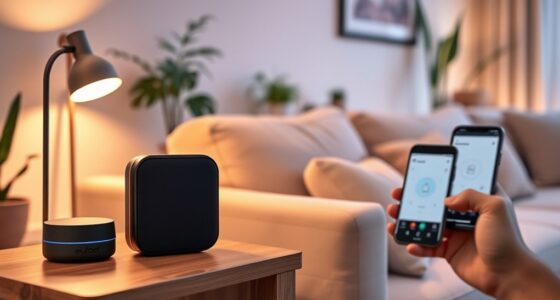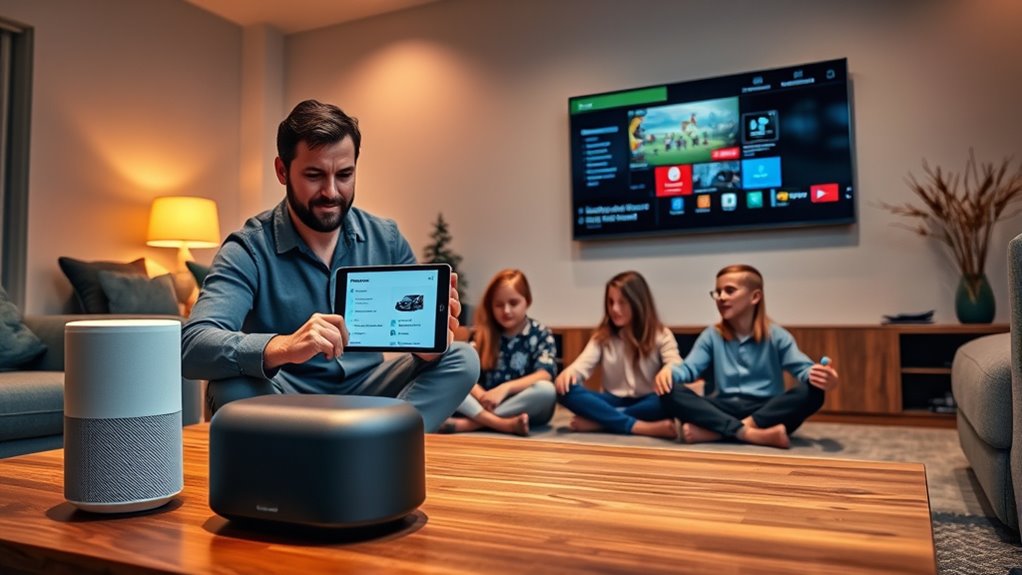

To share smart home devices and permissions, set clear boundaries on when and how voice commands are used, respecting everyone’s privacy and comfort. Discuss what data is collected and who can access it, adjusting permissions based on individual needs. Encourage open conversations about device use and privacy concerns, and review settings regularly. By establishing these respectful practices, you’ll create a harmonious environment where technology enhances daily life—exploring these concepts further will help you develop an effective approach.
Key Takeaways
- Establish clear boundaries for voice command use and privacy to respect all family members’ comfort levels.
- Assign permission levels based on age and responsibility, limiting access where appropriate.
- Communicate openly about data collection, device functions, and privacy policies to foster transparency.
- Educate family members on responsible device use and etiquette to promote respectful interactions.
- Regularly review and adjust permissions and boundaries to accommodate changing needs and maintain harmony.

As smart home devices become more integrated into our daily lives, understanding proper etiquette is crucial to guarantee everyone feels comfortable and respected. One of the key aspects to consider is setting clear voice command boundaries. It’s easy for devices to pick up unintended commands or for family members to accidentally activate certain features. To prevent this, establish guidelines on how and when voice commands should be used, especially in shared spaces. For example, you might agree that sensitive commands like adjusting security settings or accessing personal information should be spoken quietly or only used when others aren’t around. This helps avoid misunderstandings and maintains a respectful environment where everyone’s privacy is protected.
Along with voice command boundaries, respecting privacy boundaries is equally important. Smart devices often have access to personal data—whether it’s voice recordings, camera feeds, or location information. You should openly discuss what data is collected and who has access to it. Make sure everyone understands the privacy policies of each device and feels comfortable with how their information is handled. For instance, if a family member prefers not to have their voice recordings stored or shared, you should respect those wishes and adjust device settings accordingly. Creating a transparent environment helps build trust and avoids conflicts over privacy concerns.
Respect privacy by discussing data collection, understanding policies, and adjusting settings to build trust and prevent conflicts.
Another aspect to consider is how permissions are managed. It’s wise to assign different levels of access based on individual needs. For example, you might give children limited permissions or restrict access to certain features altogether. Conversely, adults can have broader control over devices like security cameras, smart locks, or voice assistants. Regularly review these permissions to ensure they align with everyone’s comfort level. This proactive approach prevents accidental or unauthorized use that might infringe on personal boundaries.
Furthermore, communication plays a critical role in establishing etiquette. Encourage open conversations about device use, privacy, and boundaries. If someone feels uncomfortable with certain functions or commands, listen and adapt accordingly. Educate family members on how to use voice commands responsibly, emphasizing the importance of respecting others’ privacy boundaries. When everyone understands these guidelines, it fosters a harmonious environment where technology enhances daily life without overstepping personal limits.
Ultimately, maintaining respectful smart home practices involves ongoing dialogue and flexibility. By setting clear voice command boundaries, respecting privacy boundaries, and managing permissions thoughtfully, you create a space where technology serves everyone’s needs without intruding on personal comfort. When each family member understands and adheres to these etiquette principles, your smart home becomes a more integrated, respectful, and comfortable environment for all.

GHome Smart Mini Wi-Fi Plug, Smart Home Wi-Fi Outlet Compatible with Alexa, Google Home & IFTTT, No Hub Required, UL Certified, 2.4G WiFi Only, 2 Count (Pack of 1), White
Voice Control: Compatible with major smart speakers, it responds to voice commands to turn the outlet on/off with…
As an affiliate, we earn on qualifying purchases.
As an affiliate, we earn on qualifying purchases.
Frequently Asked Questions
How Do I Restrict Access for Certain Family Members?
To restrict access for certain family members, you need to set clear access protocols that address privacy concerns. Most smart home systems allow you to create user profiles or permissions, so you can limit device control or data sharing. Check your device settings to customize these permissions, ensuring that only trusted family members have full access. This way, you maintain privacy and control who can interact with your smart home devices.
Can I Set Different Permissions for Shared Devices?
Yes, you can set different permissions for shared devices by creating user profiles with specific access levels. Most smart home systems allow you to customize these profiles, giving family members restricted or full control based on their needs. You simply assign permissions within the app, ensuring everyone can use the device comfortably while maintaining your privacy and security. This way, each person has the appropriate access for their role.
What Should I Do if Someone Changes Device Settings?
Think of your smart home as a delicate dance, where every step counts. If someone changes device settings, address it calmly and directly. Check the permissions and update passwords if needed. Always prioritize privacy concerns and device security—these are the pillars of trust in your smart home. Talk openly about shared access, and consider setting clear boundaries to prevent unwelcome surprises. Protect your digital space like a fortress.
How Do I Handle Conflicts Over Device Control?
When conflicts over device control arise, you should prioritize open communication. Address privacy concerns directly and establish clear consent protocols to guarantee everyone feels respected. Encourage family members to express their needs and listen actively. Set shared rules for device use, and consider creating a family agreement. This approach promotes understanding, minimizes disagreements, and maintains a harmonious smart home environment where everyone’s privacy and preferences are protected.
Is There a Way to Monitor Device Usage Anonymously?
Imagine peeking through a frosted window—you’re observing without revealing your gaze. You can set up anonymous monitoring on your smart devices, allowing you to track usage discreetly. This helps address privacy concerns while ensuring device management stays transparent. You’ll have control without invading anyone’s privacy, preserving trust. With thoughtful settings, you keep an eye on activity without compromising your family’s sense of security and respect in your shared smart home.

Voicegift Voice-Over® Mini Voice Recorder for Picture Frame, Mini Voice Recorder with Playback Audio & Digital Recorder for Picture Frame – Customizable Sound Gifting & Crafting
A picture has a thousand words – now make them yours – Add the Voice-Over to frames, albums,…
As an affiliate, we earn on qualifying purchases.
As an affiliate, we earn on qualifying purchases.
Conclusion
Remember, sharing your smart home devices fosters trust and convenience, but it’s worth considering privacy boundaries. Notably, studies suggest that transparent communication about device permissions reduces conflicts and increases overall satisfaction. So, involve your family in decisions about device access and set clear boundaries. By doing so, you create a respectful environment where everyone feels comfortable and secure. Ultimately, thoughtful sharing isn’t just etiquette—it’s the key to a harmonious, smart household.

meross Matter Smart Plug Mini, FFS Easy Setup, 100% Privacy Smart Outlet, Compact Size, Support Apple Home, Alexa, Google Home with Schedule and Timer, App and Voice Control, 2.4G Wi-Fi Only (4 Pack)
FSS – Easy Setup with Echo: Frustration free setup for Matter and Alexa, no more complicated setup! Just…
As an affiliate, we earn on qualifying purchases.
As an affiliate, we earn on qualifying purchases.
smart home device etiquette guide
As an affiliate, we earn on qualifying purchases.
As an affiliate, we earn on qualifying purchases.