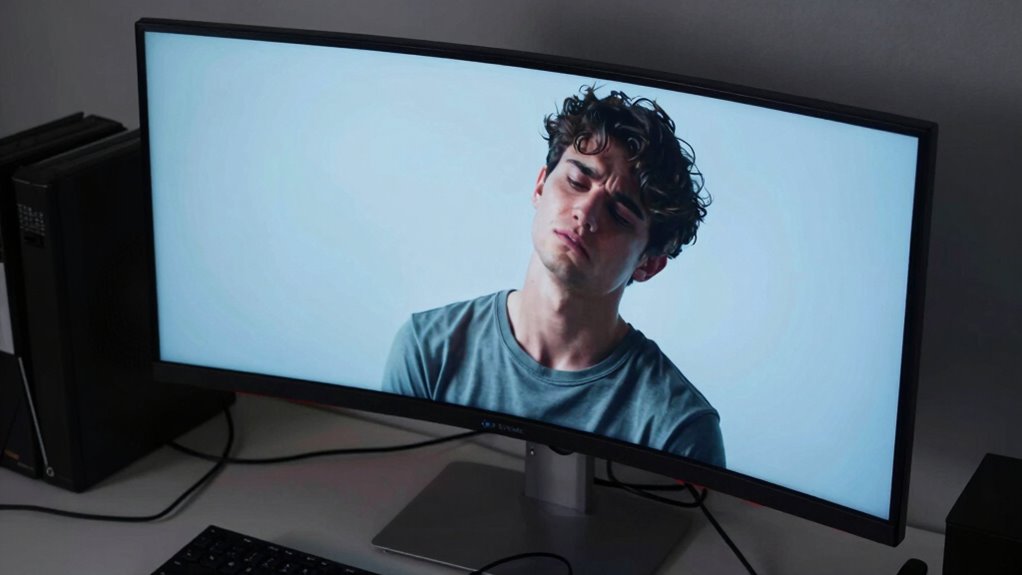

The most common setup error that causes neck pain with ultrawide monitors is placing the screen too low or too far away, forcing you to tilt or turn your neck to see clearly. If the monitor isn’t positioned at eye level and close enough, it leads to awkward postures that strain your neck muscles quickly. To avoid this, make sure your screen is properly calibrated and supported at the right height. Keep going to discover more ways to protect your neck health.

Get travel and outdoor gear delivered free with Prime
- Fast, free delivery on millions of items
- Prime Video, Amazon Music and more included
- Member-only deals all year
Key Takeaways
- Setting the monitor too low or too high causes excessive neck tilting, leading to quick neck pain.
- Incorrect monitor tilt angles force users to crane their necks, increasing strain.
- Viewing the edges of an ultrawide monitor from an improper distance requires awkward head movements.
- Not adjusting the monitor to eye level results in sustained neck tension during extended use.
- Using non-ergonomic stands or mounts prevents proper positioning, accelerating neck discomfort.
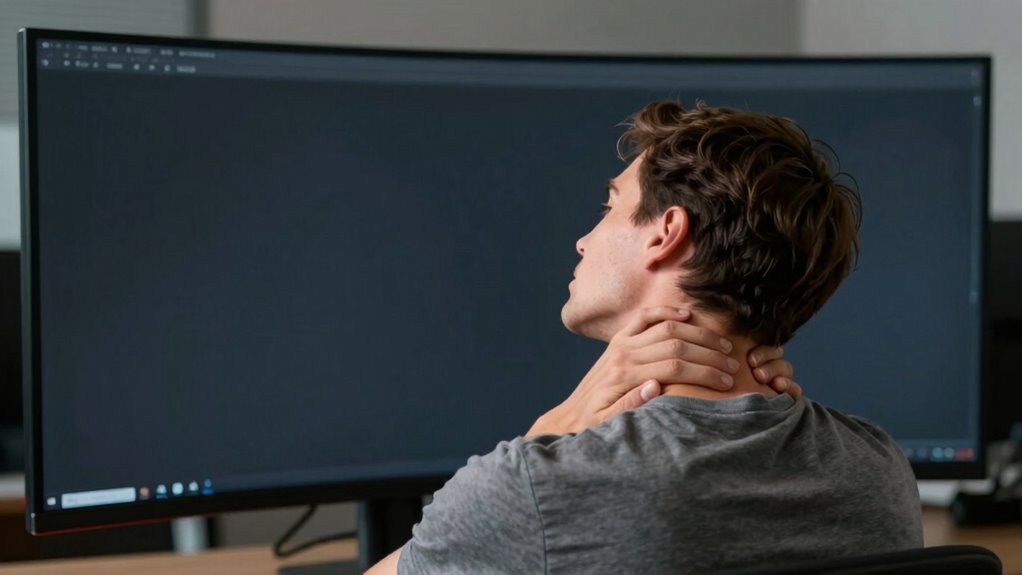
Setting up an ultrawide monitor incorrectly can lead to uncomfortable neck pain and strain. It might seem minor, but the way you position your screen plays a crucial role in your overall comfort and health. Many people overlook this, assuming they can just angle their monitor or sit back and ignore the discomfort, but poor setup habits rapidly cause issues. To prevent this, you need to pay close attention to ergonomic accessories that support a proper workstation. These include adjustable monitor stands, monitor arms, and ergonomic keyboard and mouse setups, all designed to reduce strain. Using ergonomic accessories allows you to position your monitor at the correct height and distance, which helps keep your neck aligned and minimizes unnecessary tension.
Proper ergonomic setup prevents neck strain and promotes comfort when using an ultrawide monitor.
One of the most common mistakes is neglecting monitor calibration—specifically, setting the screen at the right height and angle. When your ultrawide monitor isn’t calibrated properly, it forces you into awkward positions. For example, if your screen is too low, you’ll be tilting your head downward constantly, causing neck soreness over time. Conversely, if it’s too high, you may strain your neck upward. The goal is to position the monitor so that the top of the screen is roughly at eye level, allowing you to look straight ahead comfortably. This setup reduces the need for excessive neck movement and tension. Many monitors come with adjustable stands, but if yours doesn’t, investing in an ergonomic accessories like a monitor mount or adjustable stand ensures you can fine-tune the height and tilt.
Another key aspect of proper setup is ensuring your monitor calibration aligns with your viewing distance. An ultrawide screen is meant to be viewed from a distance that allows you to comfortably see the entire display without craning your neck or squinting. Position your monitor so that the edges aren’t forcing you to turn your head side to side. When your monitor is correctly calibrated in terms of height, tilt, and distance, it encourages a natural, relaxed posture. It’s also important to understand ergonomic principles related to workstation setup, which can further help you optimize your workspace for long-term comfort. Paying attention to display ergonomics can significantly improve your setup and help prevent strain. Additionally, regularly taking breaks and adjusting your posture throughout the day can help reinforce good ergonomic habits to prevent discomfort. Incorporating proper ergonomic practices into your workspace can help sustain your comfort over extended periods. By paying close attention to these details, you’ll significantly reduce the risk of developing neck pain caused by an improper ultrawide monitor setup.
ergonomic monitor stand adjustable
As an affiliate, we earn on qualifying purchases.
As an affiliate, we earn on qualifying purchases.
Frequently Asked Questions
How Can I Adjust My Monitor Height for Better Ergonomics?
To improve ergonomics, you should adjust your monitor height so that the top of your screen is at or just below eye level. This helps with monitor calibration and reduces neck strain. Sit back with your shoulders relaxed and keep your elbows at a 90-degree angle. Make sure your desk setup promotes good posture, minimizing discomfort and preventing neck pain during long work sessions.
What Are the Best Monitor Placement Tips to Prevent Neck Strain?
To prevent neck strain, position your ultrawide monitor directly in front of you, at eye level, using a sturdy monitor stand if needed. Adjust your ergonomic chair so your feet rest flat and your knees are at a 90-degree angle. Make sure your desk height allows your elbows to stay close to your body while typing, reducing strain. Regularly take breaks to stretch, and keep your monitor within easy viewing distance.
Are There Specific Monitor Sizes That Reduce Neck Pain?
A larger monitor isn’t always better for neck comfort—size should match your workspace and viewing distance. Opt for monitors that are around 27 to 32 inches, ensuring you can easily calibrate the screen resolution for clear visuals without straining your neck. Remember, “less is more”—choose a size that allows you to maintain good posture, with the monitor at eye level, reducing the need for constant neck movement.
How Often Should I Take Breaks With an Ultrawide Monitor?
You should take a break every 20 minutes when using an ultrawide monitor to prevent eye strain and neck pain. During breaks, look away from the screen and focus on distant objects to reduce eye fatigue. Using ergonomic accessories like adjustable stands and monitor arms helps maintain proper posture, minimizing discomfort. Regular breaks combined with ergonomic adjustments make certain you stay comfortable and avoid long-term issues from extended monitor use.
Can Monitor Angle Adjustments Improve Comfort and Reduce Pain?
Yes, adjusting your monitor angle can greatly improve comfort and reduce pain. By using ergonomic accessories like adjustable monitor stands, you can set the screen at eye level, promoting better posture correction. Proper angle adjustments lessen strain on your neck and shoulders, helping prevent discomfort during long use. Regularly tweaking your monitor position ensures you maintain ideal ergonomics, reducing the risk of developing neck pain or other musculoskeletal issues.
Conclusion
So, you’ve got that impressive ultrawide monitor, but don’t let a simple setup mistake turn your workspace into a neck pain nightmare. It’s like having a sleek sports car with a flat tire—you might look good, but you’re not going anywhere comfortably. Take the time to adjust your monitor correctly, and suddenly, your neck feels less like it’s been through a workout. Enjoy the expansive view without paying the price in pain—your neck will thank you.
Halloween Picks
halloween
As an affiliate, we earn on qualifying purchases.