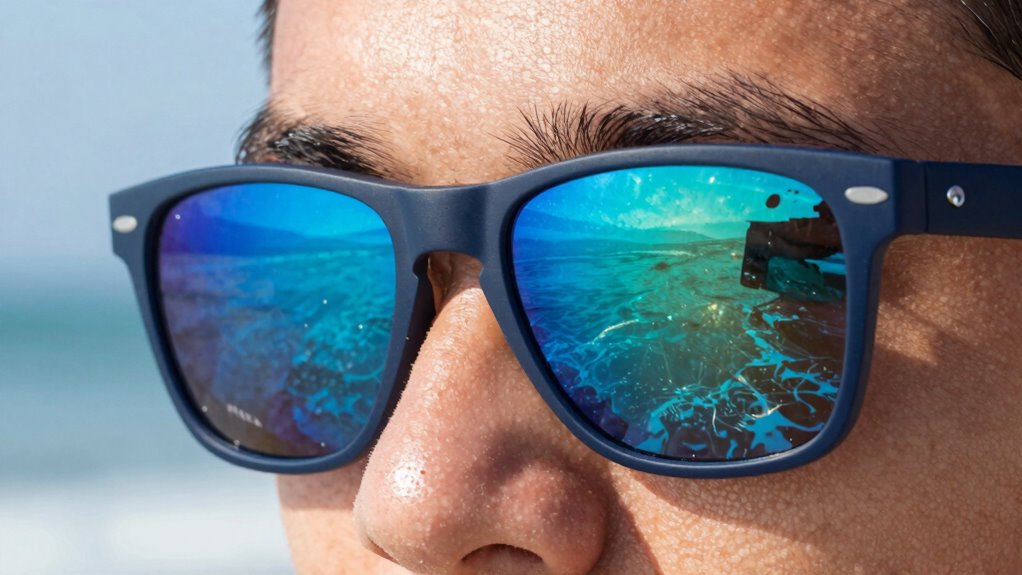
When you’re near water, polarized lenses matter more than you might realize because they reduce intense glare that water reflects, making it easier to see. They also block harmful UV rays that can damage your eyes over time. Water amplifies sunlight, causing eye strain and discomfort, but polarized lenses filter out this reflected light. This improves your comfort and safety during water activities. Keep exploring to discover how these features can protect your eyes even more.

Get travel and outdoor gear delivered free with Prime
- Fast, free delivery on millions of items
- Prime Video, Amazon Music and more included
- Member-only deals all year
Key Takeaways
- Water reflects and amplifies sunlight, increasing glare that polarized lenses effectively reduce for better visibility.
- UV rays bounce off water surfaces, making polarized lenses with UV protection essential to prevent eye damage.
- Water’s reflective nature causes more eye strain; polarized lenses alleviate this, ensuring comfort during water activities.
- Standard sunglasses may not block glare from water, but polarized lenses specifically target horizontal light waves for clearer vision.
- Effective protection and glare reduction from polarized lenses enhance safety and enjoyment in water environments.
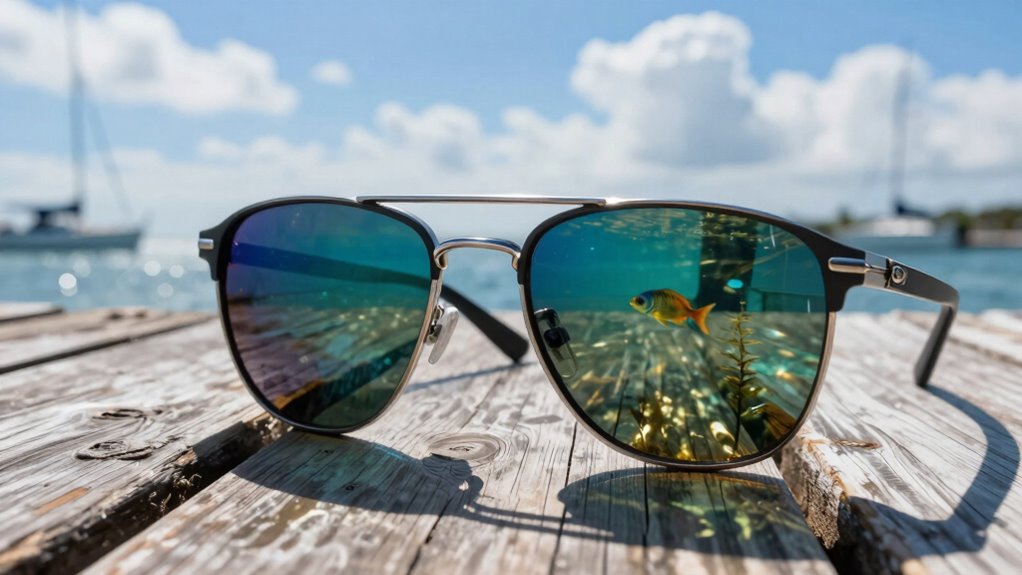
Have you ever wondered why polarized lenses are so effective when you’re near water? The answer lies in their ability to reduce glare and provide UV protection, making your time outdoors safer and more comfortable. When you’re close to a body of water, sunlight reflects off the surface, creating a blinding glare that can strain your eyes and obscure your vision. Polarized lenses are designed to block these horizontal light waves, considerably reducing glare so you can see clearly without squinting or discomfort. This glare reduction isn’t just about comfort; it’s about safety too. Whether you’re driving along a lakeshore, fishing, or simply enjoying a day at the beach, reducing glare helps you spot hazards and navigate more confidently.
Beyond glare reduction, UV protection plays a vital role in why polarized lenses matter more around water than many travelers realize. Water surfaces reflect a large portion of the sun’s ultraviolet rays, which are harmful to your eyes over time. Without proper UV protection, your eyes are exposed to increased risks of damage, including cataracts and other eye conditions. Polarized lenses often come with built-in UV filters that block 100% of harmful ultraviolet rays. This dual function—glare reduction and UV protection—means your eyes are shielded from both intense brightness and the damaging effects of UV radiation, which are amplified in water environments. Even on overcast days, UV rays can penetrate clouds and reflect off water, so wearing polarized lenses with UV protection is a smart choice year-round.
Polarized lenses with UV filters protect your eyes from water-reflected UV rays year-round.
You might not realize it, but water can amplify the intensity of sunlight, making your eyes work harder to process the visual information around you. This extra strain can cause fatigue, headaches, and discomfort, especially after prolonged exposure. Polarized lenses alleviate this strain by filtering out the reflected light that causes most of the glare. This allows you to see more comfortably and focus more effectively, whether you’re fishing, boating, or just relaxing near a pool. Additionally, vacuum cleaners and air purifiers can help improve indoor air quality, reducing irritants that might exacerbate eye discomfort caused by environmental factors. Recognizing the benefits of lens technology can further enhance your outdoor experience by ensuring optimal clarity and eye health. Furthermore, choosing lenses with anti-reflective coatings can help minimize additional light pollution and improve visual clarity in bright conditions.
Understanding how different lens features work together can help you choose the best eyewear for water-related activities, ensuring maximum protection and comfort. In essence, polarized lenses are indispensable when you’re near water because they tackle two major challenges: reducing glare for better visibility and protecting your eyes from harmful UV rays. This combination makes your outdoor experience safer, more comfortable, and less taxing on your eyes. So, next time you hit the water, don’t forget that investing in quality polarized lenses isn’t just about fashion—it’s about seeing clearly and protecting your vision for years to come.
polarized sunglasses with UV protection
As an affiliate, we earn on qualifying purchases.
As an affiliate, we earn on qualifying purchases.
Frequently Asked Questions
How Do Polarized Lenses Improve Vision on the Water?
Polarized lenses improve your vision on the water by reducing glare from reflections, making it easier to see beneath the surface and spot hazards. They also offer lens durability, resisting scratches and impacts, so your vision stays clear longer. Plus, they provide UV protection, shielding your eyes from harmful rays. This combination guarantees you enjoy a safer, more comfortable experience while boating or fishing, with clearer vision and better eye health.
Can Polarized Lenses Prevent All Types of Water Glare?
You might think polarized lenses prevent all water glare, but that’s not entirely true. They notably reduce glare by blocking horizontal light, helping with UV protection and glare reduction. Interestingly, studies show polarized sunglasses cut glare by up to 90%, yet some reflections—like shiny wet surfaces—still cause minor glare. So, while they’re highly effective, they don’t prevent every type of water glare, especially under intense sunlight or specific angles.
Are Polarized Lenses Necessary for Casual Water Activities?
Yes, polarized lenses are necessary for casual water activities because they reduce glare, making it easier to see clearly and enjoy your time. Plus, they serve as a fashion statement, enhancing your look while providing UV protection. Wearing polarized sunglasses helps shield your eyes from harmful rays and minimizes eye strain, so you can relax and focus on the fun, whether you’re lounging by the pool or strolling along the beach.
Do Polarized Lenses Distort Colors or Underwater Visibility?
Polarized lenses don’t typically distort colors or underwater visibility; instead, they act like a shield, reducing glare and enhancing clarity. Think of them as sunglasses that clear the fog from a window, allowing you to see through water better. While some slight color distortion might occur in certain conditions, most users find that polarized lenses improve underwater clarity by cutting through reflected light, making water activities safer and more enjoyable.
How Do Polarized Lenses Compare to Non-Polarized for Water Safety?
Polarized lenses offer better water safety than non-polarized ones because they reduce glare considerably, making it easier to see beneath the water surface and spot potential hazards. They also provide superior sun protection by blocking harmful UV rays, which helps prevent eye strain and long-term damage. With glare reduction, you’ll enjoy clearer, safer vision around water, enhancing your overall safety and experience during water activities.
Conclusion
Polarized lenses aren’t just for style—they’re your shield against glare, your clarity in reflection, and your safeguard around water. When you wear them, you see more clearly; when you see more clearly, you experience more fully. Protect your eyes, enhance your vision, and enjoy the water’s beauty without distraction. Because in the end, polarized lenses aren’t just about seeing better—they’re about living better, appreciating deeper, and experiencing every moment with clarity and confidence.
Halloween Picks
halloween
As an affiliate, we earn on qualifying purchases.