

TL;DR
European Commissioner Hoekstra announced the launch of Europe’s largest carbon capture and storage project at Yara Sluiskil, emphasizing EU commitment to reducing emissions. The project aims to significantly cut industrial CO2 output, marking a major step in climate policy.
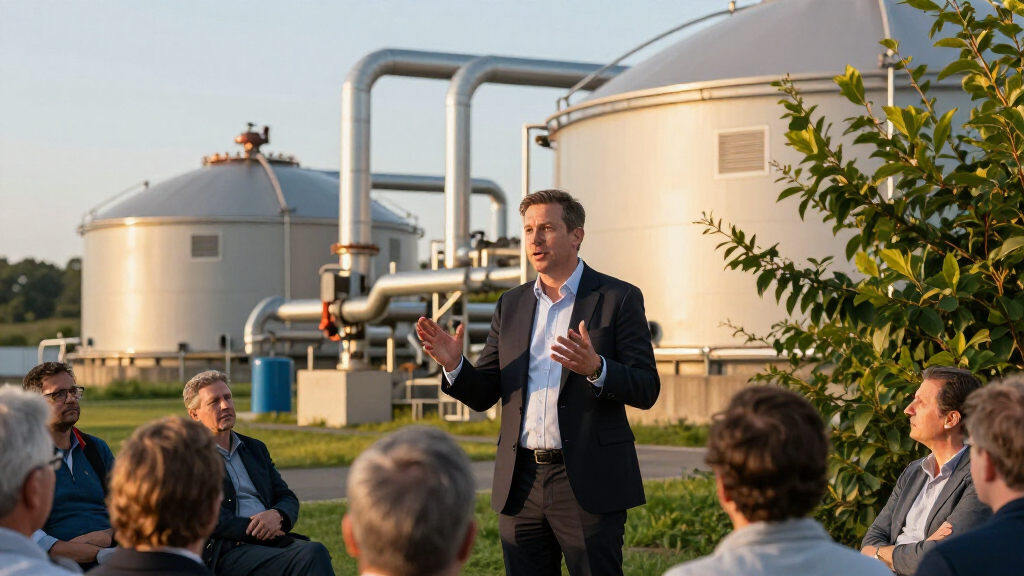
European Commissioner for Climate Action, Hans Hoekstra, announced the official launch of Europe’s largest carbon capture and storage (CCS) project at Yara Sluiskil in the Netherlands. The announcement was made during Hoekstra’s Keynote Speech By Commissioner Hoekstra at the event, emphasizing the project’s strategic importance for Europe’s climate policy. The project aims to capture up to 1.8 million tonnes of CO2 annually, representing a significant milestone in EU efforts to reduce industrial emissions and meet climate targets. The announcement was made during Hoekstra’s speech at the event, emphasizing the project’s strategic importance for Europe’s climate policy.
During his speech, Commissioner Hoekstra highlighted that the Yara Sluiskil CCS project is part of the EU’s broader strategy to decarbonize heavy industry sectors, which are among the largest sources of greenhouse gases. The project involves capturing CO2 emissions directly from the fertilizer production facility operated by Yara, a leading Norwegian chemical company, and storing it underground in designated geological formations in the Netherlands. Hoekstra stated that this initiative is expected to reduce regional CO2 emissions by approximately 20%, significantly contributing to the EU’s climate commitments for 2030.
The project is backed by a combination of EU funding, national government support, and private investment, with an estimated total cost of around €1 billion. This initiative highlights the EU’s commitment to climate action and innovation in industrial decarbonization. It is designed to be scalable, serving as a model for similar industrial CCS projects across Europe. Hoekstra emphasized that the project aligns with the EU’s Green Deal objectives and aims to demonstrate the viability of large-scale CCS as a crucial tool for achieving climate neutrality.
Implications for Europe’s Climate Goals
The launch of Europe’s largest CCS project marks a significant step in the EU’s efforts to meet its climate targets, particularly the goal of reducing greenhouse gas emissions by at least 55% by 2030. By capturing a substantial portion of industrial CO2 emissions, the project could set a precedent for other industries and regions to adopt similar measures. It also underscores the EU’s commitment to investing in technological solutions that can help bridge the gap between current emissions levels and long-term climate neutrality.
Experts suggest that successful implementation could accelerate the deployment of CCS technologies across Europe, potentially transforming industrial processes and reducing reliance on fossil fuels. However, critics question the scalability and environmental safety of underground CO2 storage, and whether CCS can be a long-term solution or merely a transitional measure.
carbon capture and storage equipment
As an affiliate, we earn on qualifying purchases.
As an affiliate, we earn on qualifying purchases.
Background on Europe’s CCS Initiatives
Carbon capture and storage has been a focus of European climate policy for over a decade, with several pilot projects and regional initiatives launched to evaluate its feasibility. The EU’s climate strategies include supporting CCS as part of a portfolio of decarbonization technologies, alongside renewable energy and energy efficiency measures. The Yara Sluiskil project is among the most ambitious in terms of scale and investment, reflecting increased political and industry interest in CCS as a climate mitigation tool.
Previous projects faced delays and public opposition over safety concerns and environmental risks associated with underground storage. Nonetheless, recent policy shifts and technological advancements have renewed interest, with the European Commission emphasizing CCS as essential for decarbonizing sectors like cement, steel, and chemicals.
While the exact capacity and operational timeline of the Yara project remain subject to final approvals, officials have indicated that commercial operations could begin as early as 2025.
Unconfirmed Details About Project Timeline and Safety
While the project has been officially launched, specific details remain uncertain. It is not yet confirmed when commercial operations will fully commence, with officials suggesting possible start dates around 2025 but without final approval. Additionally, concerns about underground CO2 storage safety and environmental impact continue to be discussed, with some experts calling for further monitoring and regulation before large-scale deployment.
Next Steps in Project Development and Evaluation
Following the launch, the project team will proceed with detailed engineering, environmental assessments, and regulatory approvals. The European Commission and Dutch authorities will monitor progress, with operational readiness expected within the next two years. Further public consultations and safety evaluations are likely to occur before full-scale CCS operations begin. The project will also serve as a benchmark for future CCS initiatives across Europe.
Key Questions
What is the main goal of Europe’s largest CCS project?
The primary goal is to capture up to 1.8 million tonnes of CO2 annually from Yara’s fertilizer plant in Sluiskil and store it underground, significantly reducing regional emissions and supporting EU climate targets.
When is the project expected to start full operation?
Officials suggest that commercial operation could begin as early as 2025, but final timelines depend on regulatory approvals and safety assessments.
What are the main concerns about CCS technology?
Environmental safety of underground storage, potential leakage, and long-term monitoring are key concerns raised by critics and environmental groups.
How is this project funded?
The project is supported by a combination of EU funding, national government support, and private investments, with an estimated total cost of around €1 billion.
Why is CCS considered important for Europe’s climate goals?
CCS can significantly reduce industrial CO2 emissions, which are among the hardest sectors to decarbonize, thus helping Europe meet its emission reduction commitments for 2030 and beyond.
Source: primary