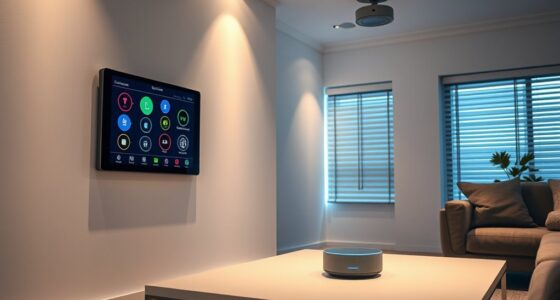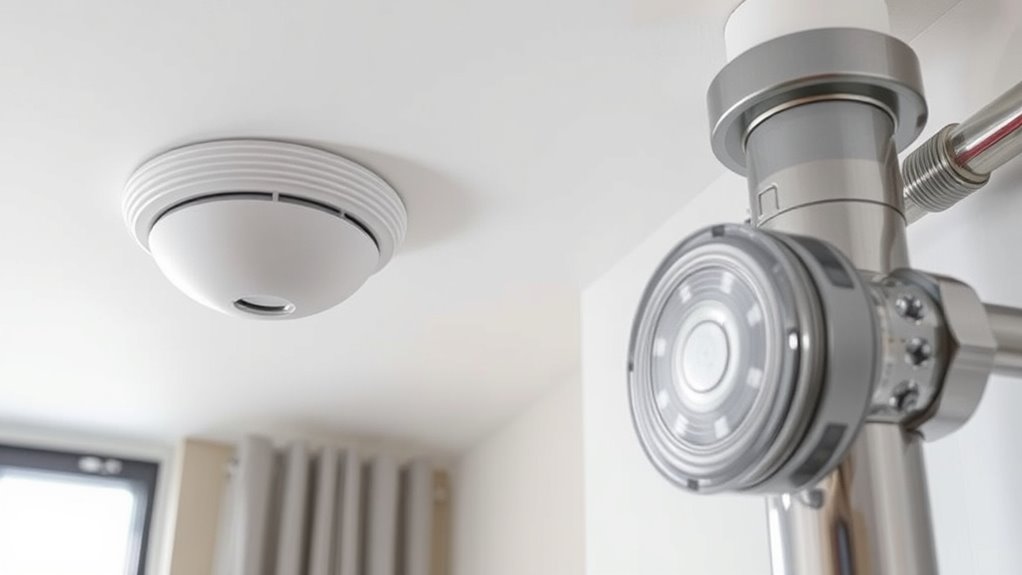

Smart home safety combines smart smoke alarms, carbon monoxide detectors, and leak sensors to keep you protected. These devices send instant alerts to your phone or connected systems, helping you respond quickly to fires, gas leaks, or water damage. They work seamlessly together, providing continuous monitoring and reducing false alarms. Staying proactive with these technologies enhances your safety and peace of mind. To learn more about how these smart solutions can protect your home, keep exploring the options available.
Key Takeaways
- Smart smoke alarms provide real-time alerts and voice notifications, enhancing safety and quick response during fires.
- Carbon monoxide detectors continuously monitor levels and send immediate alerts to smartphones, preventing CO poisoning.
- Leak detectors detect water leaks early, enabling prompt action to prevent water damage and related hazards.
- Integration of these devices creates a comprehensive, interconnected safety system for homes.
- Real-time monitoring and instant alerts help protect loved ones and belongings, reducing disaster risks.
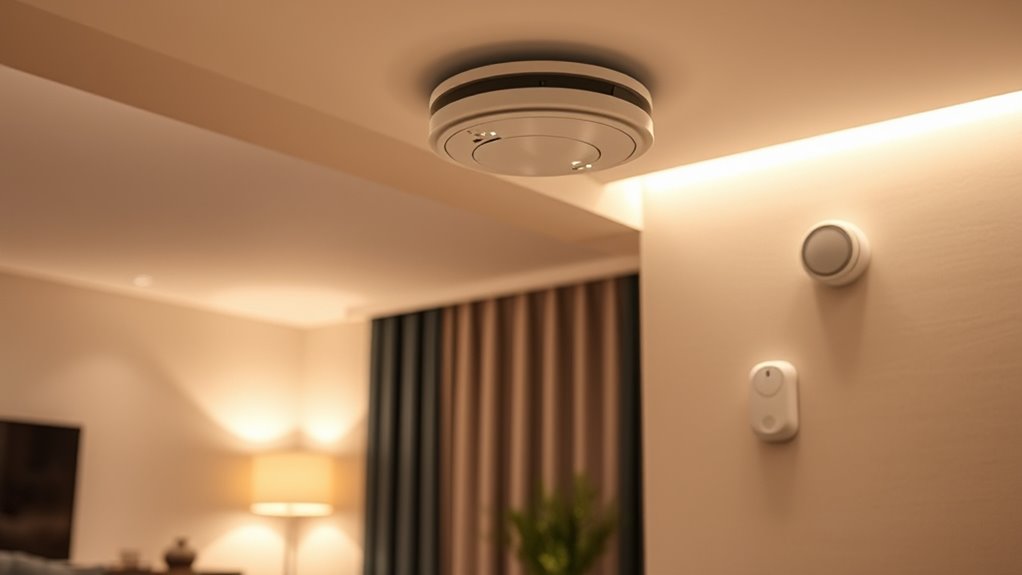
Smart home technology has transformed how you protect your living space, making safety more automated and accessible than ever before. One of the most important advancements is in fire prevention, where smart smoke alarms and alarm technology play a vital role. These devices don’t just beep loudly when they detect smoke; they are integrated into your smart home system, providing real-time alerts directly to your phone or other connected devices. This means you can respond quickly, even if you’re away from home. Modern smoke alarms can differentiate between types of smoke, reducing false alarms caused by cooking or steam, and ensuring you’re alerted only when there’s a real threat. Many also come with voice alerts, telling you exactly where the danger is, so you can act swiftly.
Smart smoke alarms provide real-time alerts and differentiate smoke types for safer home protection.
Alarm technology in smart home safety systems extends beyond smoke detection. Carbon monoxide detectors are now smarter than ever, offering continuous monitoring and immediate alerts if dangerous levels are detected. Because carbon monoxide is odorless and invisible, having a reliable alarm system is vital. These detectors are interconnected with your smoke alarms, so if one detects danger, all alarms sound off simultaneously, ensuring everyone in the house is aware of the threat. Some systems even send notifications to your smartphone, giving you peace of mind whether you’re home or away. This integration greatly enhances fire prevention efforts by providing early warning signs, giving you valuable time to evacuate or address the issue before it escalates.
Leak detectors are another essential component of smart home safety, especially for preventing water damage and related hazards. These compact sensors can be placed near appliances, under sinks, or along basement walls. When a leak is detected, they immediately send alerts to your device, allowing you to take swift action—be it shutting off a water supply or calling a plumber. Combining leak detection with fire prevention and alarm technology creates a comprehensive safety network that proactively guards your home from multiple threats. You no longer have to rely solely on manual checks or outdated alarms; instead, you benefit from automated monitoring that works around the clock.
In essence, smart home safety devices like advanced smoke alarms, carbon monoxide detectors, and leak sensors give you a smarter, more responsive way to protect your home. They seamlessly integrate into your daily life, offering peace of mind through continuous, real-time monitoring and instant alerts. This technology empowers you to act quickly and confidently, reducing risks and safeguarding your loved ones and belongings from preventable disasters.
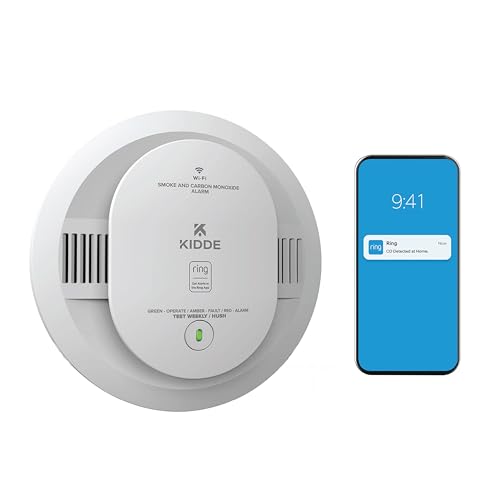
Kidde Smart Smoke & CO Detector with Ring, AA Battery, RGCUDR-RW
- Detection Types: Smoke and carbon monoxide alerts
- App Notifications: Real-time alerts via Ring app
- Detection Speed: Over 25% faster detection
As an affiliate, we earn on qualifying purchases.
As an affiliate, we earn on qualifying purchases.
Frequently Asked Questions
How Often Should I Replace My Smoke Alarm Batteries?
You should replace your smoke alarm batteries at least once a year to guarantee reliable operation. Check the device’s battery life regularly, especially if it chirps or malfunctions. Follow the recommended replacement schedule, typically every 12 months, to maintain safety. Some alarms have sealed batteries lasting up to 10 years, so verify your model’s specifics. Staying consistent with battery replacements keeps your home protected from fire hazards.
Are Smart Detectors Compatible With All Home Automation Systems?
You might wonder if smart detectors work with your home automation system. Compatibility varies by device, so check the manufacturer’s specifications for system integration and device compatibility. Many smart detectors support popular platforms like Alexa, Google Home, or Apple HomeKit, but some may require additional hubs or bridges. Always verify compatibility before purchasing to make certain of seamless integration and reliable alerts within your existing smart home setup.
What Are the Signs of a Malfunctioning Carbon Monoxide Detector?
You should watch for warning signs of a malfunctioning carbon monoxide detector, like it beeping unexpectedly, not responding during tests, or showing a low battery indicator. Regular detector maintenance is essential to guarantee safety precautions are effective. If you notice any issues, replace the batteries or the entire unit as needed. Staying vigilant helps protect you and your loved ones from dangerous CO buildup, so don’t ignore these signals.
Can Leak Detectors Be Integrated With Home Security Systems?
You can definitely integrate leak detectors with your home security system. Leak detection integration enhances your safety by providing real-time alerts for water leaks or flooding. To do this, check your leak detectors’ compatibility with your security system. Many modern systems support this integration, allowing you to monitor leaks remotely. Ensuring security system compatibility means you get all-encompassing protection, so you can respond quickly and prevent costly water damage.
Do Smart Alarms Require Professional Installation or Can I Set Them up Myself?
You can usually do DIY installation for smart alarms, making setup quick and easy without professional help. Many models come with clear instructions and wireless connectivity, allowing you to install them yourself. However, if you prefer, you can opt for professional setup to guarantee everything’s correctly installed and integrated with your existing systems. Ultimately, it’s your choice based on your comfort level and the complexity of your home’s security setup.
Conclusion
So, with all these smart gadgets watching over your home, you might as well start practicing your victory dance every time a detector does its job. Who knew that trusting tiny sensors could turn you into a safety superhero, right? Just imagine, someday you’ll relax knowing your smart smoke alarm’s got your back—while you sip coffee, blissfully unaware of the tiny hero silently saving your day. Now, that’s peace of mind, served with a side of high-tech flair.