
Whole-house water filters often confuse buyers with vague “better water” claims because marketing can exaggerate their capabilities without explaining how they work or what improvements to expect. Many systems focus on specific contaminants, but not all are suited for every water issue. Plus, the variety of features and maintenance needs can overwhelm you. If you want to understand how to pick the right system and see real results, there’s more to learn ahead.

Get travel and outdoor gear delivered free with Prime
- Fast, free delivery on millions of items
- Prime Video, Amazon Music and more included
- Member-only deals all year
Key Takeaways
- Many filters make vague “better water” claims without explaining specific contaminant removal capabilities.
- Marketing slogans often prioritize persuasive language over technical accuracy, causing confusion.
- Similar-looking systems vary widely in their ability to address different water contaminants.
- Overemphasis on features or benefits can overshadow the importance of matching filters to actual water quality needs.
- Lack of clear, accessible technical information leads consumers to rely on misleading promises.
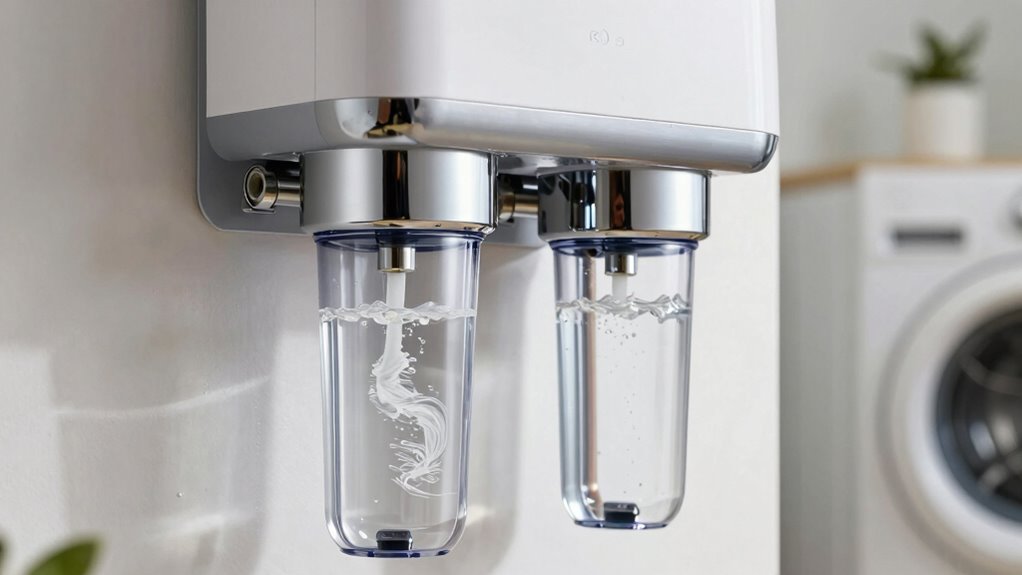
Choosing a whole-house water filter can be overwhelming because the market offers so many options, each claiming to be the best. You’re faced with countless brands and models, all promising to improve your water quality in ways that seem almost too good to be true. It’s tempting to focus solely on the “better water” claims, but that can lead to confusion. The truth is, not all filters are created equal, and understanding what they actually do requires digging deeper than marketing slogans.
When you look at different systems, you’ll notice how each one touts its ability to remove contaminants, but the specifics often differ. Some filters excel at removing chlorine, while others target heavy metals or sediments. The challenge is that many manufacturers highlight the benefits their filter provides without explaining what that means for your water quality. As a result, you might assume a more expensive system automatically guarantees cleaner water, but that’s not always the case. It’s crucial to evaluate whether the filter’s capabilities match the particular water issues in your area.
Another source of confusion is the maintenance involved. Filter maintenance isn’t just about replacing cartridges; it’s about ensuring the system continues to perform at its best over time. Some filters require frequent replacements, while others have longer-lasting media. You need to consider how much effort you’re willing to put into maintaining your system, as neglecting filter maintenance can compromise water quality. A filter that’s not properly maintained may fail to remove harmful contaminants or even introduce bacteria into your water supply. Understanding filter specifications can help you make more informed choices. Additionally, being aware of the filter lifespan can help you plan for ongoing costs and maintenance schedules. Furthermore, understanding the filter media used can provide insight into its effectiveness and environmental impact. Recognizing the importance of water testing can also guide you to select a system that truly addresses your specific water quality concerns.
Moreover, understanding the true impact of a whole-house water filter involves knowing what’s in your water to start with. Water quality varies by location, so a filter suitable for one area might not be as effective elsewhere. Conducting a water test can help you identify the specific contaminants to target. Once you know what you’re dealing with, you can choose a system tailored to your needs, avoiding the trap of falling for a “better water” claim that doesn’t address your actual water quality concerns. Additionally, educating yourself about filter specifications can help you make more informed choices.
Ultimately, the confusion surrounding whole-house water filters stems from marketing claims, diverse features, and maintenance requirements. To make an informed decision, focus on your water quality needs, research the technical specifications, and be prepared for ongoing filter maintenance. This approach helps you avoid getting swayed by exaggerated promises and ensures you select a system that genuinely improves your water, rather than just promising it.
whole house water filter for chlorine removal
As an affiliate, we earn on qualifying purchases.
As an affiliate, we earn on qualifying purchases.
Frequently Asked Questions
How Do I Determine the Actual Filtration Capabilities of a Whole-House Filter?
To determine a whole-house filter’s filtration capabilities, check its specifications for filtration accuracy, which tells you what contaminants it removes. Look for certifications from recognized standards like NSF or WQA, as they verify the filter’s claims. These certifications guarantee the filter meets rigorous testing, giving you confidence in its actual performance. Always review the certification details to understand precisely what contaminants the filter targets.
Are There Health Risks Associated With Over-Filtering or Under-Filtering Water?
Over-filtering or under-filtering water can pose health concerns. When you over-filter, you risk removing beneficial minerals, which affects water’s taste and your health. Under-filtering might leave contaminants, leading to health issues. To avoid these risks, guarantee your filter’s filtration capabilities match your water quality needs. Regular maintenance and testing help maintain the right balance, preserving essential minerals while removing harmful substances.
Do All “Better Water” Claims Comply With Government Regulations?
You can’t assume all “better water” claims are above board, as marketing tactics often stretch the truth. Some claims might not meet certification standards set by regulatory bodies, so it’s crucial to verify if the product has proper certification. Always scrutinize the labels and ask for proof, because not every promise aligns with government regulations. Don’t take claims at face value—dig a little deeper to guarantee you’re getting what you pay for.
How Often Should I Replace or Maintain My Whole-House Water Filter?
You should replace or maintain your whole-house water filter every 6 to 12 months, depending on your filtration technology and water quality. Regularly check the filter for signs of clogging or reduced flow, and follow the manufacturer’s guidelines. Proper maintenance guarantees your filtration system continues to improve water quality effectively. Keep an eye on filter lifespan and replace it promptly to maintain peak water purity and protect your plumbing.
Can a Water Filter Improve Taste and Odor Without Removing Beneficial Minerals?
Think of your water as a fine wine—taste and aroma matter. A good water filter can enhance taste and odor without stripping beneficial minerals, thanks to mineral retention technology. This process improves taste enhancement while preserving essential minerals, so your water remains healthy and delicious. You enjoy better flavor and clarity without sacrificing the minerals that support your health, making your whole-house filter a smart choice for purity and taste.
Conclusion
While it’s easy to be swayed by claims of “better water,” remember that no filter is perfect for every home. Instead of chasing the idea of flawless water, focus on understanding your specific needs and choosing a filter that addresses those. Investing in the right system might seem costly now, but it guarantees you get genuinely cleaner, safer water without falling for marketing hype. Prioritize knowledge—your health depends on it.
Columbus Day / Indigenous Peoples' Day Picks
long weekend sales
As an affiliate, we earn on qualifying purchases.