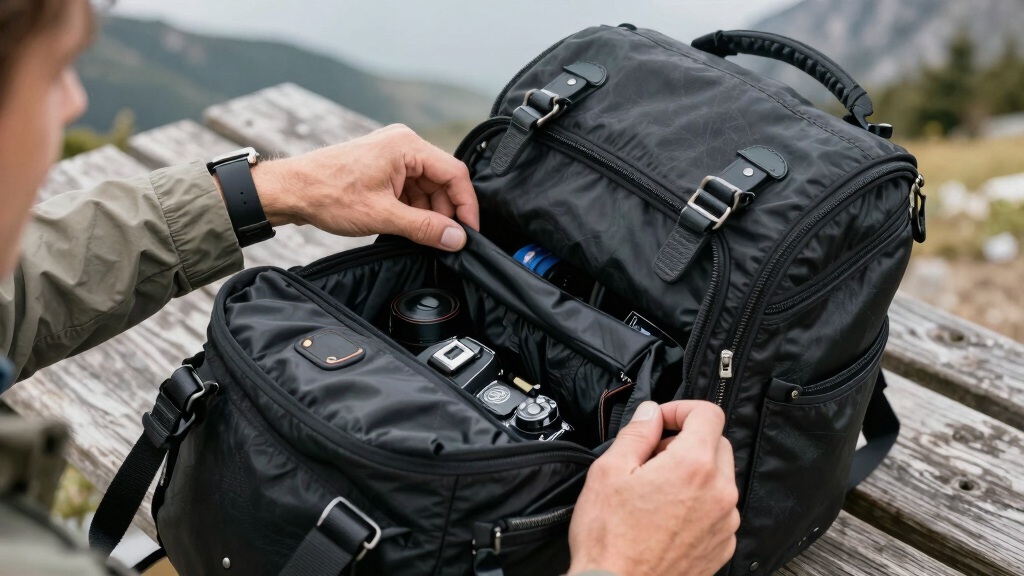

For serious travelers and photographers, investing over $200 in a camera backpack means prioritizing quality, durability, and thoughtful design. The Think Tank FocusPoint 22L stands out as the best overall for its versatility and expandability, while the Peak Design Travel Backpack 45L offers unmatched capacity and weatherproof features for longer trips. These backpacks often trade off between size, access, and protection—larger models provide more storage but can be bulkier, while compact options excel in mobility but may limit gear. Continue reading for a detailed breakdown of each choice and find the perfect fit for your travel photography needs.
Key Takeaways
- Top choices balance capacity and portability, with larger packs suited for extended trips and smaller ones for quick getaways.
- Weatherproofing and durability are key factors, especially for outdoor or unpredictable weather conditions.
- Multiple access points, such as side and rear openings, significantly improve gear retrieval efficiency.
- Expandability features add versatility but may increase weight and bulk, so consider your typical travel load.
- The best backpacks combine thoughtful organization with comfort, ensuring they carry gear without strain.


More Details on Our Top Picks
Think Tank FocusPoint 22L RollTop Camera Backpack – Golden Hour: Expandable Travel & Camera Backpack with Laptop Sleeve, Quick Side and Back Access, Rain Cover – Versatile Photography & Travel Bag
This backpack excels for photographers who need quick access combined with versatile travel features. Its expandable capacity and multiple access points make it more adaptable than the Peak Design Everyday Backpack, which favors sleekness over bulk. The FocusPoint’s thoughtful organization with ten pockets and a removable photo insert offers superior gear separation, but the tradeoff is added weight and bulk, making it less ideal for minimalist travelers. The water-resistant materials and included rain cover bolster its suitability for unpredictable weather, yet the larger size and weight (3.6 lbs) could be a concern for those prioritizing light packing. Compared to the Peak Design, it provides more dedicated organization, but sacrifices some ease of mobility. This pick makes the most sense for photographers who travel frequently and need quick gear access without sacrificing capacity or protection.
Pros:- Expandable capacity with adjustable roll-top for versatile storage
- Multiple access points for quick gear retrieval
- Eco-friendly, durable materials with included rain cover
Cons:- Heavier and bulkier than some competitors, which may reduce mobility
- Higher price point may not suit budget-conscious travelers
Best for: Photographers who value quick, multi-access gear retrieval along with durable, eco-friendly materials for frequent travel.
Not ideal for: Light travelers or those seeking a lightweight, minimalist backpack for casual day trips, as this model is bulkier and heavier.
- External Dimensions:11.25″ W x 16.5″ H x 6″ D
- Photo Insert Dimensions:9.25″ W x 9.5″ H x 3.75″ D
- Laptop Sleeve:8.75″ W x 13.5″ H
- Weight:3.6 lbs
- Volume:20.5 Liters expanded
- Material:Sustainable recycled materials
Bottom line: This backpack is best suited for dedicated photographers needing robust organization and weatherproofing for extensive travel.
Peak Design Travel Backpack 45L, Black, Expandable 35-45L Design, Rear and Top Access, Weatherproof Shell, Laptop Sleeve, Ideal for Travel or Everyday Carry, Versatile Backpack for Men and Women
Compared with the Think Tank FocusPoint, this Peak Design offers a significantly larger capacity (up to 45L) and a sleek, minimalist look that appeals to travelers who prefer a more understated aesthetic. Its weatherproof recycled nylon shell and reinforced hardware make it more suitable for all-weather adventures than many traditional backpacks, including the PGYTECH. The tuck-away straps and luggage pass-through enhance its practicality for carry-on travel, but the expansive size can feel cumbersome for daily errands or quick trips, especially if you prefer a lighter load. While it sacrifices some quick access features found in the FocusPoint, the Peak Design’s versatile organization, durability, and expandable volume make it ideal for long trips or those carrying a wide array of gear. This model is perfect for travelers who prioritize capacity and weather resistance over ultra-compactness.
Pros:- Expandable from 35L to 45L, fitting a wide range of gear
- Weatherproof recycled nylon shell for all-weather protection
- Practical features like luggage pass-through and tuck-away straps
Cons:- Bulkier and heavier than smaller travel backpacks, reducing agility
- Less quick access compared to smaller, dedicated camera packs
Best for: Travelers needing a large, weatherproof pack capable of handling extensive gear for multi-day trips or daily heavy loads.
Not ideal for: Urban commuters or minimalist travelers who prefer a lighter, simpler backpack with fewer features and less bulk.
- Expansion Capacity:35-45L
- Material:Recycled nylon shell
- Weight:Approx. 4.2 lbs
- Laptop Sleeve:Fits up to 17″ laptops
- Access Points:Top, rear, and side
- Water Resistance:Weatherproof
Bottom line: This backpack is best for frequent travelers who need high capacity, weatherproofing, and adaptability for extended trips.
PGYTECH 2-in-1 Roller Camera Backpack, DSLR/SLR/Mirrorless Bag for Travel Photographers, Rolling Luggage with Tripod & Removable Modular & Rain Cover, Compatible with Canon, Nikon, Sony
This model stands out for its dual functionality: rolling suitcase and backpack, making it ideal for photographers who commute through urban environments and venture outdoors. Its high-performance silent wheels and stable base offer smoother handling than the Peak Design or Think Tank models in city settings, but the added weight (roughly 8% more space with the 10L expansion) can reduce portability in crowded or weight-sensitive scenarios. The modular interior allows customized gear organization, surpassing the FocusPoint’s fixed compartments, yet the complexity of its design makes it less straightforward for quick access in fast-paced situations. The rain cover and splash-proof fabric add another layer of protection, but the larger size and rolling mechanism may be less suitable for tight spaces or quick handheld use. It’s best for photographers who need versatile transport options and are comfortable with a more complex, larger bag.
Pros:- Dual mode: rolling suitcase and backpack for maximum versatility
- Removable modular interior for customized gear organization
- High-performance silent wheels and stable handle for city travel
Cons:- Heavier and bulkier, less ideal for quick, casual trips
- More complex to pack and carry, requiring setup time
Best for: Travel photographers who need flexible urban and outdoor transport, including rolling luggage for long distances and backpack mobility for rough terrain.
Not ideal for: Lightweight travelers or those who prefer simple, lightweight camera backpacks for day trips and city touring only.
- Expandable Capacity:10L expansion
- Wheels:Silent double wheels
- Material:Splash-proof PU fabric
- Tripod Storage:External side pockets
- Compatibility:Canon, Nikon, Sony
- Weight:Approx. 8 lbs
Bottom line: This bag is best for professional photographers needing adaptable transport modes in urban and outdoor environments.
Think Tank FocusPoint 30L RollTop Camera Backpack – Greenway: Expandable Travel & Camera Backpack with Laptop Sleeve, Quick Side and Back Access, Rain Cover – Versatile Photography & Travel Bag
Compared to the 22L version, the FocusPoint 30L offers more space for photographers with larger gear sets or those who travel longer periods. Its eco-friendly, bluesign-certified recycled materials make it appealing for environmentally conscious users. The quick access and multiple pockets enhance organization, but the larger size increases weight (around 3.85 lbs) and makes it less convenient for quick trips or daily errands. While the 30L version shares many features with the smaller model, its increased volume caters better to photographers with bulkier gear or additional accessories. The rain cover and sturdy construction provide peace of mind in unpredictable weather, though the increased capacity might be overkill for light travelers. It’s perfect for those who need a balance of capacity, protection, and eco-awareness.
Pros:- Larger capacity for extensive gear or longer trips
- Eco-friendly recycled materials and rain cover included
- Multiple access points and smart organization
Cons:- Heavier and bulkier than smaller models, affecting mobility
- Potentially excessive capacity for casual users
Best for: Eco-conscious photographers requiring a larger, durable, and well-organized travel backpack with quick gear access.
Not ideal for: Travelers seeking ultralight, compact packs for short trips or daily use, as this model is larger and heavier than the 22L version.
- External Dimensions:12″ W x 18″ H x 7″ D
- Volume:30 Liters
- Material:Recycled bluesign-certified fabric
- Water Resistance:Seam-sealed rain cover included
- Laptop Sleeve:Fits up to 14″ laptops
- Weight:Approx. 3.85 lbs
Bottom line: This backpack is ideal for eco-conscious photographers needing more space for extended travel without sacrificing protection.
WANDRD PRVKE 21L Photography Bundle: Weather-Resistant Travel & Camera Backpack with Laptop Sleeve, Quick Side Access, Clamshell Opening – Ideal Photography & Travel Bag (Wastach Green)
The WANDRD PRVKE 21L stands out for its combination of weather resistance and modular design, making it ideal for creators who need flexible gear management. Compared with the Peak Design Travel Backpack 45L, it’s more compact and lightweight, but still offers expandable capacity and dedicated camera access. Its weatherproof tarpaulin and ballistic nylon ensure gear stays dry in harsh conditions, while the quick side access and clamshell opening streamline shooting on the go. However, the 21L capacity limits bulkier gear, and the included accessories add to the cost. This pick makes the most sense for photographers who travel light but want weather protection and versatile organization without the bulk of larger packs.
Pros:- Weatherproof tarpaulin and ballistic nylon construction for tough conditions
- Expandable from 21L to 25L for flexible packing
- Quick side access and clamshell opening facilitate fast gear retrieval
- Includes a complete photography bundle with accessories
Cons:- Limited capacity for larger or more gear-heavy shoots
- Additional accessories increase overall cost
- Materials, while weather-resistant, may not feel ultra-durable over years of heavy use
Best for: Travel photographers and creators seeking a weather-resistant, modular bag with quick access and expansion capabilities.
Not ideal for: Photographers with extensive gear needs or those requiring large, fully expandable backpacks for pro-level equipment.
- Capacity:21L expandable to 25L
- Material:Waterproof tarpaulin and ballistic nylon
- Dimensions:D 7.9″ x W 11.8″ x H 11.8″
- Weight:3.16 kg
- Laptop Sleeve:Fits up to 13-inch laptops
- Expansion:Rolltop expands capacity
Bottom line: This backpack suits travel photographers who prioritize weather protection and modular organization in a compact size.
TARION Large Camera Backpack for Photographers – 35L Expandable DSLR Waterproof Camera Bag with 16″ Laptop Compartment & Side Access & Adjustable Waist Strap & Rain Cover (Xprober)
The TARION Xprober is designed for serious photographers and travelers needing high capacity and impact protection. Unlike the WANDRD PRVKE, it offers a larger 35L volume and more advanced organization with movable velcro dividers, accommodating two cameras, multiple lenses, a drone, and a 16″ laptop. Its impact-resistant aluminum alloy frame and high-strength support prevent deformation, making it ideal for professional environments or rugged travel. The side quick access is a valuable feature for fast shots, though the bag’s bulk and weight—over 3 kg—may be a drawback for lighter travelers. Its waterproof polyester and included rain cover add to its durability, but materials may feel less refined compared to lighter packs. This pack makes sense for those prioritizing maximum gear protection and capacity over weight and compactness.
Pros:- Large 35L capacity with expandable zones for extra gear
- Impact-resistant aluminum alloy frame for maximum protection
- Removable, foldable inner camera bag for flexible packing
- Side quick access for fast gear retrieval
Cons:- Heavy at over 3 kilograms, less comfortable for day-to-day carry
- Bulkier size may be cumbersome for urban travel or crowded airports
- Materials, while durable, may not feel as refined or lightweight as premium bags
Best for: Professional photographers or serious travelers carrying extensive gear in challenging environments.
Not ideal for: Casual travelers or those seeking a lightweight, minimalist bag for short trips or daily use.
- Capacity:35L expandable
- Material:Water-resistant polyester with aluminum frame
- Laptop Compartment:Fits up to 16 inches
- Weight:3.16 kg
- Organization:Movable velcro dividers
- External Attachments:Tripod and additional gear
Bottom line: This backpack suits professional photographers or travelers with substantial gear who need maximum protection and capacity, accepting added weight and size.
How We Picked
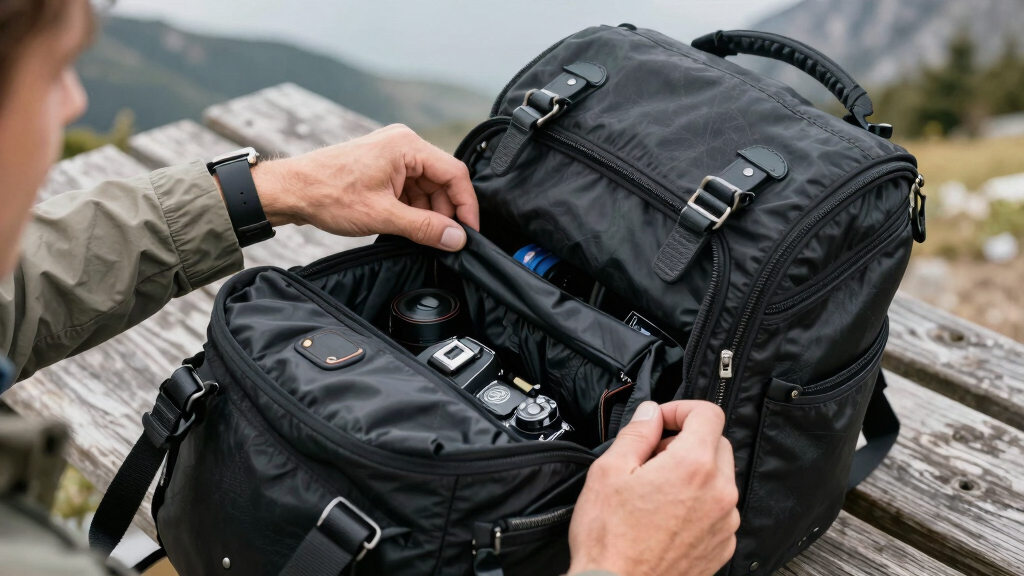
Each backpack was evaluated based on build quality, capacity, accessibility, weather resistance, and comfort. We prioritized models that offer versatile access points, durable materials, and thoughtful organization tailored to travel photographers. Price was not a limiting factor, but the focus was on value for the features offered over the $200 threshold. The ranking reflects a mix of practical usability, innovative design, and overall robustness, ensuring each pick serves a different traveler profile while maintaining high standards for quality and functionality.Factors to Consider When Choosing Best Travel Camera Backpacks Over $200
Choosing the right travel camera backpack over $200 involves balancing several factors. Beyond just capacity, it’s important to consider how the bag handles weather, how accessible your gear will be on the go, and how comfortable it is to carry over long distances. A well-designed backpack enhances your travel experience by protecting your gear and making access intuitive. Keep in mind that investing more often means better materials and innovative features, but not necessarily more complexity. The following considerations will help you identify what matters most for your specific travel style.Capacity and Expandability
Size matters depending on your gear collection and trip duration. Larger packs like the Peak Design Travel Backpack 45L offer significant space for extended travel, but they can become cumbersome in crowded airports or city streets. Conversely, smaller models like the WANDRD PRVKE 21L prioritize mobility but might limit gear if you’re carrying multiple lenses or accessories. Expandability features, such as additional compartments or adjustable volumes, provide flexibility but can add weight and bulk—consider your typical travel scenario to find the right balance.
Access Points and Organization
Multiple access points, including side zippers and rear openings, drastically improve your ability to grab gear quickly without unpacking everything. Well-organized compartments with padded dividers help protect delicate equipment while keeping everything in reach. Be cautious about bags that only open from the top, as they can slow down workflow and increase the risk of gear misplacement. The best designs streamline access while maintaining compartment security, especially for on-the-go shooting.
Weather Resistance and Durability
Travel often involves unpredictable weather, so a backpack with weatherproof materials or rain covers is worth the investment. Waterproof zippers and rugged exteriors add longevity and peace of mind, especially during outdoor shoots or in rainy climates. Cheaper or lower-quality models may claim water resistance but fail in heavy rain, so look for proven features. Durability also means sturdy straps and reinforced seams that withstand the rigors of frequent travel.
Comfort and Carrying Style
Long days on your feet require a backpack with padded, adjustable straps and an ergonomic design. Some models, like the Think Tank FocusPoint series, include waist straps or chest harnesses for added support, which can reduce fatigue. Consider the weight distribution and whether the pack has a ventilated back panel to prevent overheating. Comfort is often overlooked but makes a significant difference in overall travel experience, especially when carrying heavy gear over extended periods.
Material Quality and Maintenance
High-quality materials resist wear and tear, making your investment last longer. Look for abrasion-resistant fabrics and robust zippers, which are vital for carrying expensive gear. Easy-to-clean surfaces or removable rain covers simplify maintenance after outdoor adventures. A durable backpack might cost more upfront but saves money over time by avoiding frequent replacements or repairs.
Frequently Asked Questions
Will a larger camera backpack over $200 be too bulky for everyday use?
Not necessarily. Many larger models are designed with mobility in mind and include features like compression straps and ergonomic straps to make them manageable in daily settings. However, size and weight are key considerations—if you plan to use the pack for daily commutes or city walking, opt for a design that balances capacity with ease of carry. Look for models with streamlined profiles and adjustable straps to minimize bulk while still providing ample storage.
Are weatherproof features worth paying extra for in a travel backpack?
Yes, especially if you often travel to outdoor locations or in variable climates. Weatherproof materials and rain covers protect your gear from water damage, which can be costly and frustrating. While they may add to the weight or cost, these features provide peace of mind and extend your backpack’s lifespan. For frequent travelers, investing in weather-resistant construction is a smart choice for safeguarding high-value equipment.
How important is quick access to gear when choosing a travel camera backpack?
Quick access is vital for photographers who need to capture spontaneous moments. Bags with side or rear openings allow fast retrieval without unpacking everything, saving precious seconds. If you often shoot on the go or in unpredictable environments, prioritize models with multiple, well-designed access points. This feature can significantly improve your shooting efficiency and overall travel experience.
Should I prioritize expandability or a more streamlined design?
It depends on your typical travel style. Expandable backpacks provide flexibility for different gear loads and longer trips, but they tend to be bulkier. A streamlined design is better for daily use or short trips where mobility and ease of carry matter more. Consider your regular travel needs—if you often carry more gear or plan longer trips, an expandable model is likely worth the extra bulk.
Is it better to invest in a dedicated photography backpack over a general travel pack?
Dedicated photography backpacks are designed with compartments, padding, and access features tailored for camera gear, offering better protection and organization. General travel packs may sacrifice some of these features for versatility, but they often lack the specialized compartments needed for high-value equipment. If photography is a primary focus, a dedicated model provides peace of mind and efficiency, making the extra investment worthwhile.
Conclusion
For travelers seeking the best overall balance of capacity, accessibility, and durability, the Think Tank FocusPoint 22L stands out as top choice. Those prioritizing maximum capacity and weatherproofing may prefer the Peak Design Travel Backpack 45L, especially for longer trips. Beginners or casual travelers should consider more compact, easy-to-use models like the WANDRD PRVKE 21L for straightforward functionality. For specialized needs, such as rolling convenience or ultra-rugged protection, options like the PGYTECH 2-in-1 Roller Backpack or TARION Large Camera Backpack deliver unique advantages. Ultimately, your choice depends on how you balance capacity, weather resistance, and access for your specific travel photography adventures.